Delta

LOA0.0m
Beam0.00m
Top Speed0kn
Guests0
Draft0.00m
Engines2x Volvo Penta D8-IPS 800 (option A); Mercury Verado V12-600 (option B)
Propulsionips
Hullcarbon
ClassCE-B

About this tender

Delta - what we know.

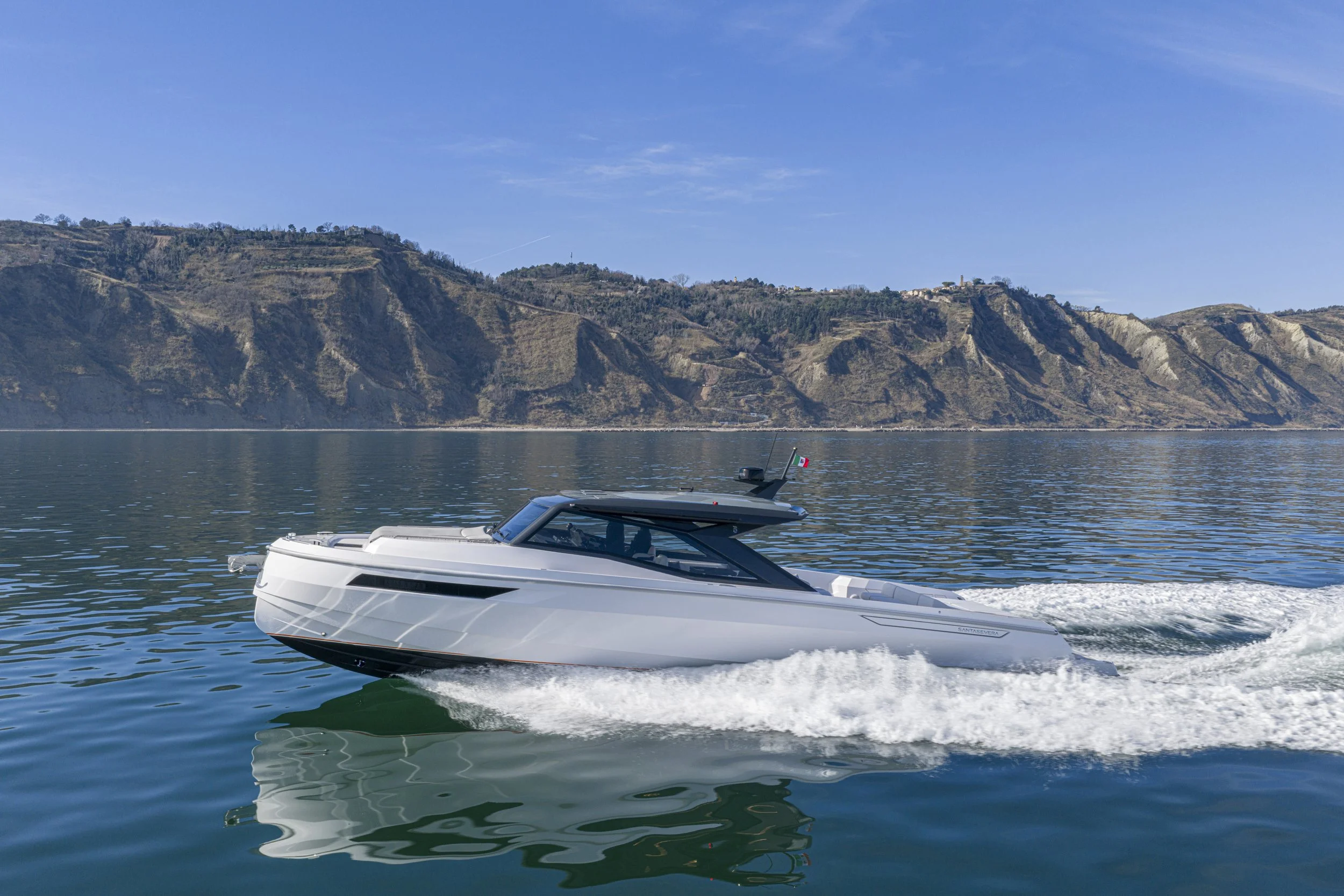
The Delta 60 Open is the build we ask Delta Powerboats for when a programme needs a serious day boat with genuine overnight capability and the structural integrity to justify the carbon bill. At 18.22m overall on a 16.60m hull, it sits at a length where most yards are reaching for aluminium or GRP; Delta builds it in vacuum-infused carbon-fibre composite throughout, hull, stringers, bulkheads, deck, and superstructure all laminated to Diab Core Infusion Technology standards. The result is a dry weight of 12,800 kg on a platform that carries twenty guests in open-plan comfort.

Propulsion is offered in two configurations: twin Volvo Penta D8-IPS 800 pod drives for owners who prioritise efficiency and range, or triple Mercury Verado V12-600 outboards for those who want the simpler servicing model and maximum top-end. The IPS specification delivers a quoted 450 nautical miles at 30 knots on a 2,900-litre fuel load, which is a usable range figure for Mediterranean or Adriatic programmes rather than a flat-calm record run. Top speed is rated at 38 knots.

Below deck, the layout is tailored to order. The standard arrangement runs a forward owner's cabin with en-suite, two amidships guest cabins sharing a second bathroom, a Fischer Panda 19 kW generator, and a Webasto 55,000 BTU air-conditioning system. The alternative layout substitutes one guest cabin for a below-deck lounge and galley, which suits a day-charter or family programme where sociable space below matters more than cabin count. A hydraulic swim platform doubles as a tender launch, and the integrated passerelle makes marina arrivals straightforward. Design is by Lars Modin; the hull is built at Luksusjaht AS in Estonia.
Highlights

Built for the work.

The four details we'd point out first to a captain who hasn't seen one on the water yet.

01

Full carbon-composite structure

Hull, stringers, bulkheads, deck, and superstructure are all vacuum-infused carbon-fibre composite, laminated using Diab Core Infusion Technology. At 12,800 kg dry on an 18.22m hull, the weight discipline is genuine, and it shows in the 38-knot top speed and the 450nm range at 30 knots.

02

Dual propulsion options

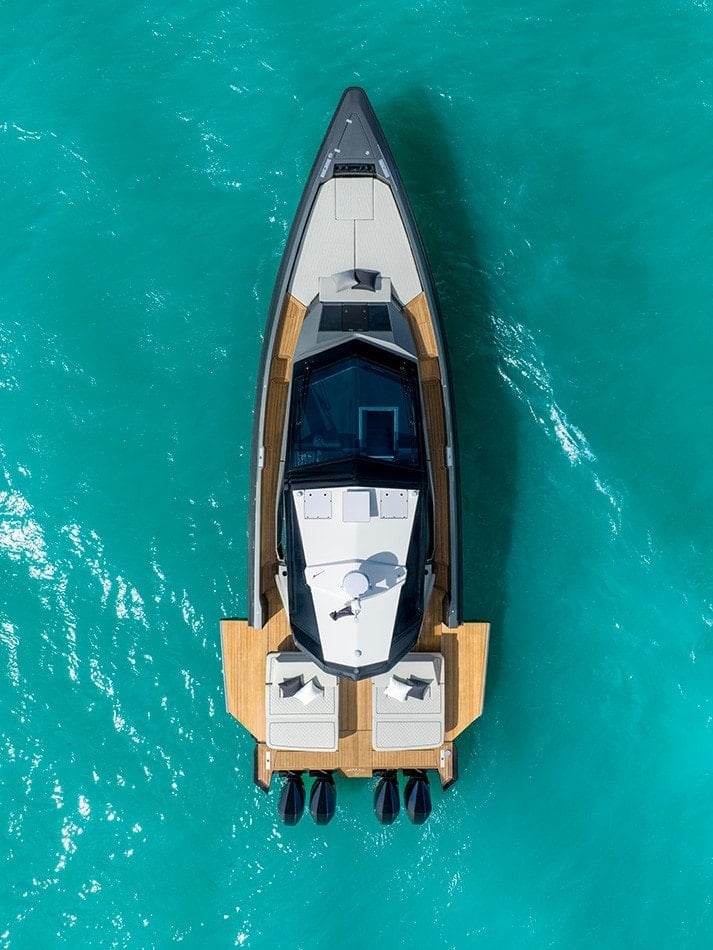
Buyers choose between twin Volvo Penta D8-IPS 800 pod drives, optimised for the deep-V hull and offering joystick control with Dynamic Positioning System, or triple Mercury Verado V12-600 outboards for straightforward servicing schedules and strong top-end performance. Both options are offered from the factory.

03

Twenty-guest cockpit layout

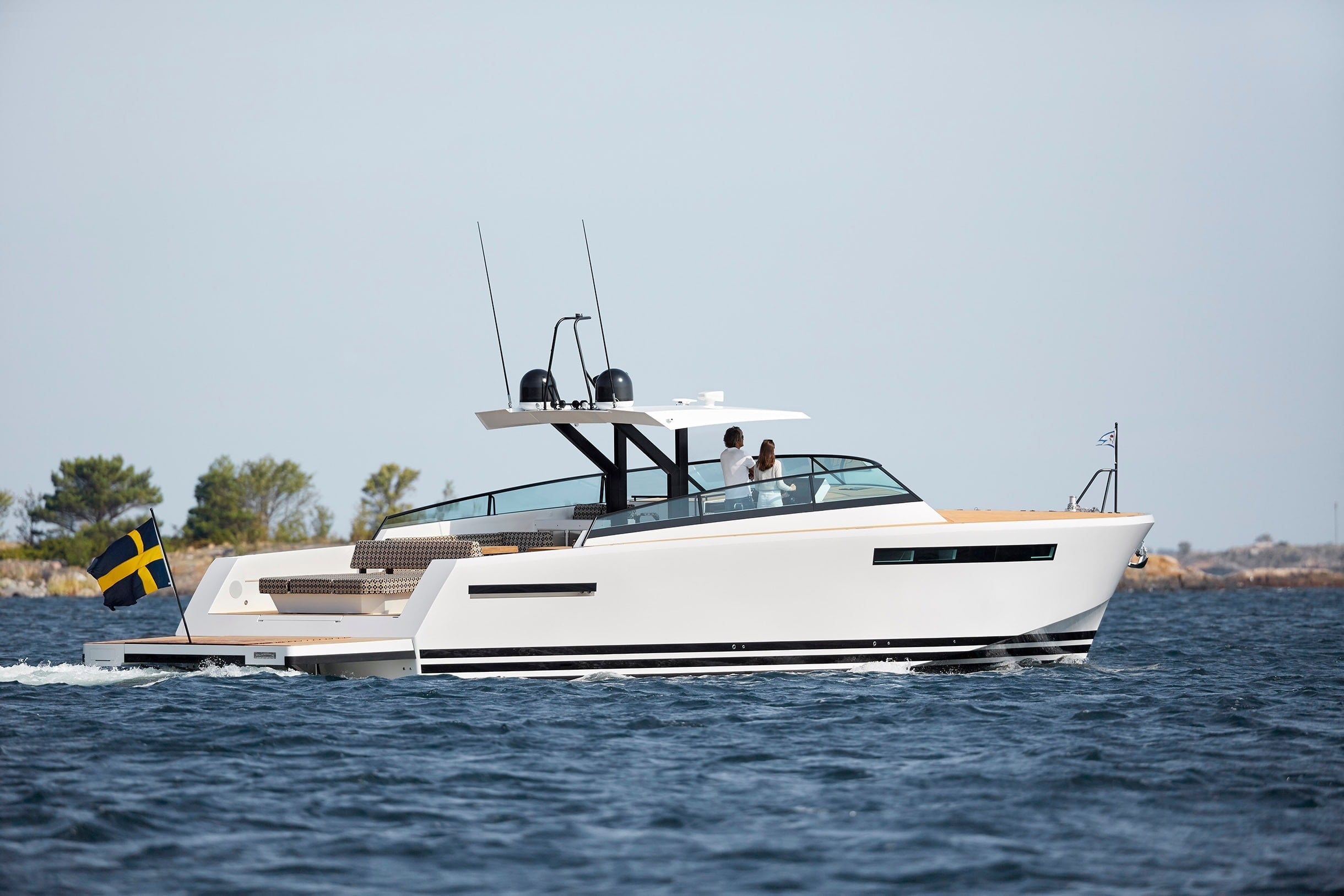
Mirrored L-shaped sofas on both sides, multiple sunbathing areas, and a wet-bar galley module with BBQ, fridge-freezer, ice maker, and dishwasher give the cockpit a practical hosting capacity for up to twenty guests. The hydraulic platform extends the aft section seamlessly to the waterline for swimming and toy deployment.

04

Configurable below-deck accommodation

The standard three-cabin arrangement places the owner's cabin forward with en-suite bathroom and two amidships guest cabins with a shared head. The optional layout converts one guest cabin to a below-deck lounge and galley, giving a different sociable balance for day programmes or family charters.

05

Garmin Glass Cockpit and 24V digital bus

The helm station runs dual 22-inch Garmin MFDs, a Mastervolt 24V CZone digital bus, and a lithium battery bank as standard. Combined with Volvo Penta joystick control and DPS in the IPS configuration, the systems specification is appropriate for a captain running a complex daily programme without additional electronics outlay.

The full specification

Every number, sorted.

Dimensions

Length overall
18.22m
Beam
4.60m
Draft
1.40m
Dry weight
12,800kg
Year
2019

Performance

Top speed
38kn
Cruising speed
30kn
Range
450nm

Power and Tanks

Engines
2x Volvo Penta D8-IPS 800 (option A); Mercury Verado V12-600 (option B)
Propulsion
ips
Fuel capacity
2,900L
Water capacity
700L

Construction

Hull
carbon
Classification
CE-B

Construction and Design

Lamination method
Vacuum-infused carbon-fibre composite, Diab Core Infusion Technology
Design
Lars Modin
Builder
Luksusjaht AS, Roomassaare, Saaremaa, Estonia
Interior
Handmade woodworks, tailored to buyer specification

Propulsion and Systems

Engine option A
Twin Volvo Penta D8-IPS 800 pod drives with joystick control and DPS
Engine option B
Triple Mercury Verado V12-600 outboards
Fuel consumption at 30 knots
6 l/nm
Generator
Fischer Panda 19 kW
Electrical bus
Mastervolt 24V CZone digital bus
Battery bank
Lithium

Layout and Accommodation

Standard below-deck layout
Owner's cabin forward with en-suite; two amidships guest cabins with shared bathroom
Optional below-deck layout
Owner's cabin forward with en-suite; one guest cabin; below-deck lounge and galley
Cockpit galley
BBQ cooker, fridge-freezer, ice maker, dishwasher
Cockpit seating
Mirrored L-shaped sofas port and starboard; multiple sunbathing areas
Swim and boarding platform
Hydraulic tender launch and swim platform with integrated passerelle

Electronics and Comfort

Navigation
Garmin Glass Cockpit, dual 22-inch MFDs
Air conditioning
Webasto 55,000 BTU
Bridge clearance
4.20 m (13.8 ft)
Grey water capacity
200 litres
Black water capacity
200 litres

Specifications, prices, availability, and performance figures are supplied for guidance only and remain subject to confirmation by the yard, seller, broker, survey, contract, and final specification.

Questions, answered

Before you enquire.

Which propulsion option is more suited to a superyacht support role with long daily passages?
The twin Volvo Penta D8-IPS 800 configuration is the more fuel-efficient choice, returning a quoted range of 450 nautical miles at 30 knots on 2,900 litres. The IPS pod drives also give joystick control and Dynamic Positioning System, which simplifies close-quarters manoeuvring in marina or mothership approaches. The triple Mercury V12 outboard option suits programmes where servicing access and top-end speed take priority over range.
Can the below-deck accommodation be configured to the owner's requirements?
Yes. Delta specifies two distinct layout options: a three-cabin arrangement with a forward owner's cabin en-suite and two amidships guest cabins, or an alternative with one guest cabin replaced by a below-deck lounge and galley. Both are offered from the factory; further bespoke interior work is also available, as the woodworks are handmade to order.
What CE certification category does the Delta 60 Open carry?
The boat is certified to CE Category B, which covers offshore conditions up to Beaufort 8 and significant wave heights up to 4 metres. This makes it appropriate for extended coastal and offshore passages in typical European sea states, consistent with a superyacht support or day-boat programme.
How heavy is the Delta 60 Open, and does the carbon construction make a meaningful difference at this size?
Dry displacement is 12,800 kg on an 18.22m hull. For context, a GRP or aluminium hull of equivalent length and accommodation depth would typically run considerably heavier. The vacuum-infused carbon laminate keeps the weight down without sacrificing structural rigidity, which is what underpins the 38-knot top speed and the 6 litres per nautical mile consumption figure at 30 knots.
Where is the Delta 60 Open built, and who designed it?
The hull is built at Luksusjaht AS in Roomassaare, Saaremaa, Estonia. The exterior design is by Lars Modin. Delta Powerboats is a Swedish company with its office in Djurhamn; the yard relationship with Luksusjaht AS is long-standing across the Delta range.
What capacity does the cockpit support for day guests?
Delta specifies seating and sunbathing areas for up to twenty guests in the open cockpit. The integrated wet-bar galley module, running a BBQ, fridge-freezer, ice maker, and dishwasher, supports this capacity practically rather than just on paper.

The yard

Delta

Stockholm, Sweden

Delta Powerboats is an independent Swedish motor yacht builder, founded in 2003 and headquartered in Stockholm, with production carried out by around 140 engineers and craftsmen at a dedicated factory on the island of Saaremaa, off the Estonian coast. The company was established by a trio of Swedes, Lennart Alpstål, Lars Modin, and Kalle Wessel, heading production, design, and sales respectively, and every hull is made to order in close collaboration with the client.

The range runs from 7.5m up to approximately 26m, covering open dayboats, walkaround cruisers, sportscruisers, and larger flybridge models. Within the tender and chase-boat segment, the T26 (8.1m) and the T33 sit alongside the broader open and coupé lines; the T26 is a centre-console format conceived specifically for water-sports use, with a Mannerfelt-designed multi-stepped deep-V hull capable of 53 knots with seating for eight. The T33, running twin Mercury V10 outboards on the same Mannerfelt hull architecture, reaches a published top speed of 55 knots.

What distinguishes Delta in this segment is the carbon-fibre construction programme it pioneered from 2010. The 54 IPS was the first serial-production motor yacht built entirely in carbon fibre, delivering a claimed 40 per cent reduction in fuel consumption compared with conventional composite hulls. The 54 and the flagship 88 Carbon have both taken Motor Boat of the Year honours at MB and Y. We'd put Delta alongside the more visible Scandinavian names when an owner's programme calls for fuel efficiency and clean Nordic aesthetics at a price point below the larger Italian build centres.

Last call · Available

Enquire about the Delta.

Delta · Stockholm, Sweden

Indicative price fromPrices on request
LOA
18.2m
Beam
4.60m
Top Speed
38kn
Guests
20

Tell us about your yacht, your programme, and the missions Delta needs to handle. We come back within 48 hours with a written assessment - fit for the brief, lead time, and trade-offs against alternatives in the same band.

Prefer to talk? +44 (0) 77180 88055 · other ways to reach us