SACS

LOA0.0m
Beam0.00m
Top Speed0kn
Guests0
Draft0.00m
Engines2x Volvo Penta D6-380
Propulsionshaft
HullGRP

About this tender

SACS - what we know.

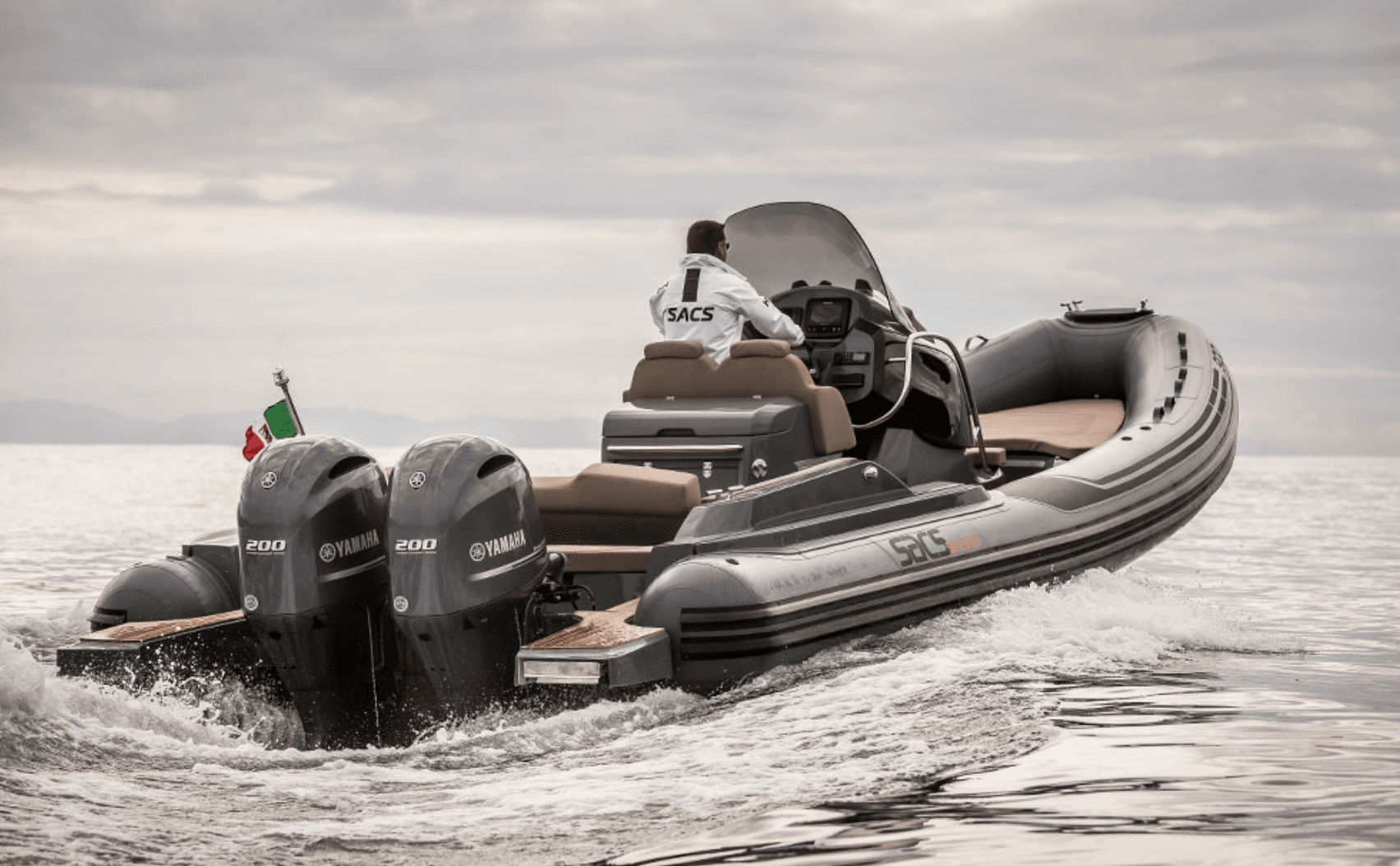
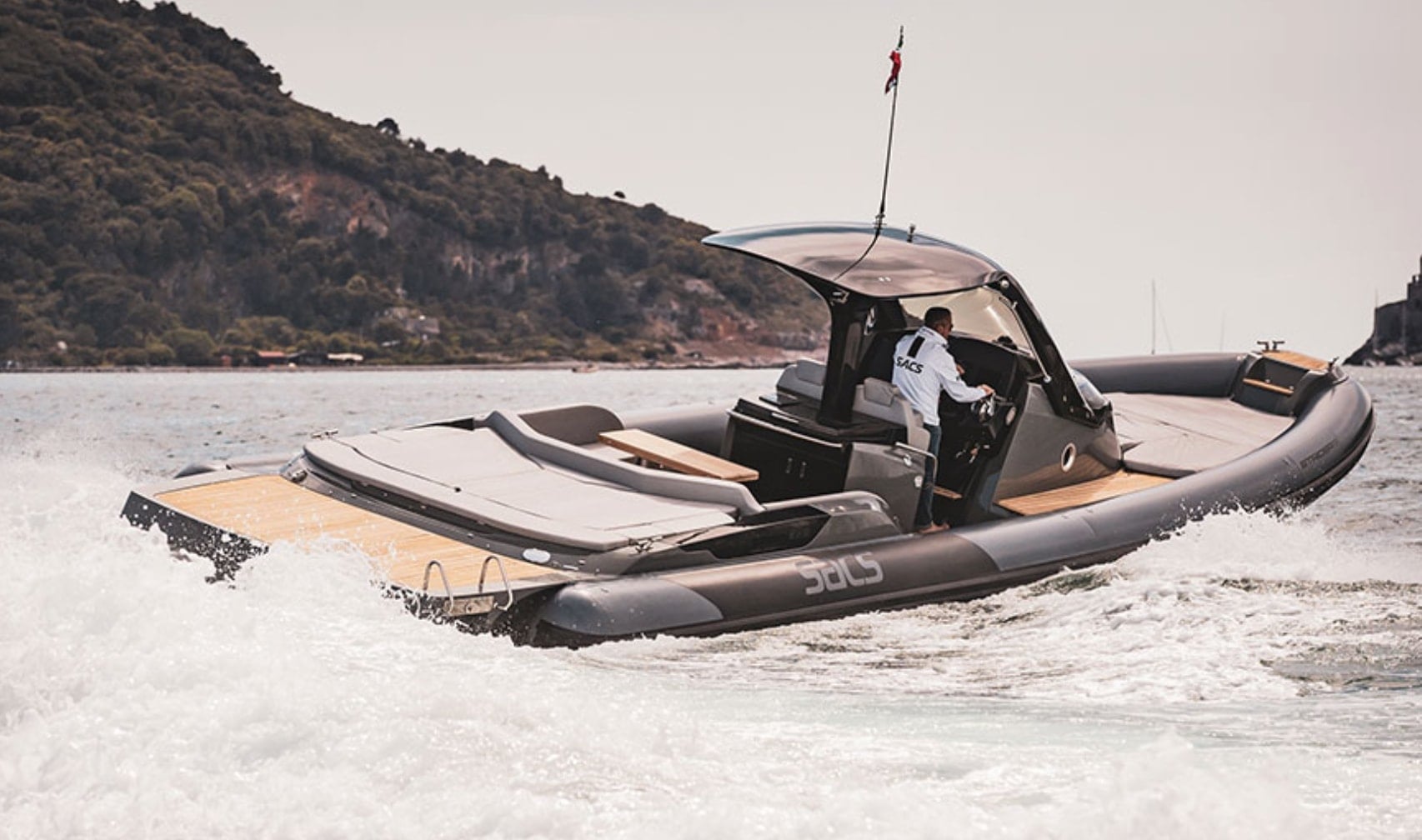
The Strider 13 is the SACS we tend to specify for owners who want a serious 13m Italian maxi RIB that genuinely covers chase boat duty rather than just a fast leisure cruiser. At 13.35m on a 3.83m beam, with a deck plan engineered to absorb sport driving and longer cruising, it sits between the Strider 11 and the Strider 15 in the line and earns its place on programmes that need both deck volume and sport feel in one boat.

Standard powertrain is twin Volvo Penta D6-380 diesel inboards giving 46 knots top speed and a 5,200kg dry weight. Engine options run through Mercury Diesel V8 370hp pairs, upgraded twin Volvo D6-440s, and twin Yamaha 350 outboards for owners who want a different propulsion philosophy on the same hull. The 1,000 litre fuel tank gives credible cruising range.

Sixteen-passenger coastal certification covers charter and event capacity. SACS' console architecture and material standard at this size give the boat a refined sport feel that suits both private use and serious tender duty without the boat looking out of place in either context.

Highlights

Built for the work.

The four details we'd point out first to a captain who hasn't seen one on the water yet.

01

46-knot maxi RIB performance

Twin Volvo Penta D6-380 inboards push the Strider 13 to 46 knots top with a comfortable cruise in the high twenties. That places the boat in chase territory while keeping the running cost and service profile of a standard D6 powertrain. Mediterranean parts and service availability is well established.

02

Multiple engine packages

Hull supports twin Volvo D6-380 standard, upgraded D6-440, twin Mercury Diesel V8 370hp inboards, or twin Yamaha 350 outboards. Owners can specify a powertrain matched to the programme: planted shaft drive for chase duty, lighter outboard installation for service flexibility, or higher-power inboards for top-end performance.

03

Distinctive console architecture

SACS describe the Strider 13 console as imposing for a reason. The helm cluster, windscreen and console volume are scaled to the hull rather than carried over from smaller boats. The result is a sport feel at the helm that matches the boat's chase-boat brief and a guest area that holds presence at the dock.

04

Sixteen at coastal certification

Sixteen passengers under coastal certification gives charter and event capacity, supported by the deck plan and 3.83m beam. The Strider 13 retains usable lounging space at full guest load, which is what separates it from competitors that quote the same number on a tighter deck.

The full specification

Every number, sorted.

Dimensions

Length overall
13.35m
Beam
11.98m
Draft
0.80m
Dry weight
5,200kg
Year
2020

Performance

Top speed
46kn

Power and Tanks

Engines
2x Volvo Penta D6-380
Power
380hp ea.
Propulsion
shaft
Fuel capacity
1,000L

Construction

Hull
grp

Propulsion and Performance

Mercury Diesel option
2 x V8 370hp
Volvo upgrade
2 x D6-440
Yamaha outboard option
2 x 350hp

Specifications, prices, availability, and performance figures are supplied for guidance only and remain subject to confirmation by the yard, seller, broker, survey, contract, and final specification.

Questions, answered

Before you enquire.

Inboard or outboard on the Strider 13?
Inboard Volvo D6 or Mercury Diesel V8 give the planted feel and shared bunkering most superyacht programmes prefer. Twin Yamaha 350 outboards trade weight and service simplicity for petrol bunkering and a different transom layout. Most chase-boat specifications take the inboard route.
Is the Strider 13 a real chase boat?
Yes for most coastal and inter-island use. With 46 knots top, 1,000 litres of fuel and a deep-V hull engineered for sport driving, the boat keeps up with mid-size superyachts on coastal legs and absorbs sea state without forcing the helm to back off. For yachts running 30-plus knot cruising speeds across longer ocean legs, the Strider 15 is the better answer.
How does it compare to the Strider 11?
The Strider 13 has more deck volume, more fuel and stronger inboard powertrain options. It is the right choice for owners who genuinely need chase capability or want a credible weekender with deck presence. The Strider 11 is lighter, cheaper to run and easier to lift, which suits a different brief.
Does the Strider 13 fit a yacht garage?
On most motherships, no. Thirteen and a half metres is too long for almost every yacht garage, so the Strider 13 is normally specified as a stand-alone boat moored separately or carried on the deck of a larger mothership with proper crane handling. Confirm cradle and crane plans against the specific yacht.

The yard

SACS

Roncello, Italy

SACS (trading as SACS Tecnorib) is an Italian Maxi RIB manufacturer founded in 1989 and based in Roncello, in the Monza e Brianza province of Lombardy. The yard sits in the same northern-Italian industrial corridor that feeds the premium automotive and design sectors, and that heritage shows: every hull above 10.0m is built using vacuum-infusion construction, and all current models are styled by Christian Grande Design Works, whose sharp, low-slung lines are now immediately recognisable on any marina.

The current production range runs two lines. The Strider collection spans from compact open RIBs at around 9.0m through to the 18.3m Strider 19, a megayacht-grade tender with twin-diesel surface drives rated to 2 x 1,200 hp and a quoted top speed of 50 knots. The Rebel line - introduced with the Rebel 47 in 2016 - takes technology developed for military and rescue applications and reframes it as a luxury Maxi RIB; the Rebel 55 at 15.0m is the current volume flagship at this level. Both lines accept substantial owner customisation through SACS Bespoke Operations (SBO), covering layout, tubes, deck coatings, and propulsion choice.

In the superyacht-tender segment, the build we ask SACS for is the Strider 13 or Strider 15 when an owner's programme needs a fast, high-capacity day platform, and the Strider 19 when the mothership is large enough to carry a near-yacht-sized tender. The hull design on the larger Striders was developed with Naiad in New Zealand, the deep-V geometry is engineered for rough-water stability, and CE category B offshore certification is standard on the upper range.

Since 2006 SACS has been part of the Laserline industrial group, which has reinforced production quality and dealer network depth without diluting the Italian build character.
Last call · Available

Enquire about the SACS.

SACS · Roncello, Italy

Indicative price fromPrices on request
LOA
13.3m
Beam
11.98m
Top Speed
46kn
Guests
16

Tell us about your yacht, your programme, and the missions SACS needs to handle. We come back within 48 hours with a written assessment - fit for the brief, lead time, and trade-offs against alternatives in the same band.

Prefer to talk? +44 (0) 77180 88055 · other ways to reach us