About this tender
Anvera 58S Full Carbon - what we know.
The Anvera 58S Full Carbon is a 17.5m chase boat from Anvera, built in Misano Adriatico, Italy: twin 850hp surface drive and 50 knots.
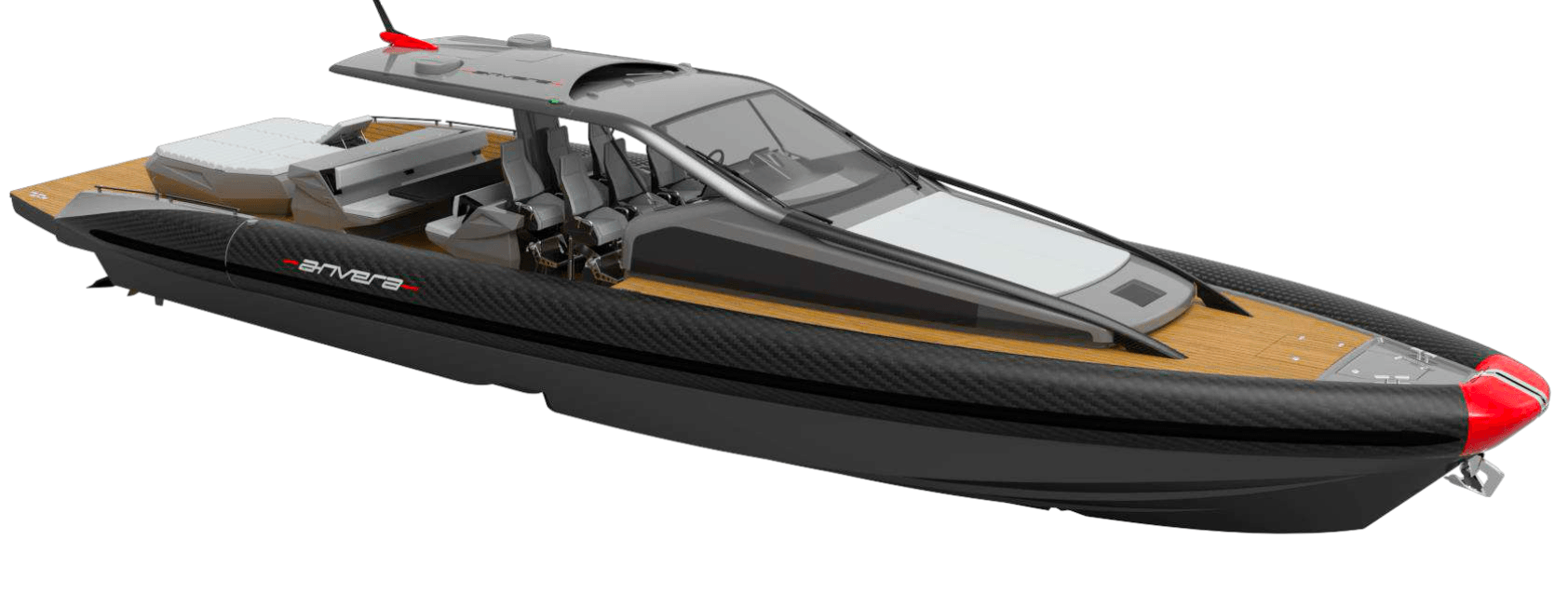
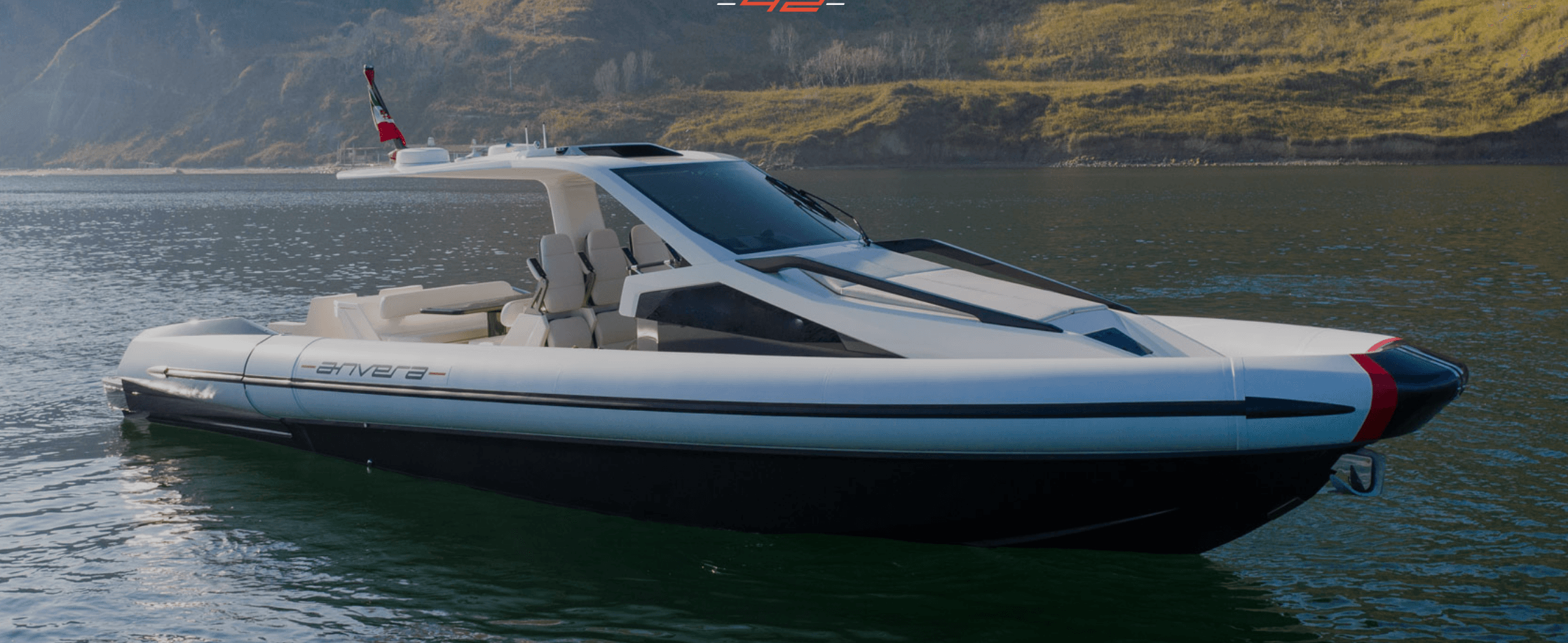
The Anvera 58S Full Carbon is the build we point owners and captains towards when the programme calls for genuine offshore pace, a serious beach platform at anchor, and a carbon structure that can take the punishment of daily chase-boat duty. At 17.50m overall and 5.12m of beam, it is a significant hull - large enough to carry an extended day party, disciplined enough in weight to deliver what the yard describes as speeds over 50 knots from twin 850 hp powerplants. This is not a dual-use compromise squeezed into a mother-ship garage: it is a stand-alone performance platform built on a decade of Class 1 offshore racing DNA.
The laminate tells the story. Unidirectional and multiaxial carbon fibres are combined with high-density PVC cores and epoxy resins throughout the structure - no glass, no wood, no weight concessions. The result is a hull that is light enough for the power-to-weight ratio to matter at speed, and stiff enough to hold its shape in the kind of sea states that expose ordinary RIB construction. The aerodynamic superstructure, developed with Aldo Drudi's D-Perf studio, shapes twin 12-metre airfoil uprights around the helm station - a detail that goes beyond visual identity into genuine downforce and drag management at pace.
At anchor the 58S opens into a different boat entirely. The signature folding stern terraces expand the deck into over 23 square metres of beach area - a flat, connected surface at water level that few purpose-built chase vessels can match in social terms. Two cabins, a full bathroom, a 1,600-litre fuel load, and 400 litres of fresh water mean the programme does not have to pause for an early return to the mother ship. For a vessel that competes on speed, the range and habitability credentials are genuinely unusual.
We'd put the 58S Full Carbon alongside the upper tier of Italian performance yards in terms of material specification and finish quality. The twin MAN 850 hp installation with Top System surface drives is a credible, well-supported drivetrain choice for this displacement class, and the surface-drive configuration keeps the running gear out of harm's way on the kind of high-speed coastal passages that wear shaft arrangements down. If your programme involves a superyacht with a serious cruising schedule and an owner who expects the tender to keep up, this is a hull worth a detailed look.