A decade ago the chase boat barely came up when we wrote a tender brief. Now it appears within the first meetings on most 50 metre and larger programmes we run. This is a market piece: the data behind that shift, the structural reasons for it, and what it means for a 2026 brief. For the evergreen definition, how a chase boat differs from a tender or a support vessel, and the honest test of whether a programme needs one, the canonical reference is the chase boats explained guide.
The data: this is structural, not anecdote
Wajer's managing director told BOAT International that around 35 per cent of the builder's new-build sales in 2025 year to date, and 33 per cent in 2024, are directly linked to superyachts. State that precisely: it is a share of one prominent builder's new-build sales tied to superyacht owners, not a claim that a third of all boats everywhere are chase boats. It is still a striking figure from a serious builder, and it is the cleanest public data point that the shift is structural rather than fashion.
The three structural drivers
None of them is taste:
- Garage size lagged guest expectations. A 60 m yacht built in 2010 typically has a garage sized for a 7.5 m tender. Today's guest brief needs a 10 to 11 m hull. The chase boat solves it without cutting the yacht apart.
- Charter reset the spec. Charter guests bring divers, fishers, kiteboarders and instructors. The mothership cannot host all of it without crowding the aft deck.
- Itineraries widened. Programmes now stretch across oceans in a season. A chase boat shipped a leg ahead gives flexibility the mothership alone cannot.
What the 2025 market showed
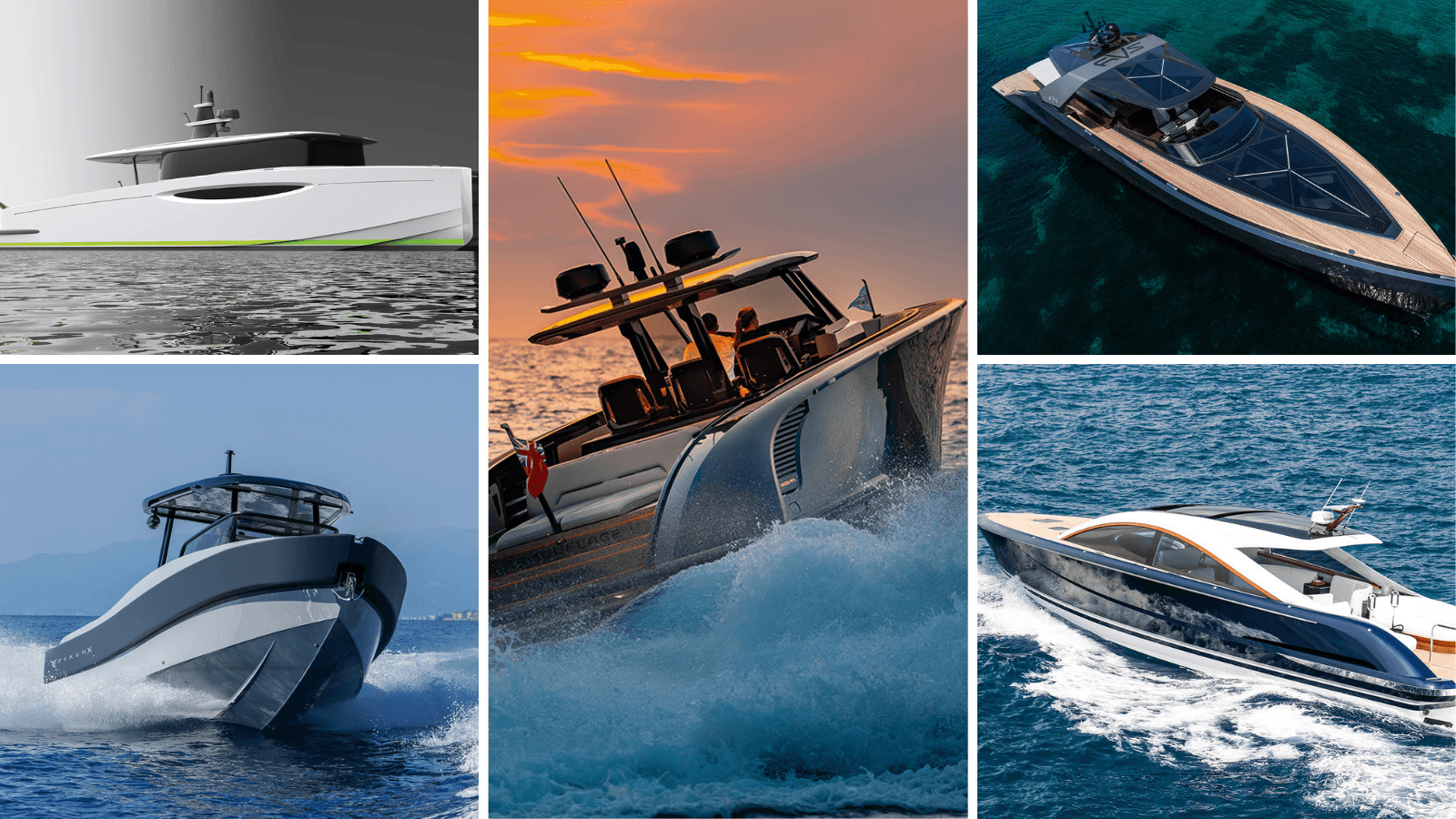
The category is maturing into clear bands, and the named launches make it concrete: SAY Carbon at 32, 42 and 52 feet; the TYKUN range at 8.5, 10.5 and 12.5 m; a Tenderworks custom 16.5 m built for the 79.9 m Feadship Faith; and the SPARK Marine Synthesis S.60, an 18.3 m foil-assisted catamaran rated for sea states 4 to 5, all per BOAT International. SPARK's Cyril Le Sourd frames the design target: the chase boat should work in 90 per cent of situations, and for the remaining 10 per cent you have a smaller tender. Tenderworks' Ernest Menten captures the inversion some programmes reach: in a way, the superyacht then becomes the chase. We shortlist builders across these bands in the best chase boats.
What it means for a 2026 brief
The takeaway is not that every yacht needs one. It is that every 50 metre-plus brief should now ask the question deliberately rather than default to a garage tender. Whether a given programme actually needs a chase boat, where it sits against a larger primary tender, and the definition and cost calculus are worked in full in chase boats explained and, for the fleet view, tender fleet planning by yacht size. The chase boats register shows what is available and the comparison tool puts candidates side by side. Tell us the programme and we will give you a straight answer on whether yours needs one.
FAQ
Is the chase boat trend real or marketing? Real. Wajer reports around 35 per cent of its new-build sales in 2025 are linked to superyachts (33 per cent in 2024), the cleanest public data point that the shift is structural.
Why are more superyachts buying chase boats now? Garages did not grow with guest expectations, charter raised the activity load, and itineraries widened. The full reasoning and the buy-versus-bigger-tender decision are in chase boats explained.
Does every 50m-plus yacht need a chase boat? No. It means the question should be asked deliberately on every brief. The honest five-point test is in the chase boats explained guide, which is the canonical reference.