The brief comes first, and everything on the deck follows from it. A chase boat built for sport-fishing, a chase boat built for diving, and a chase boat built to shuttle guests in a chop are three different boats even at the same length. Before you talk to a builder, you settle what the boat is for, because that single decision sets the console position, the seating, the shade, where the toys live, how much fuel you carry, and what goes on the helm. Get the brief right and the layout almost designs itself. Get it wrong and you spend the first season fighting a deck that will not do the job. This guide walks through how each mission shapes the plan, then covers the open versus cabin decision and the helm. For the wider category, start at the superyacht chase boats overview or read what is a chase boat.
Start with the operating profile
Write down what the boat does on a typical day, not what it might do once a year. The honest answer is usually narrower than owners expect, and a narrow brief produces a better boat. A 14 metre hull cannot be a tournament sportfisher, a dive platform, and a long-range shuttle all at once without compromising each.
Once you have the day plan, the operating profile sets the bones: speed, range, sea state, crew, and the number of people aboard. Those numbers decide hull and length before you ever sketch the deck. Our specifications guide walks through the spec blocks in order.
Layout by mission
The mission shapes the deck plan more than any other factor. Five briefs cover most of what we see.
- Sport-fishing. The deck has to work hard. That means a clear cockpit aft, a centre console for 360-degree access around a hooked fish, rod holders, live wells, a bait-prep station, and outriggers. Many add a tower for spotting. The seating is functional rather than soft. See sport-fishing chase boats for the full rig.
- Diving. A dive brief wants a wide, low swim platform, a boarding ladder that works with fins on, tank racks the divers do not trip over, a freshwater shower, and clear deck to kit up. Shade over the kitting area matters because divers wait in the sun. We detail the deck at diving chase boats.
- Guest shuttling. Here the priority flips to comfort and dryness. Soft seating, a proper boarding arrangement, good shade, and a layout that keeps guests away from the working crew. A small cabin and a head earn their space on this brief.
- Expedition. Remote and cold-water work pulls toward a protected wheelhouse, a reinforced hull, fuel for long legs, and stowage for spares and survival kit. The deck is utilitarian. Read expedition chase boats.
- Water-sports. A water-sports brief wants a flat, clear aft deck with track-mounted stowage, a ski tow point, and easy access to boards, foils, and a jet ski. The deck flexes between gear and seating through the day. See water-sports chase boats.
Family-driven owners usually blend shuttling and water-sports into one versatile platform, which is the most common brief we see.
Console, seating, and shade
Console position is the first call, and it is a mission call. A forward or fully forward console clears the largest possible aft deck, which is what fishing, diving, and water-sports want. The Vandal 60 Chase puts its helm fully forward for exactly this reason, leaving an open aft deck with integrated deck tracks so seating and stowage can be reconfigured through the day. A centre console, by contrast, gives the walk-around access a sport-fishing crew needs and is the default on dedicated fish boats.
Seating should be specified as removable or track-mounted wherever the deck has to flex. Fixed sunpads look good in the brochure and get in the way when the brief turns to work. Plan the boat around its busiest job, then add comfort that stows.
Shade is routinely under-specified. A T-top suits open working boats. A hardtop with a soft aft extension suits guest and family briefs. On a sport-fishing tower the shade comes from the tower hardtop. Whatever the form, size it for where people actually stand: the helm, the kitting area, and the seating, not the whole deck.
A useful boat reference for the open day-boat layout is the
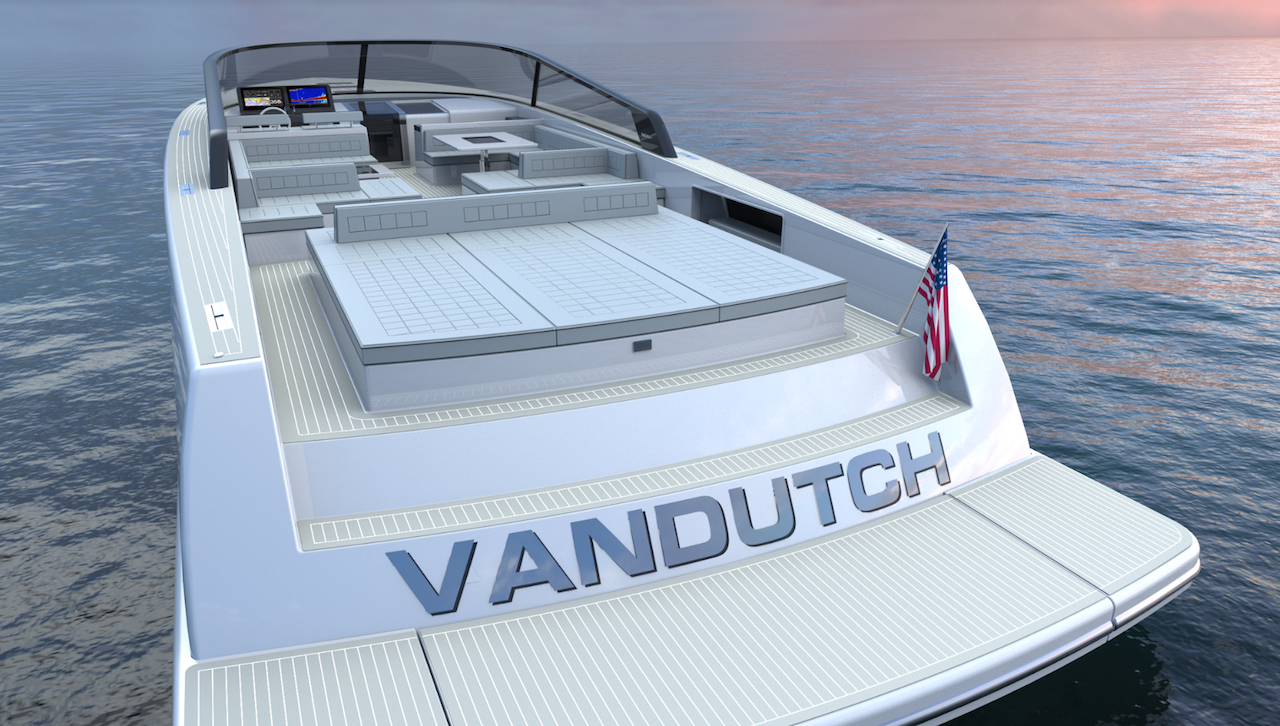 VanDutch · On the registerVanDutch 75LOA22.3mBeam4.92mTop Speed40knPrices on requestView on Superyacht Tenders →
For a more enclosed, weatherly take on the same length, look at the
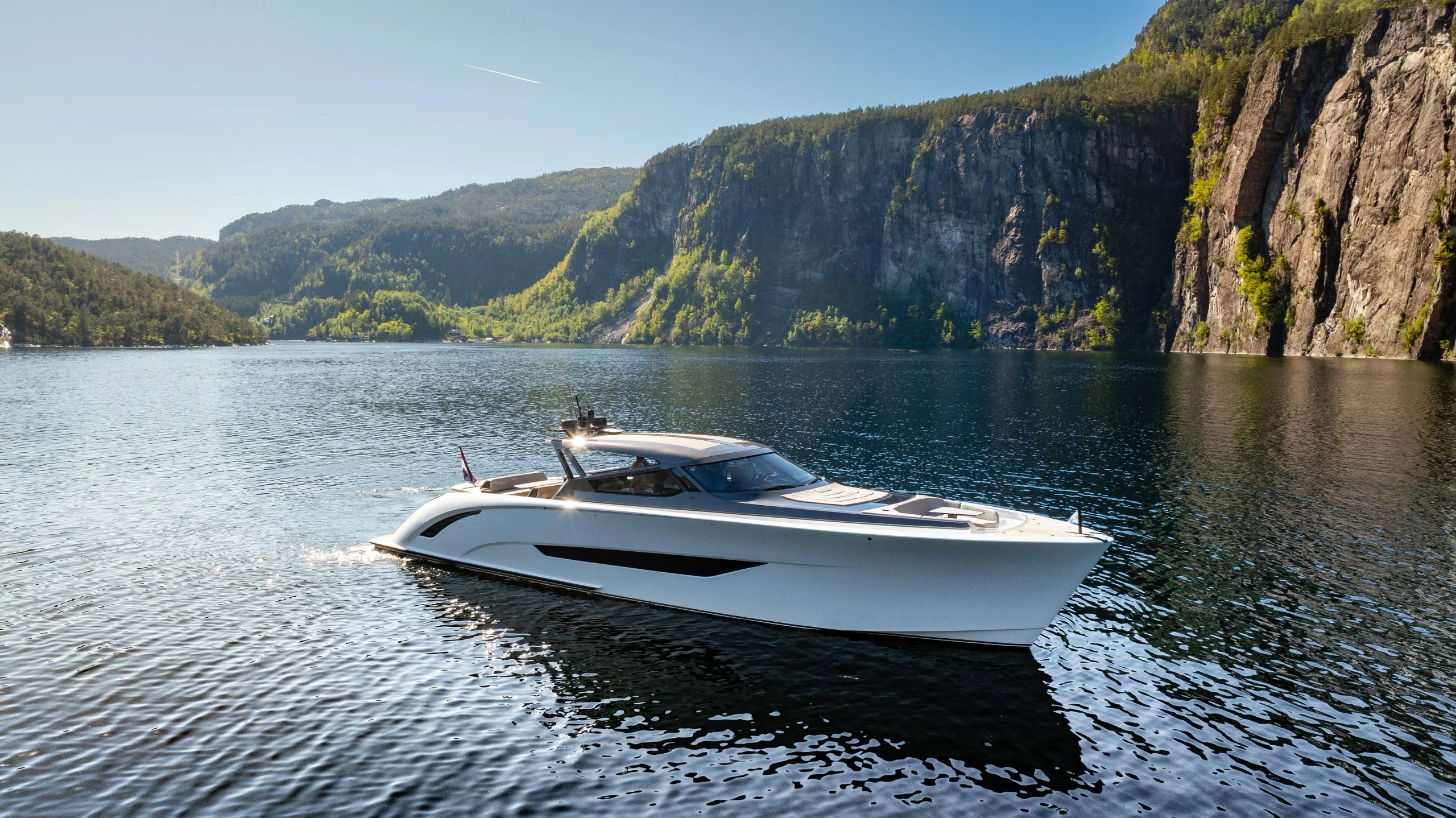 Wajer · On the registerWajer 77LOA23.4mBeam5.80mTop Speed37knPrices on requestView on Superyacht Tenders →
Tender and toy stowage, fuel and tankage
Where the toys live drives the deck plan as hard as the seating. A crane aft lets a chase boat carry and launch a small RIB or jet ski. Track systems and board racks keep wing foils, surfboards, and dive kit secure but quick to reach. The rule we use: every toy needs a home that does not block the working deck or the boarding route. If the kit ends up loose on the sole, the layout has failed.
Fuel follows the operating profile, not the length. A day-boat brief needs enough for a coastal round trip. A shuttling or expedition brief that follows the mothership on long legs needs far more, and that tankage changes the hull. The Vandal 60 Chase, for instance, carries enough for 700 nautical miles at a 30-knot cruise. More fuel means a deeper, heavier hull and less deck volume forward, so settle the range early. Larger tankage also shifts trim, which is a naval-architecture conversation, not an afterthought.
Open versus cabin
This is the layout decision owners agonise over, and the answer is set by the brief.
An open layout keeps the deck clear, low, and workable. It suits sport-fishing, diving, and water-sports, and it suits warm-climate day running. There is nowhere to shelter, which is the point: the whole boat is a working deck.
A cabin layout trades deck area for a head, a galley, berths, and shelter from weather. It suits expedition work, long transits, guest shuttling, and any programme that runs in poor conditions or carries non-crew for hours at a time. Several semi-production builders now offer the same hull in both forms, which is the clean way to resolve it: pick the hull, then pick the configuration the brief demands. The penalty for a cabin is always deck space and a little speed, so only buy the cabin you will use.
Helm and electronics
The helm is specified to the operating profile, not to a wish list. A coastal day boat needs a multifunction display, radar, AIS, autopilot, and VHF. A boat that runs in fog, at night, or offshore wants redundant displays, FLIR or thermal imaging, and a second VHF. Sport-fishing adds sonar, a fishfinder, and chartplotter overlays for marks. Expedition adds heated screens, robust ground tackle controls, and often a satellite link.
Keep two principles. First, the helmsman should reach everything without leaving the wheel at speed, because chase boats run fast and the sea state is rarely calm. Second, build in redundancy proportional to how far from help the boat operates. A boat that shadows the mothership inside VHF range can run leaner than one working a remote coast alone, where the crew has to be self-sufficient.
What we tell clients
Settle the brief before you talk hull. Be honest about the day plan, because the boat that tries to do everything does nothing well. Let the mission set the console position, fix the seating so it flexes, give every toy a home off the working deck, size the fuel to the real operating profile, and choose open or cabin on need rather than looks. Specify the helm to where the boat actually goes. Do that in order and the layout resolves itself. When you are ready to move from plan to purchase, read buying a chase boat, and if you are still weighing this against a garaged boat, compare it with the options at tenders.