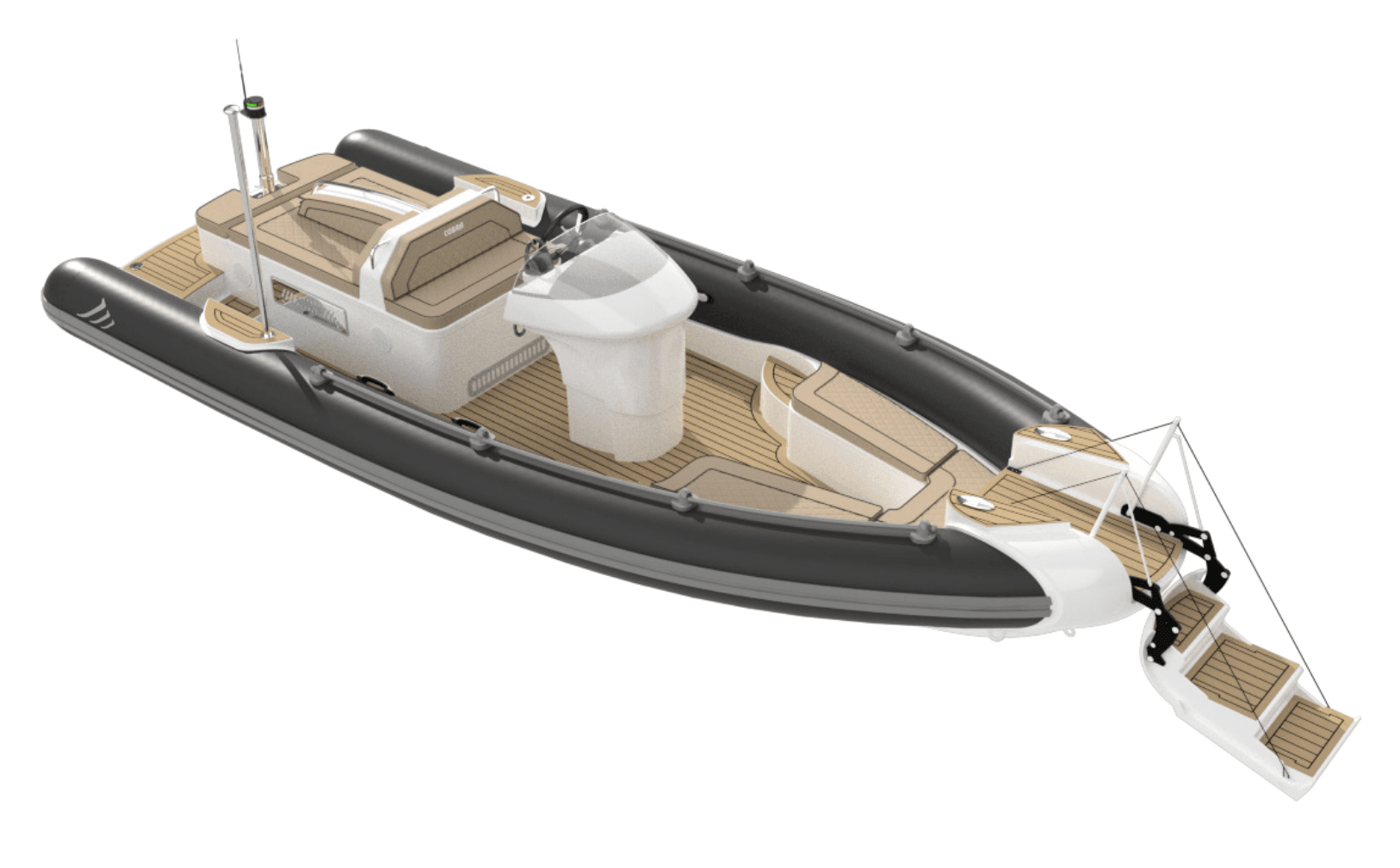
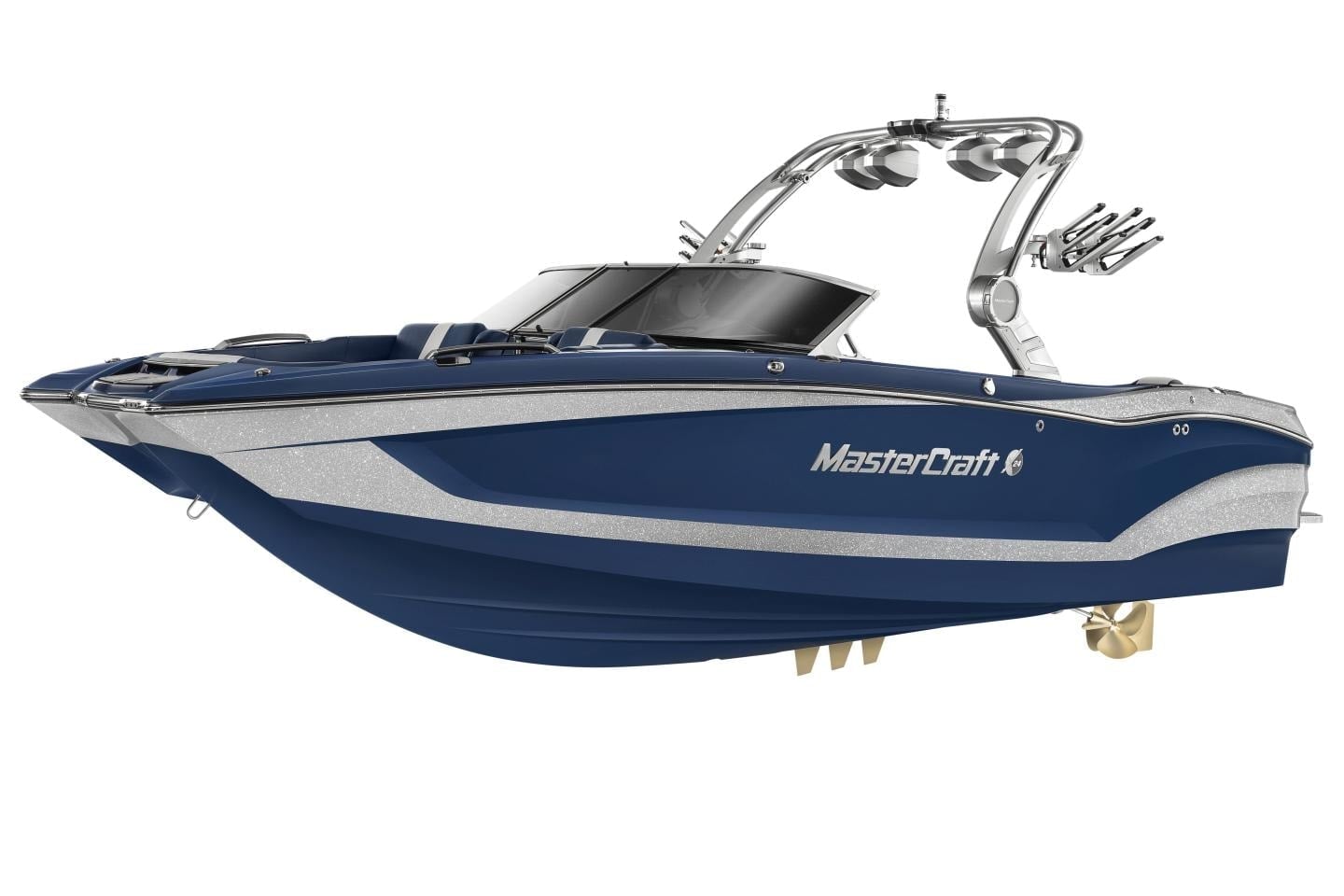
Shipping a superyacht tender starts with one decision: ship it separately, or deliver it aboard the mothership. From there the choices are the mode of transport, the cradle and lifting plan, the customs route and the marine transit insurance. Get those right and the boat arrives on time, undamaged and legally cleared into the destination. Get them wrong and the tender becomes the thing that holds up the whole programme.
Ship separately or deliver on the mothership
The first call is whether the tender travels in its own garage or on its own.
Delivering aboard the mothership is the simplest route when the timing works: the boat is already in its cradle, in its space, certified and commissioned, and it arrives wherever the yacht arrives. The catch is timing. A tender finished after the mothership has sailed, or built at a yard the yacht will not visit, has to travel separately.
Shipping separately is the answer when the boat is built away from the yacht, when it is finished on a different schedule, or when it is too large or too late to load aboard. It is the normal case for a new build delivered from a tender yard to a mothership in another part of the world. It is also how a boat moves to and from a refit yard. The decision sits inside the wider delivery programme; see lead times and delivery for how the dates line up.
Cradles and certified lifting points
Whatever the mode, the boat moves on a cradle and is lifted by its lifting points, and both have to be right.
- The cradle must support the hull correctly under transport loads, not just static weight. A cradle built for the garage is not always rated for road vibration or the working of a deck at sea. Confirm it is fit for the transport mode before the boat is loaded.
- Certified lifting points. The boat is craned on and off by its designed lifting eyes or slings, with a current lifting plan and certification. Lifting a heavy tender on improvised points is how hulls get damaged and people get hurt. If the certification is out of date, deal with it before the boat is anywhere near a crane.
Price the cradle and lifting plan into the shipping cost from the start. They are not an afterthought, and a boat that cannot be safely lifted or secured does not ship.
Modes of transport
The right mode is set by the boat's size, the route and the timing.
- Container. Smaller tenders, broadly up to around 6 to 7 metres depending on beam and height, ship inside a standard or open-top container. It is the cheapest and best-protected option where the boat fits.
- RoRo (roll-on, roll-off). The boat travels on its road trailer or cradle, driven on and off a vehicle deck. Good for many sizes on established routes, straightforward for handling.
- Breakbulk and deck cargo. Larger tenders ship as secured deck cargo or in the hold of a breakbulk vessel, lifted on and off by crane on the certified points. This is the route for boats too big to container, and the one where the cradle, lifting plan and securing matter most.
- Road. For moves within a region, including yard to port and port to mothership, the boat travels by low-loader. Oversize loads need permits and route planning.
Customs and temporary importation
Crossing a customs border is where unmanaged shipments stall. A tender moving between jurisdictions needs the right declarations and, often, a temporary importation route so the boat is not treated as a permanent import and taxed accordingly. The rules differ by territory and by whether the boat is sold, in transit, or returning. The detail for the common crossings is in importing a yacht tender into the EU and UK.
Handle the paperwork before the boat sails, not when it arrives. A tender held in a bonded yard while a declaration is sorted is a tender accruing storage fees and missing its slot alongside the yacht.
Marine transit insurance
The carrier's liability is limited and will not come close to the value of a high-spec tender. Arrange dedicated marine transit insurance on the boat's agreed value, covering it from collection to delivery, and covering the lifting, securing and any temporary storage along the way. Confirm the cover is in force before the boat moves, read what is excluded, and make sure the agreed value reflects the boat as fitted, not a base price. This is the single cheapest line in the whole shipment and the one not to economise on.
Where shipping sits in the programme
Shipping is not a standalone errand; it is a fixed link in the delivery chain, and it has a lead time of its own. Booking on a major route can take weeks, breakbulk space is not always available on demand, and customs clearance adds days at each end. Build the transport window into the delivery schedule from the start so the boat is not finished, certified and then stuck waiting for a vessel. The arrival also has to dovetail with commissioning and handover at the other end; see lead times and delivery for how the final stage runs.
Managing the move
A tender shipment touches the yard, the cradle maker, the shipping line, customs, the insurer and the receiving crew, and any one of them can stall the whole thing. We coordinate the move end to end, from the cradle and lifting plan to the customs route and the transit cover; see transport. Once the boat lands, delivery and commissioning takes it from the quay to working order alongside the yacht.