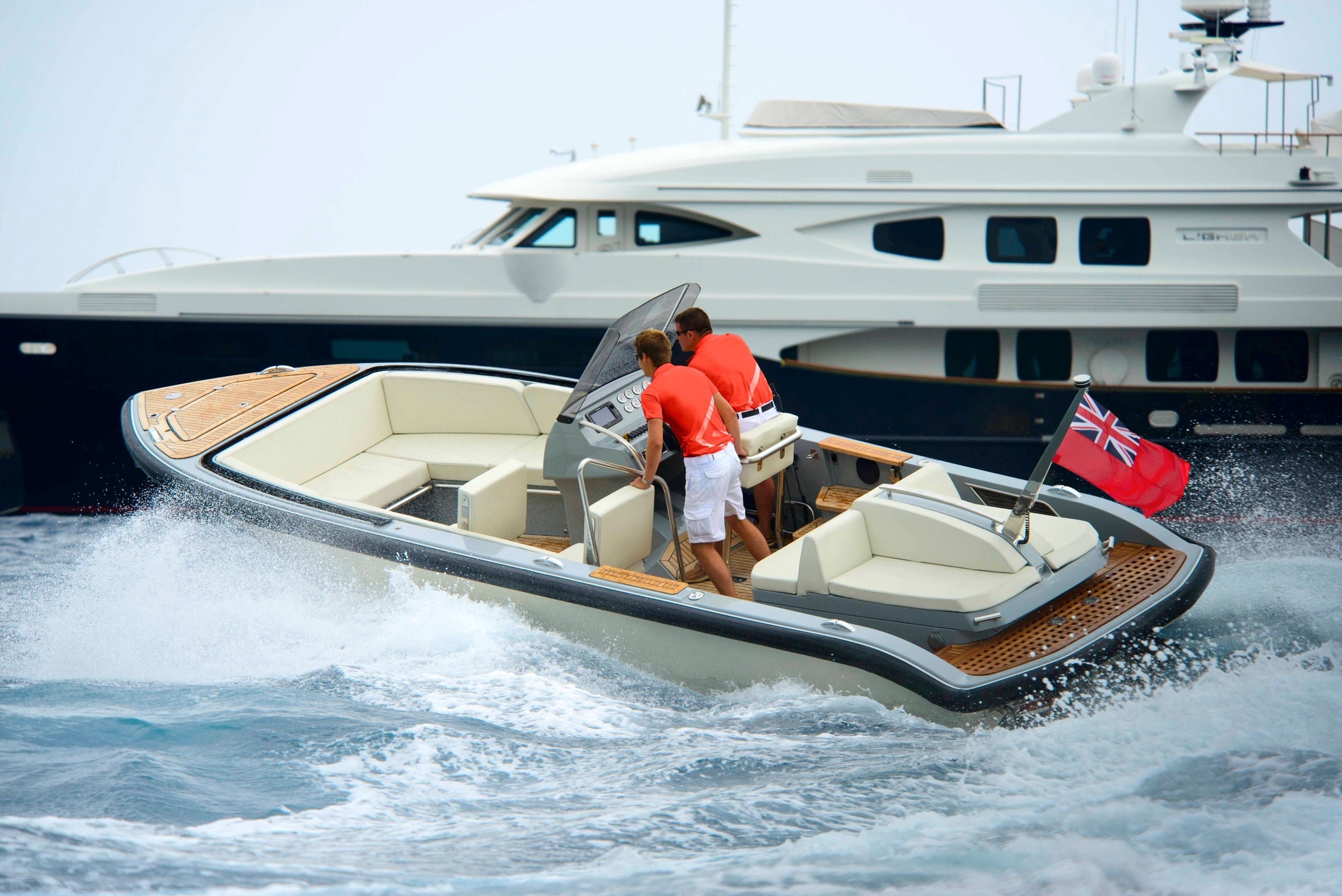
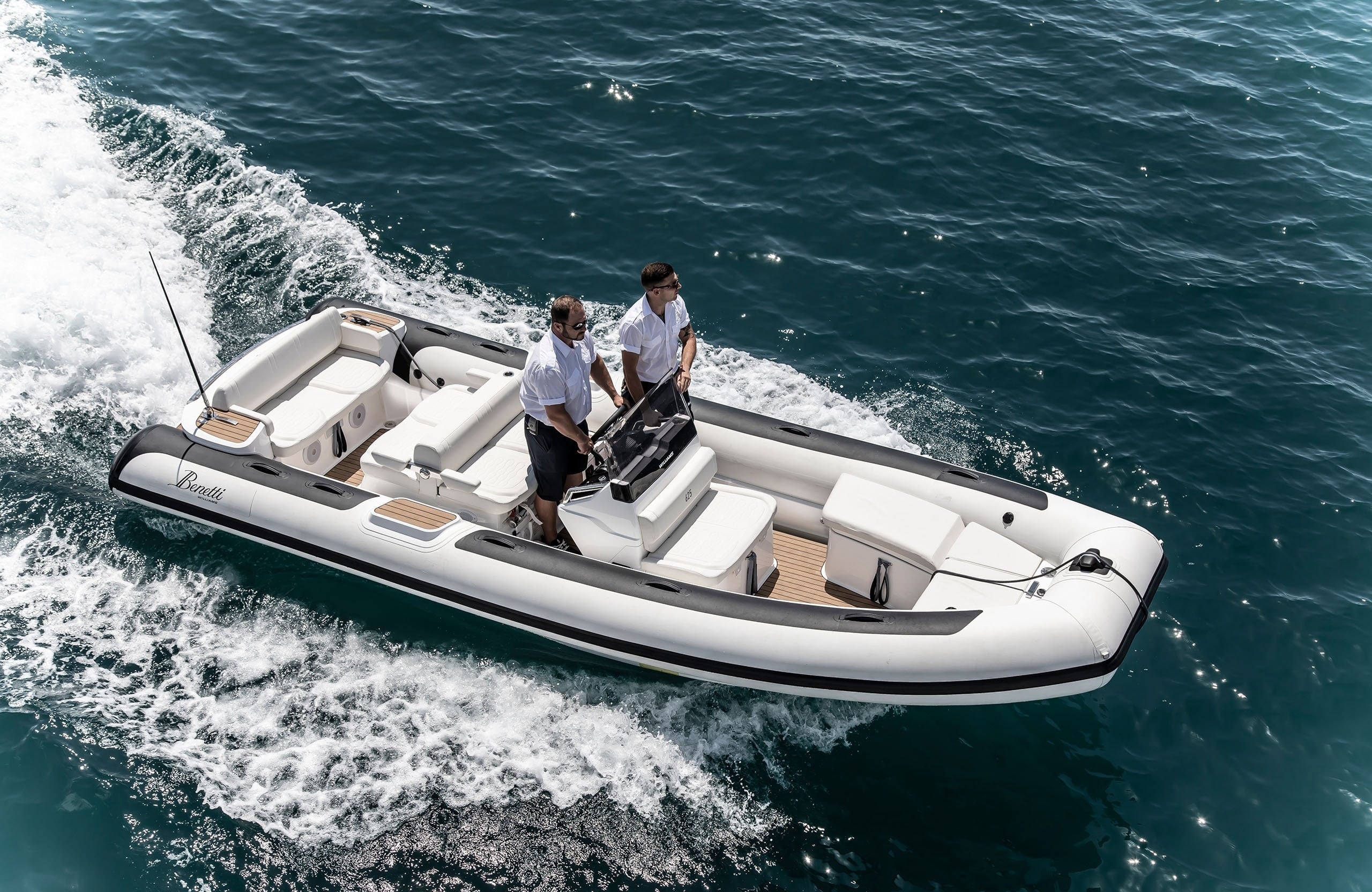
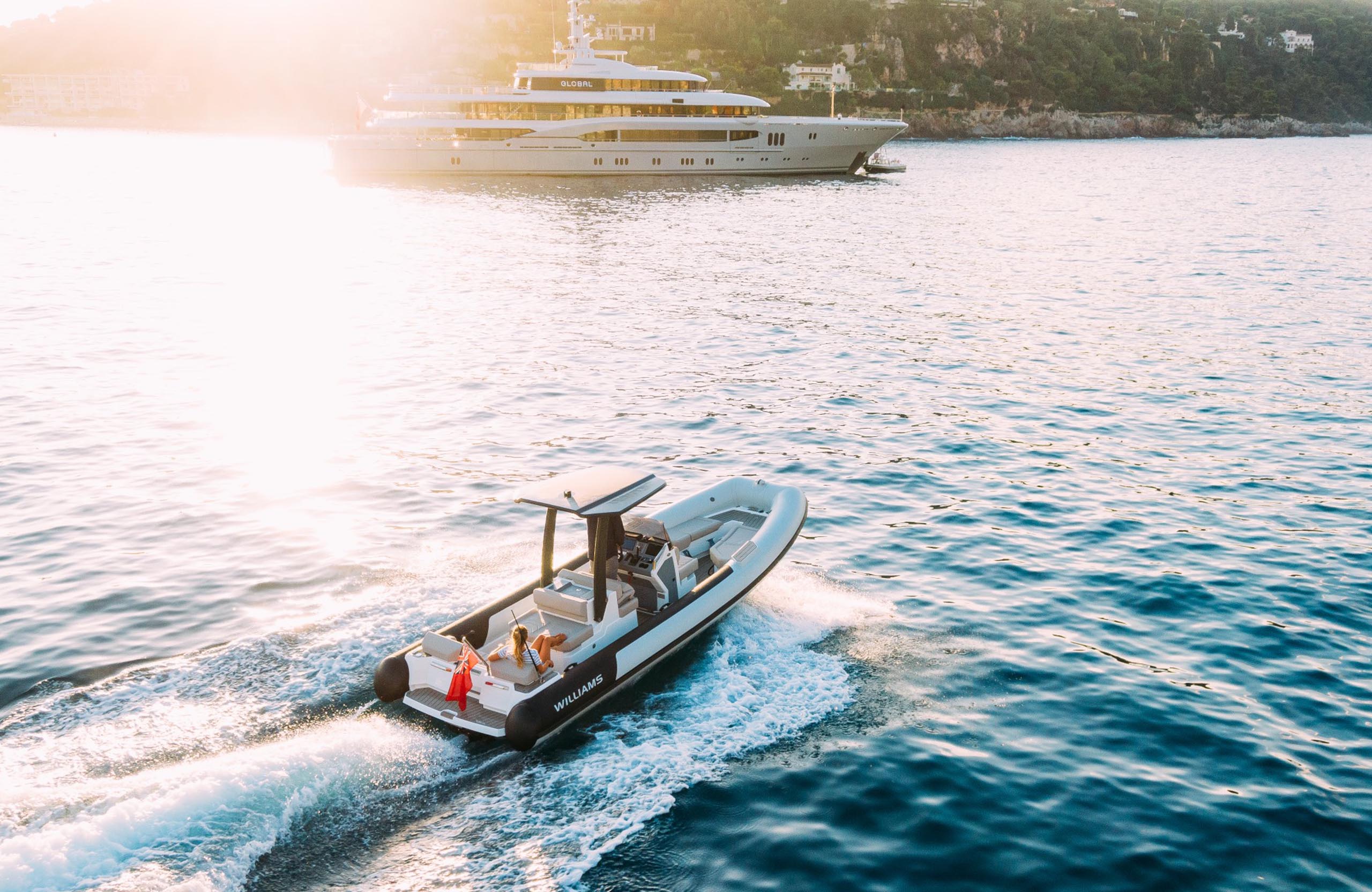
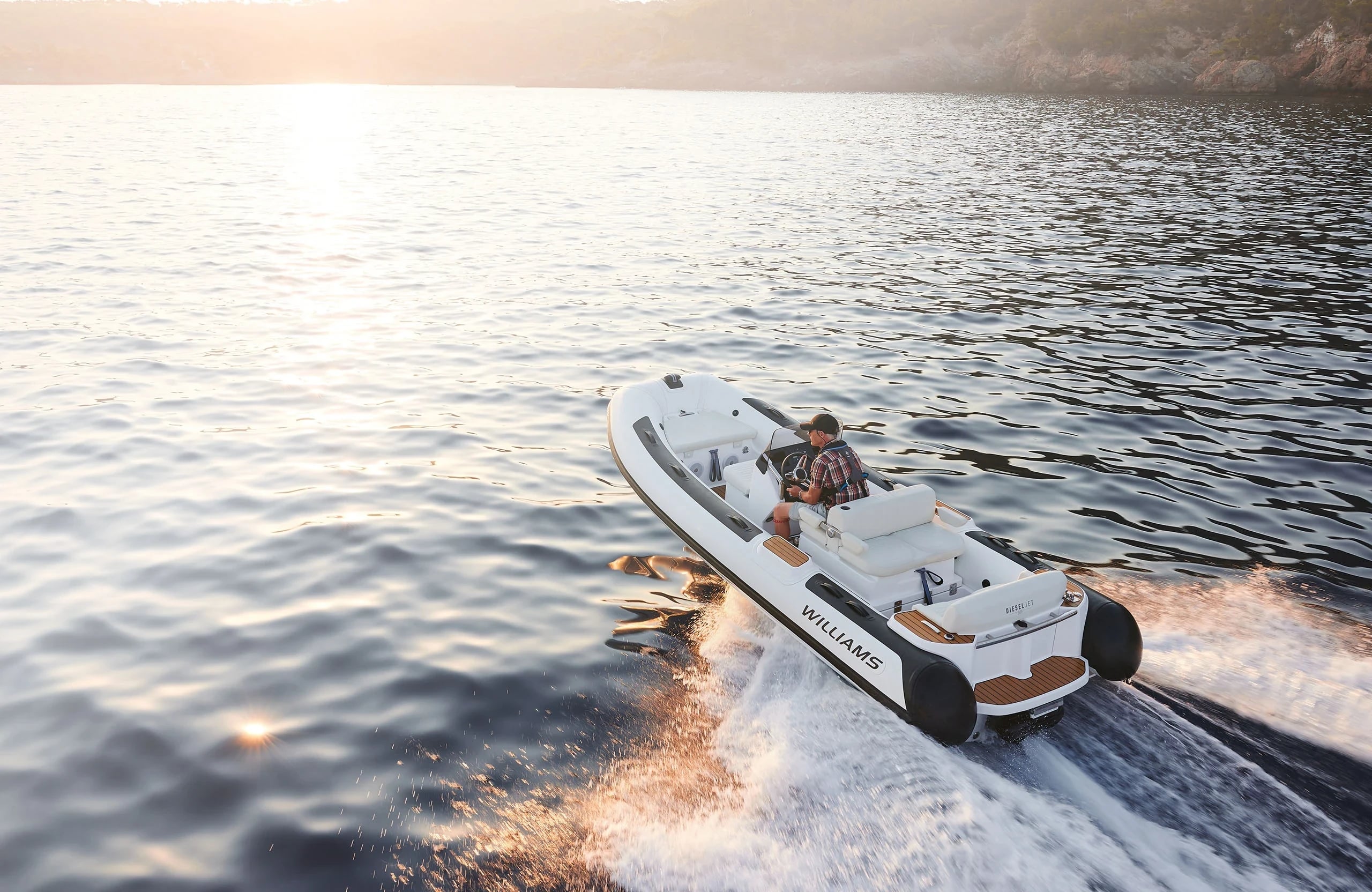
A yacht tender is a vessel for VAT and customs purposes, regardless of how small it is or how often it sits in a garage. Move it across the EU or UK customs border the wrong way and the bill is twenty per cent of the agreed value, plus duty, plus interest, plus a yard's worth of administrative time you did not budget for. Move it the right way and the friction is genuine paperwork rather than penalty exposure.
This guide is the operational version of the rules, focused on the situations that arise around tender purchase, delivery, and movement between the EU and UK. It is not legal advice, but it is the framework we use with clients before any cross-border tender transaction.
The two regimes you actually deal with
Since 1 January 2021 the EU and UK have been separate customs territories. A tender legally in free circulation in one is not automatically in free circulation in the other. The two regimes you will encounter are:
- EU customs and VAT. Governed by the Union Customs Code and member-state VAT law. The reference document for vessels is the Single Administrative Document (SAD), which records the import event and proves VAT-paid status.
- UK customs and VAT. HMRC rules under the Taxation (Cross-border Trade) Act and the post-Brexit border operating model. Returned Goods Relief (RGR) is the workhorse mechanism for boats that have travelled out of and back into the UK.
Anything you read about pre-2021 single-market positions is now historical context, not current procedure. Operate from the post-Brexit framework.
VAT-paid vs not-VAT-paid: getting the status right
Every tender on the market is in one of three positions.
- VAT-paid in the EU. Sometimes referred to as Union goods. The tender can move freely within the 27 member states without further VAT on movement. Proof is typically the original VAT invoice plus, ideally, a SAD or comparable customs declaration if the boat has ever left and returned.
- VAT-paid in the UK. Free circulation in the UK. Proof is the original UK VAT invoice or, for a re-imported boat, evidence accepted under RGR.
- Not VAT-paid in either jurisdiction. Typically a tender that has been in commercial use under a chartering structure, or one that has lived its life under temporary admission on a non-EU-flagged mothership. Importing it triggers VAT on the agreed customs value.
The status follows the boat, not the owner. A British buyer who acquires a VAT-paid EU tender in Antibes does not automatically end up with a UK VAT-paid boat. If the tender then moves to the UK, the import event happens at the UK border, and RGR will apply only if the documentary trail supports it.
For the tax economics of a tender purchase before any movement happens, see tender import VAT and tender finance and leasing.
Importing into the EU
The default route. A tender being delivered to an EU-based yacht for the first time, from a non-EU builder (US, UK post-Brexit, Asia), is a customs import.
What happens at the border
The tender enters under a SAD declaration prepared by a customs broker at the port or yard of arrival. VAT is calculated on the customs value (typically the contract price plus freight to the EU border) and paid before the boat is released for free circulation. Pleasure craft fall under tariff heading 8903 and the standard most-favoured-nation duty is commonly cited at around 1.7 per cent, but origin matters: US-built boats have faced a materially higher retaliatory tariff (reported at 25 per cent on US-origin craft) on import into the UK and EU, per Nicholson Yachts. Treat both figures as indicative and verify the current duty rate and the US-origin tariff status with EU customs, HMRC or a marine tax adviser before you contract; this is the single most expensive thing to get wrong on a US-built hull.
Three practical points.
- Choose the import jurisdiction deliberately. France, Italy, Malta, the Netherlands and Germany all process yacht imports routinely, and the procedural quality varies. Build managers tend to use the same set of brokers in each jurisdiction; ask for recommendations.
- Know the import VAT rate. It varies by member state, indicatively around 22 per cent in Italy, 20 per cent in France, 21 per cent in the Netherlands, 19 per cent in Germany and 18 per cent in Malta. Rates change, so verify the current standard rate for the chosen jurisdiction before structuring the import; the boat's eventual berth and the owner's tax structure matter, not just the choice of port.
- Document the value carefully. The contract price is the starting point. Builder's invoices, freight receipts, and any agency fees all sit in the customs value calculation. Get this right at the outset; correcting it later is expensive.
Temporary admission, in brief
A non-EU-resident owner with a non-EU-flagged yacht can use temporary admission (TA) to keep a tender in EU waters for up to 18 months per visit without paying VAT. Useful for yachts based outside the EU that visit Mediterranean waters seasonally. Three details owners routinely miss, and that we flag because the SERP rarely states them together:
- There is a cumulative lifetime cap. Beyond the 18-month-per-visit allowance, the Cruising Association reports an aggregate ceiling of around 10 years of total TA over the boat's life, irrespective of owner, per the Cruising Association. A tender that resets the clock every season is still accumulating against that cap.
- The 18 months can extend to 24 if the vessel is laid up and bonded with prior customs authorisation, and the boat may not be sold or substantially refitted while under TA, per Oceanskies.
- Resetting the period requires evidence of EU exit, a marina invoice or customs record outside the EU customs territory, not merely a claimed departure.
The mechanism does not work for EU-resident owners and is not appropriate for tenders operationally based in the EU year-round. Verify the current TA conditions and the lifetime cap with EU customs or a marine tax adviser before relying on it as anything other than a short-term relief.
Commercial yachts and VAT exemption
A tender attached to a commercially registered yacht engaged in genuine charter activity may qualify for VAT-exempt acquisition or import in some EU jurisdictions, under the relief that applies to vessels used for international transport. The rules tightened significantly post-2020, and the structures that were standard in the early 2010s no longer reliably work. Treat any commercial-exemption claim as a question for a yacht-tax specialist before you sign anything.
Importing into the UK
UK procedure post-Brexit splits cleanly into two cases: a fresh import (no prior UK status) and a re-import under Returned Goods Relief.
Fresh imports
A tender entering the UK for the first time enters under a customs declaration submitted via the Customs Declaration Service (CDS). UK VAT (currently 20 per cent) is calculated on the customs value at the border. Duty applies under the UK Global Tariff, commonly cited at around 1.7 per cent for most pleasure craft under heading 8903, but a US-built hull has faced a materially higher US-origin tariff (reported at 25 per cent), so verify the current rate and origin treatment with HMRC or a marine tax adviser rather than assuming the standard figure.
Separately from the customs entry, UK pleasure-craft arrivals and departures generally require a Simplified Pleasure Craft Report (sPCR) to Border Force online, per Nicholson Yachts; confirm the current requirement for the specific movement. For most yacht-tender deliveries, the broker handling the freight (or the yard taking delivery) will manage the declaration. The owner provides the contract documentation and the funds for VAT and duty.
Returned Goods Relief
RGR is the mechanism that prevents UK VAT being charged twice on the same boat. It applies when a vessel that was previously in UK free circulation returns to the UK after a period abroad.
The position eased in 2022, with a scope worth stating precisely because sources differ. PKF Francis Clark reports that the normal three-year RGR time limit was waived for privately owned recreational pleasure craft returning under unchanged ownership from 1 January 2022; brokers such as Nicholson Yachts still describe a three-year RGR window in the general case. Read the waiver as specific to private pleasure craft under continuous ownership, with the standard three-year limit otherwise applying, and verify the current RGR conditions for your circumstances with HMRC or a marine tax adviser. The core eligibility requirements are:
- The boat was previously in UK free circulation under the current ownership.
- It is being re-imported by the same owner for personal use.
- Documentary evidence of prior UK status exists (original VAT invoice, prior moorings, photos with dated context, customs entries).
Provided those tests are met, the boat returns under RGR with no further UK VAT. HMRC accepts "declaration by conduct" for recreational pleasure craft, meaning that simply arriving at a UK port can constitute a customs declaration; in practice, it is sensible to file a written declaration and keep the records.
What RGR will not do
RGR does not apply to:
- A boat being imported by a different owner from the one that exported it.
- A boat that has never had UK VAT-paid status.
- A boat that has been substantially modified abroad in a way that materially changes its character.
- Most commercial-use scenarios.
If any of these apply, you are in a fresh-import situation and the full UK VAT will be due.
Cross-border movement, day to day
Routine seasonal movement of a tender across the UK-EU border (boat lives on a yacht that crosses the Channel) is rarely a customs event in itself, because the yacht is the customs unit and the tender follows the yacht's status. The key is to keep the documentation aligned.
- Carry the VAT-paid evidence (original invoice or SAD) on board, both for the yacht and the tender if separately documented.
- If the tender is ever taken ashore for repair or sale on the wrong side of the border, the customs treatment changes immediately. Plan refits with the correct customs status in mind. The refit decision guide goes into more detail on yard selection.
- For a tender being sold while on the wrong side of the border from its VAT status, plan the transaction structure before the boat moves; correcting it after the fact is significantly harder.
Common mistakes we see
- Assuming a builder invoice equals VAT-paid status. It does not. The customs declaration is the document that matters.
- Buying an EU-VAT-paid tender, moving it to the UK, and assuming RGR will cover it. RGR is a UK relief and depends on prior UK status. An EU-VAT-paid boat being imported to the UK is a fresh UK import and full UK VAT applies.
- Letting the freight forwarder choose the import jurisdiction. They will route to whatever is convenient for them, not what is optimal for the owner's tax position.
- Skipping the tender on the customs paperwork at yacht delivery. Some yards have, in the past, treated the tender as included in the mothership's customs entry. This works only if the values are explicitly broken out. Ambiguity here surfaces years later, usually at sale.
- Relying on temporary admission as a long-term plan. It is an 18-month relief, not a structure. For a tender that operationally lives in EU waters, plan the proper import.
Working with brokers, lawyers, and tax advisors
A clean cross-border tender import involves three professionals. A customs broker handles the declaration. A yacht lawyer documents the transaction. A yacht-tax specialist (different from a general tax accountant) advises on structure. For tenders below EUR 500k some owners try to short-cut this; we have seen that go wrong often enough that we no longer recommend it. The professional fees are a small fraction of the VAT exposure.
If you are buying through us, we coordinate the trio. If you are working independently, allow eight to twelve weeks between contract signature and clearance for any cross-border delivery, and budget for advisor fees of EUR 5,000 to EUR 20,000 depending on complexity.