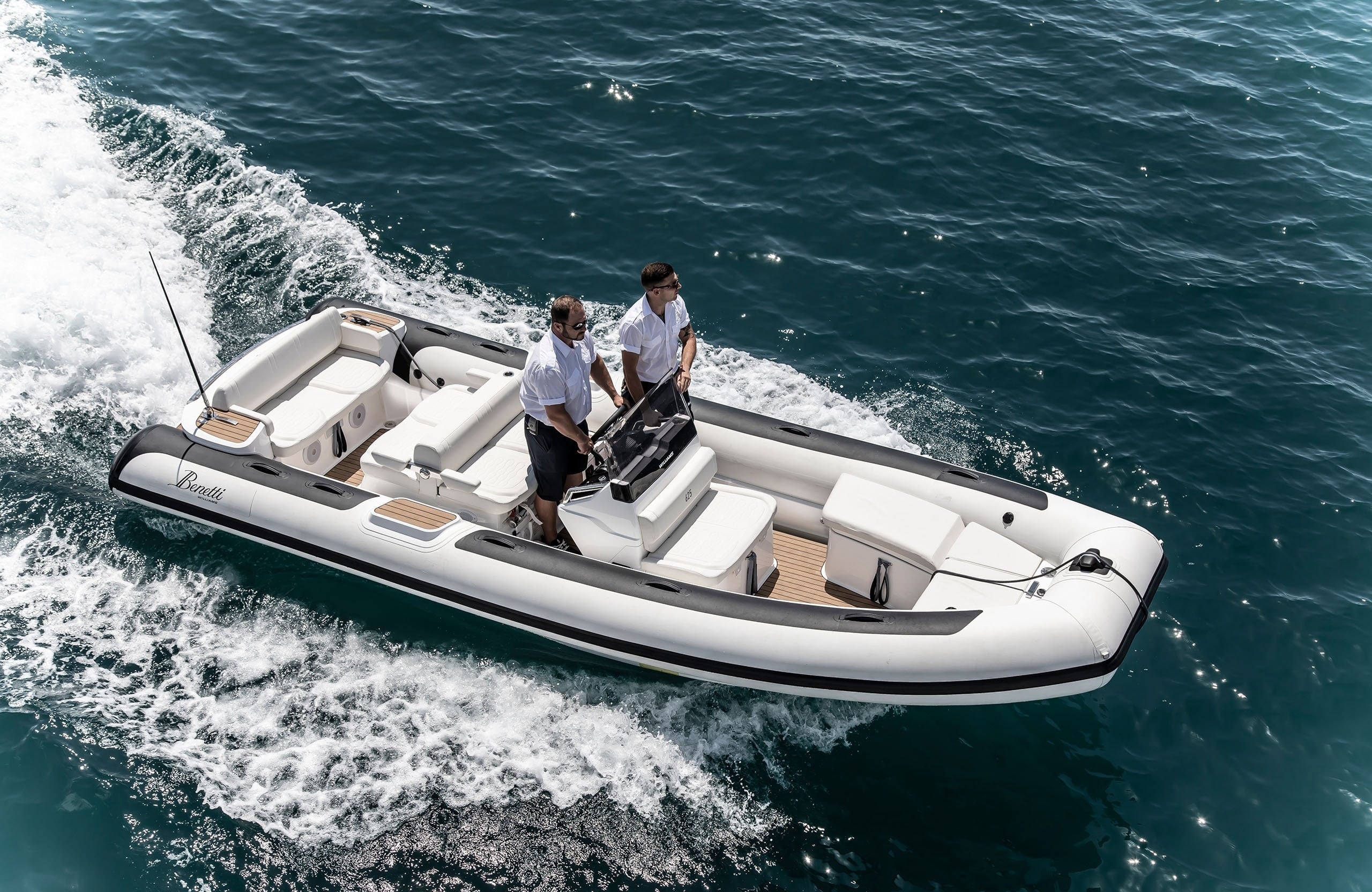
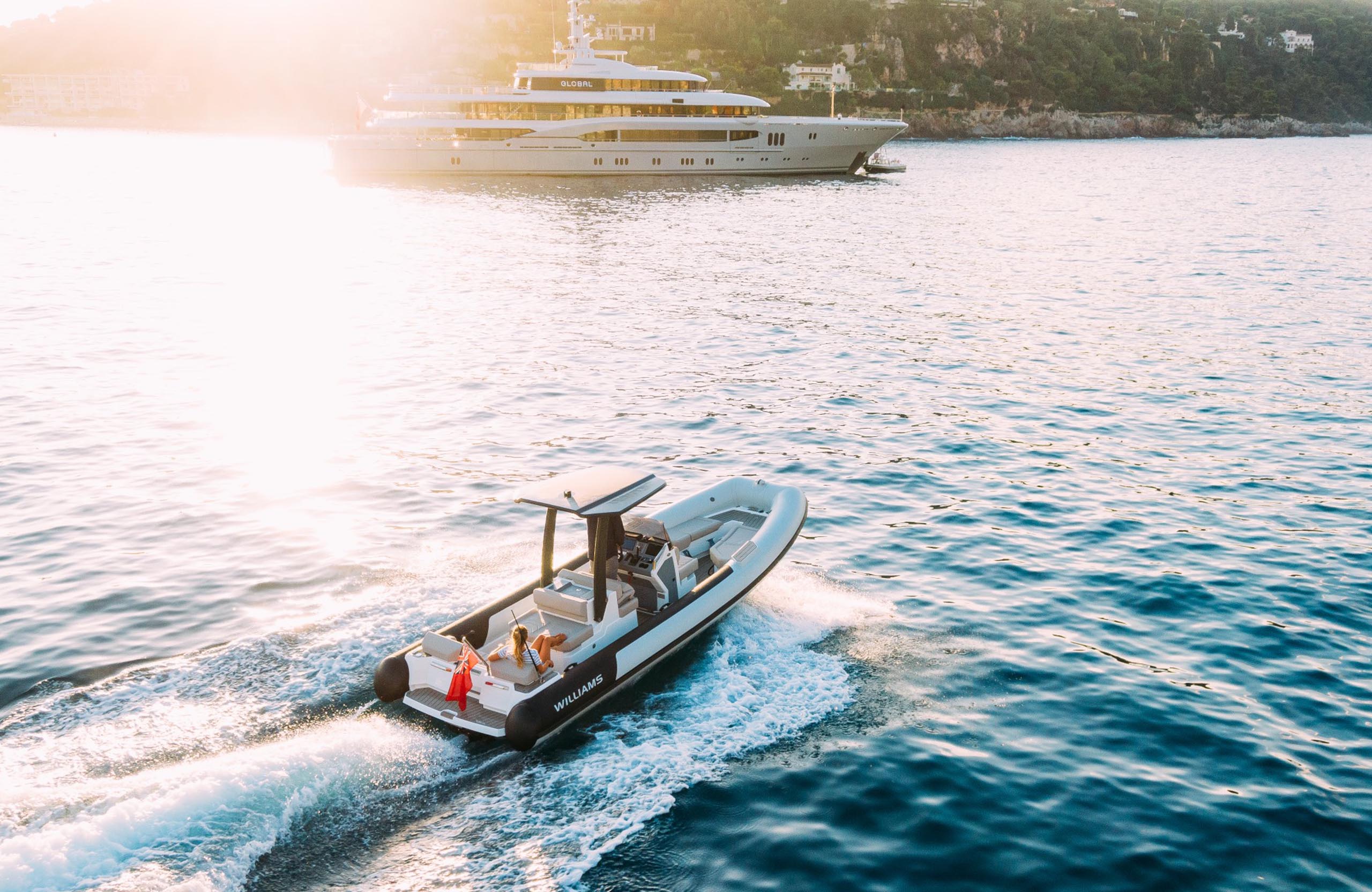
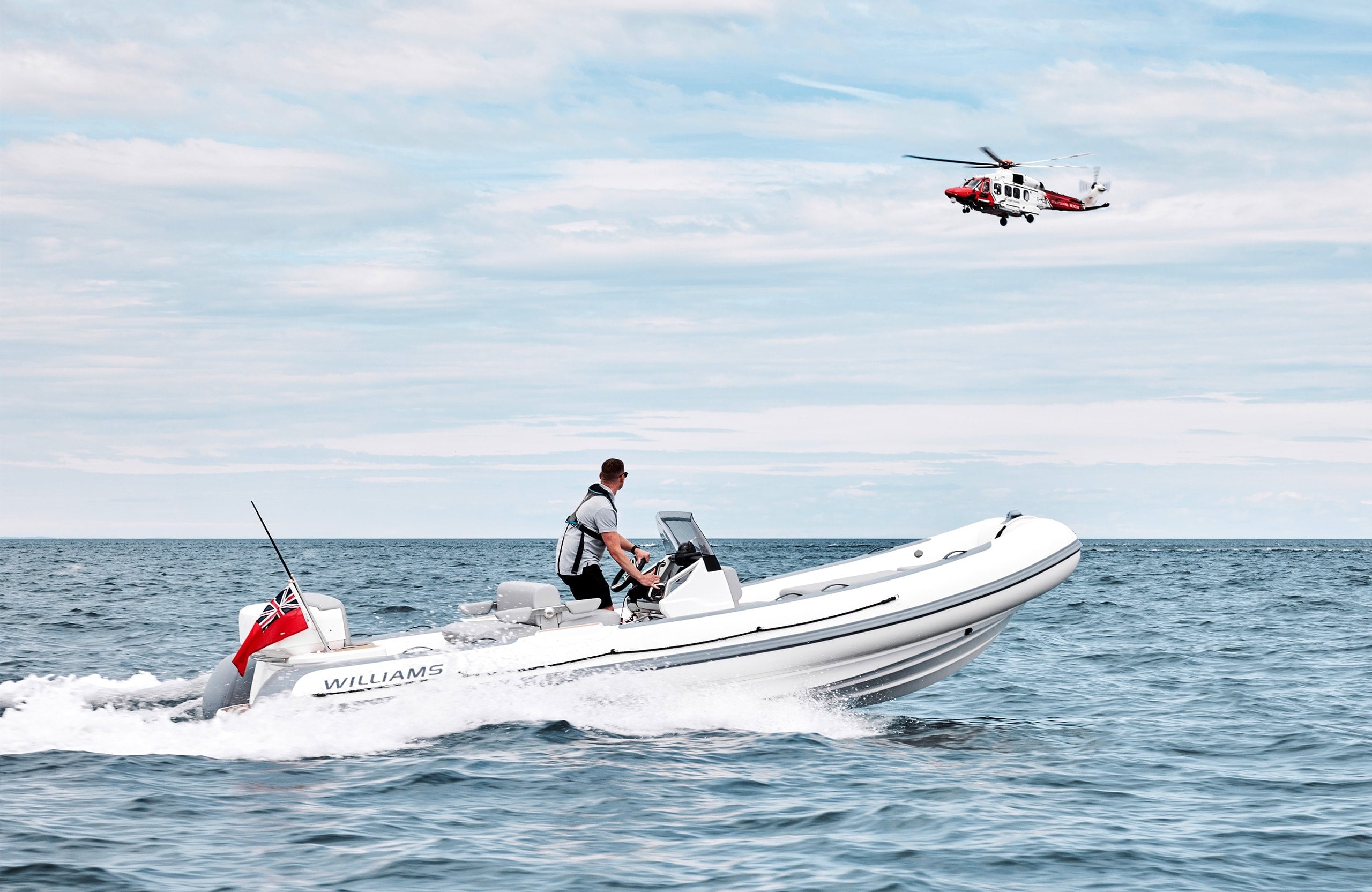
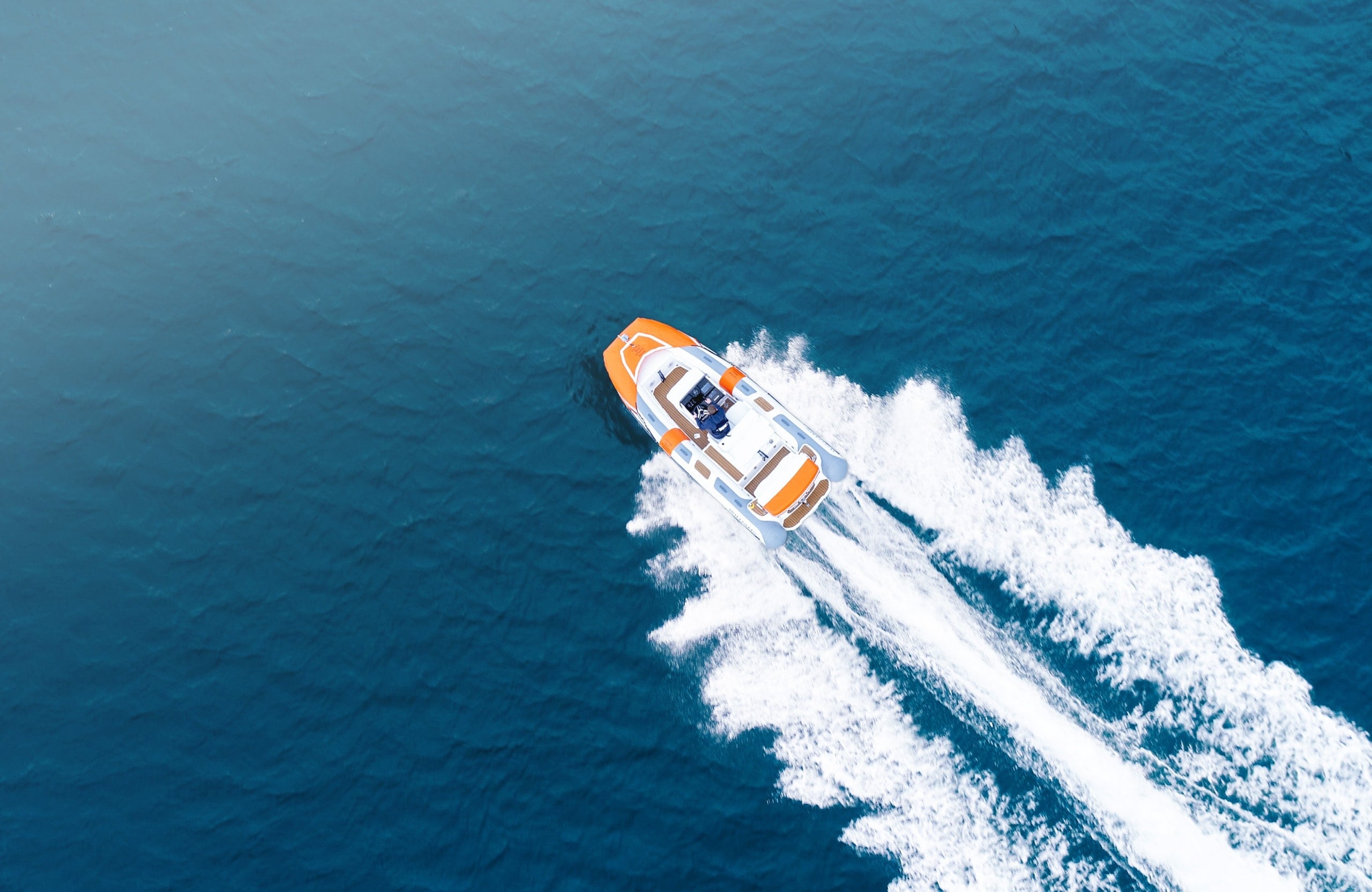
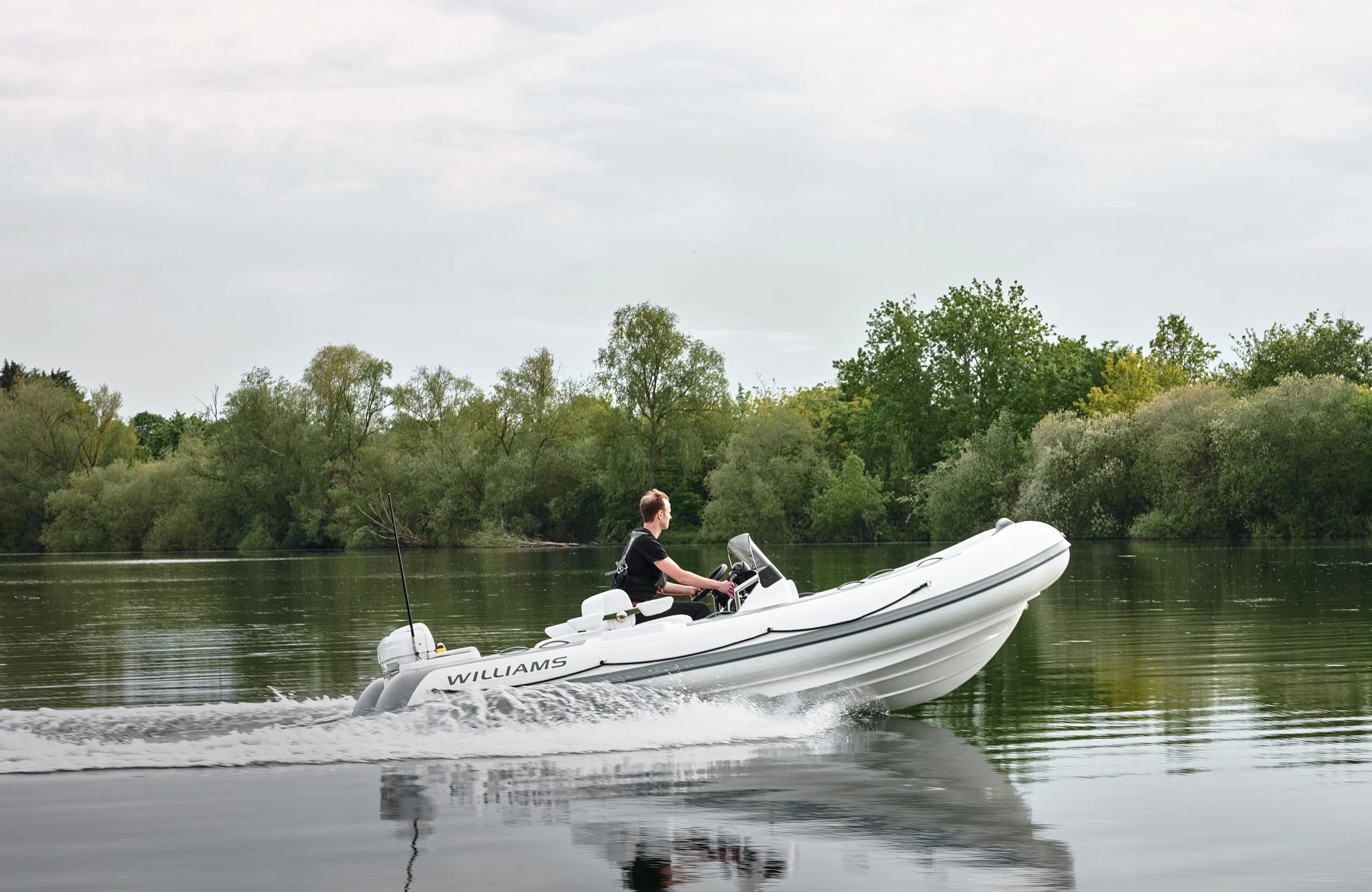
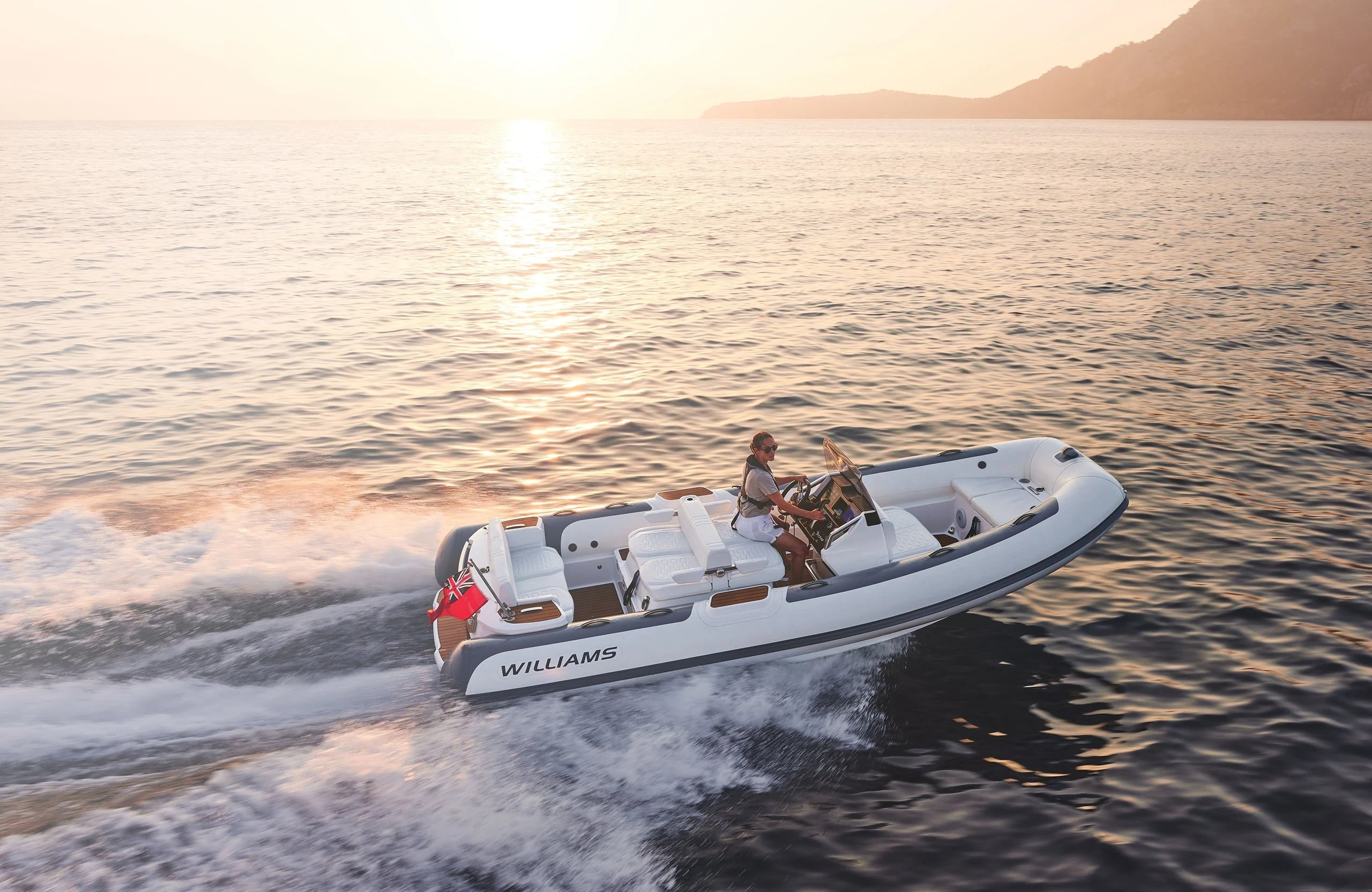
A jet tender uses a waterjet drive instead of a propeller. The category covers a wide spread, from the compact Williams DieselJet 285 used as a sub-3m garage tender on yachts down to 35m, through to 8m+ jet-driven RIBs running as guest tenders on 80m flagships. The shared property is the drive: water drawn through an inlet under the hull, accelerated through a pump, expelled through a steerable nozzle.
Why operators choose jet
Three reasons dominate:
- No exposed prop. The intake sits flush under the hull. Safer around swimmers, water-toy operations, and beach landings; tolerant of shallow water that would foul a propeller drive.
- Manoeuvrability. Reverse-bucket steering gives almost on-the-spot turning at low speed and clean docking control once the helmsman has learned the boat.
- Garage compatibility. The flat underbelly and absence of running gear below the keel line keeps depth to a minimum, which matters in the height-constrained tender garages on most superyachts under 60m.
Where jet drives have trade-offs
- Fuel efficiency. Jets are typically less efficient than a sterndrive or shaft-driven boat at cruise, especially in the diesel-jet sizes. The hit is biggest at displacement speeds and shrinks at planing speeds.
- Low-speed control in cross-wind. A jet has no thrust below the helm-input threshold; in tight marina manoeuvres in a cross-wind, sterndrive owners often prefer the always-on prop bite.
- Maintenance. Jet impellers are vulnerable to debris ingestion (rope, weed, plastic). Annual inspection is mandatory; replacement is not free.
Categories within jet tenders
Three sub-categories show up in superyacht briefs:
- Williams DieselJet range. Compact garage tenders, 2.85m to 7.5m. The volume player in the segment; almost every yacht garage built since 2010 has a Williams in mind. Diesel-powered (Yanmar 4LV most commonly), low fire risk, easy yard-side fuelling.
- Castoldi Jet range. Italian-built, larger than Williams (5m to 14m), often specified as guest limousines or beach landers with the Castoldi 320 jet.
- Custom RIB or hard-bottom jet builds. SACS, Pirelli, Novamarine, ZAR, and increasingly Brabus building 8m to 12m guest tenders with twin or triple Mercury jet outboards. These are sport tenders dressed for chase duty.
How to spec a jet tender
Three questions front-load the decision:
- What's the garage envelope? Length, beam, and headroom. Williams sizes most commonly map to 30m to 50m yachts; the larger Castoldi jets to 50m+. Beyond 7m the jet category narrows quickly.
- Diesel or petrol? Diesel for compliance with mothership fuel storage rules (almost universal above ~50m); petrol acceptable on smaller yachts where fire-safety regulations are looser.
- Single or twin? Single jet works for the smaller Williams-class boats. Twin jets, more controllable for guest-facing duty, are standard on the larger Castoldi and custom platforms.
Where it sits against alternatives
If the brief is "smallest possible tender that fits a tight garage and runs safely around the swim platform", a Williams DieselJet wins almost every time. If the brief is "guest day boat with serious range and a more refined ride", a sterndrive or outboard platform usually wins on fuel and on cruise comfort. The tender vs chase boat comparison covers the broader category split.
See also
- Williams Jet Tenders builder page
- Castoldi builder page
- Tender garage sizing
- Tender specification guide
Sources
- Williams official site — Williams
- Castoldi official site — Castoldi
- Brabus official site — Brabus
- Novamarine official site — Novamarine
- Pirelli official site — Pirelli
- Strider 10 | Sacs Marine — SACS (retrieved May 2026)
- Rebel 40, Sacs Marine — SACS (retrieved May 2026)
- Strider 13, Sacs Marine — SACS (retrieved May 2026)