A tender is the part of a superyacht programme most likely to touch another boat, a swimmer, or a dock, and it is also the part owners most often assume is automatically covered. It usually is, up to a point. The honest answer is that a tender sits in one of two places: under the mothership's hull and machinery policy as a declared item, or on its own standalone policy. Which one is correct depends on how the tender is registered, how far it travels from the yacht, and whether anyone is paying to be on board. Get that wrong and a claim that should be routine becomes a dispute. This guide sets out where the line falls and what moves it.
Under the mothership policy or standalone
For most private programmes the tender is declared on the yacht's hull and machinery policy and covered under the all-risks clause alongside the other equipment, toys, and accessories. That is the simplest arrangement and, for a tender that lives in the garage and runs beach trips within sight of the yacht, it is usually enough. The point to check, and the one owners skip, is the actual extent of cover when the tender is away from the mothership. Pantaenius makes the same point in its tender insurance guidance: review in detail the extent of the cover within the all-risks clause, because that is where the gaps hide.
A tender needs its own policy, or at least a specifically worded extension, when any of the following is true. It is registered separately from the yacht. It is large or fast enough to be operated as an independent day boat. It routinely travels beyond the radius the hull policy contemplates. Or its declared value is high enough that the owner wants a dedicated limit and deductible rather than sharing the yacht's. The bigger and more capable the tender, the more the case for standalone cover grows. A boat like the 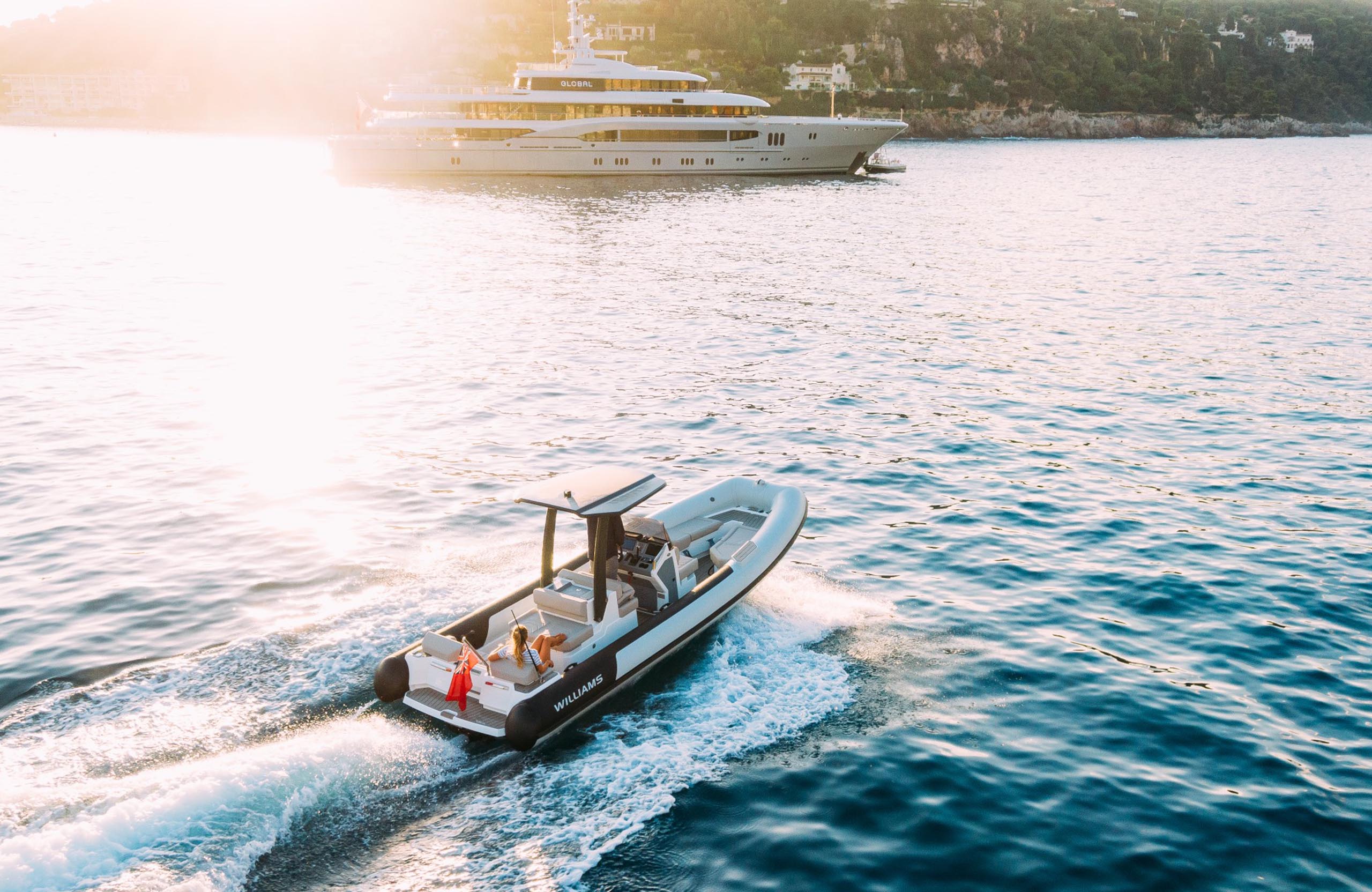 Williams · On the registerWilliams EvoJet 70LOA7.1mBeam2.65mTop Speed35knPrices on requestView on Superyacht Tenders → behaves more like a sportsboat than a ship's launch, and insurers treat it accordingly. The same logic that pushes a fast independent day boat onto its own policy is exactly what separates a tender from a chase boat, which is almost always insured in its own right.
What changes for commercial and charter use
The single biggest variable is whether anyone pays to be aboard. A private-use policy is priced and worded for the owner, family, and guests. The moment the yacht enters the charter market, the tender's exposure changes in kind, not just degree. Paying guests carry higher liability expectations, the tender works harder and longer through a season, and the watersports programme runs at full tilt. A private policy does not contemplate any of that.
Charter and commercial use require a commercial endorsement, higher third party liability limits, and confirmation that the cover follows the tender during charter operations rather than lapsing the instant a guest steps aboard. This sits alongside the broader classification and coding rules that already apply once a tender is used commercially. Treat the insurance review as part of the same exercise: if the boat is coded for charter, the policy has to match.
Watersports and third party liability
Liability is where tender claims are won and lost. As Pantaenius puts it, sufficient liability insurance for the tender is vital, because this is where accidents happen. Tenders see heavy use, often in crowded anchorages, sometimes at speed, and the people most at risk are not on board: swimmers, paddleboarders, other tenders, and divers in the water.
Add watersports and the exposure widens again. Towing toys, jet skis, foiling boards, inflatables, and dive operations each introduce their own liability, and a standard hull all-risks clause does not always extend to them. Watersports liability needs to be named in the policy, not assumed. Check three things specifically: that aquatic and aerial toys are covered when towed or operated from the tender, that recreational diving is included if guests dive from it, and that the third party limit is high enough for a serious injury claim rather than a scratched gelcoat. The cost of getting this wrong dwarfs the cost of the tender itself.
Named operators and crew
Insurers care a great deal about who is at the helm. The expectation is that the tender is piloted by an experienced crew member, and many policies go further and name the permitted operators or require a minimum qualification. Letting a guest drive when the policy does not allow it is one of the cleaner ways to have a claim declined.
In practice that means the deckhand running the tender should hold the relevant powerboat ticket, typically an RYA Powerboat Level 2 with a commercial endorsement for charter work, plus the supporting STCW safety, first aid, sea survival, and VHF certificates. A separate jet ski or PWC qualification is expected if the watersports programme includes them. For charter yachts over 24 metres, STCW Basic Safety Training is already mandatory for crew, so the tickets the insurer wants tend to overlap with what the flag state requires anyway. Whether guests may ever operate the tender depends on flag state rules, local waters, and, critically, whether the insurer agrees in writing. Do not assume.
Survey and what the insurer wants to see
A tender that is custom, high value, or unusual in any way should be appraised and that appraisal sent to the broker before the policy is bound. It clarifies the agreed value, the deductible, and the conditions of use, and it prevents the argument about what the boat actually was after a loss. For standalone cover on a larger tender, expect the same survey discipline applied to any insured hull: a condition survey at the outset and at intervals the insurer sets, with valuation kept current. We cover the inspection side in detail in the tender insurance and survey trials guide.
The survey also feeds the specification record the policy relies on. An accurate account of length, engines, declared value, and intended use is the foundation of the whole arrangement, which is why it pays to keep the specification and any import and VAT paperwork in order from the start. A vague declaration is a slow claim.
What we tell clients
Start with one question: where does this tender go, and who is on it. If it is a modest boat that stays near a privately used yacht, declare it properly on the hull policy, confirm the all-risks clause follows it off the mothership, and move on. If it is fast, valuable, separately registered, used commercially, or working a charter season, put it on its own footing with a commercial endorsement, real third party limits, named watersports cover, and a named, qualified operator. The decision tracks the same logic as choosing the tender in the first place: match the cover to the job the boat actually does, not the job you assumed it would do. The cheapest version of this conversation happens before the season, not after a claim. The full range sits on the superyacht tenders overview.