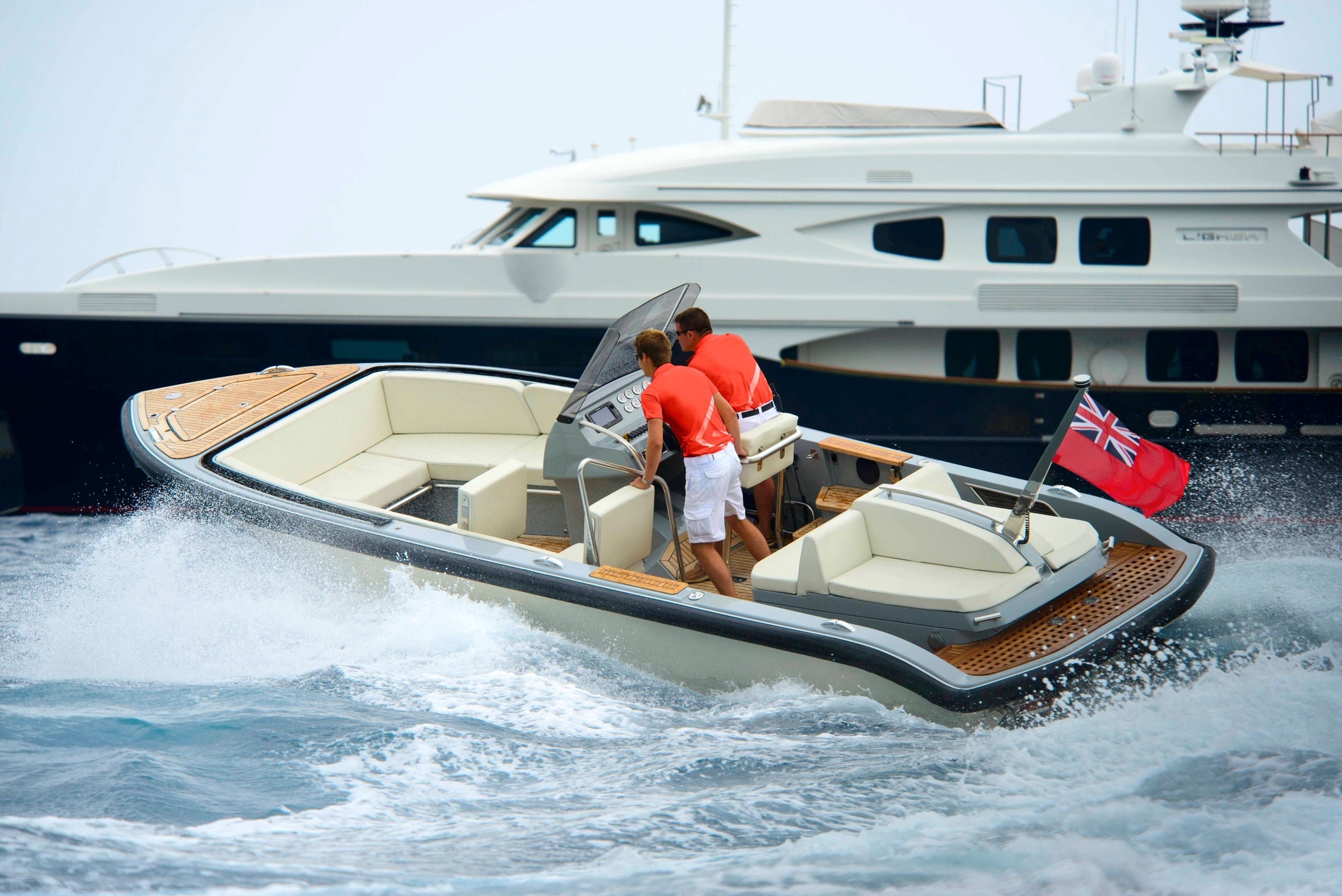
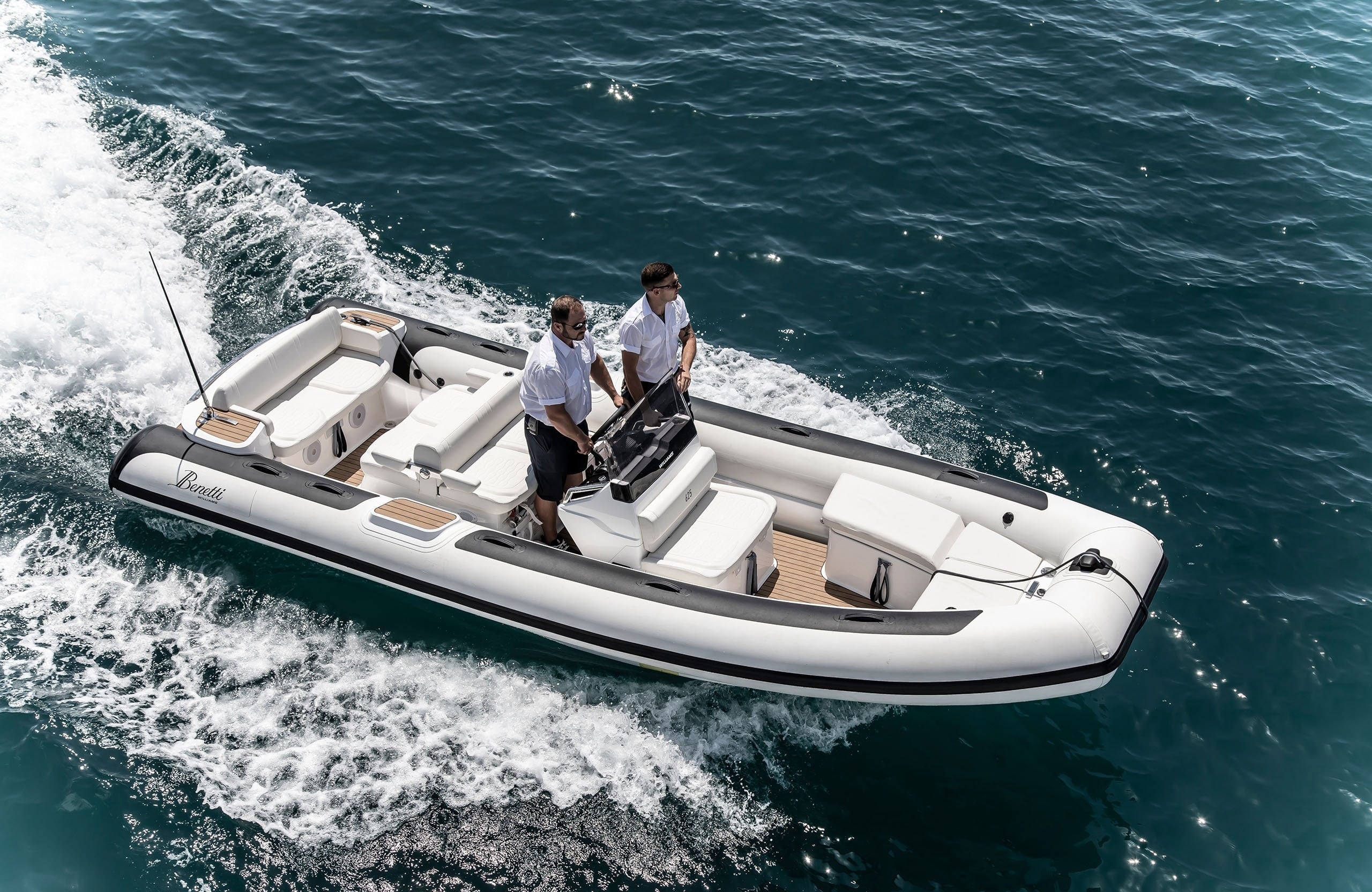
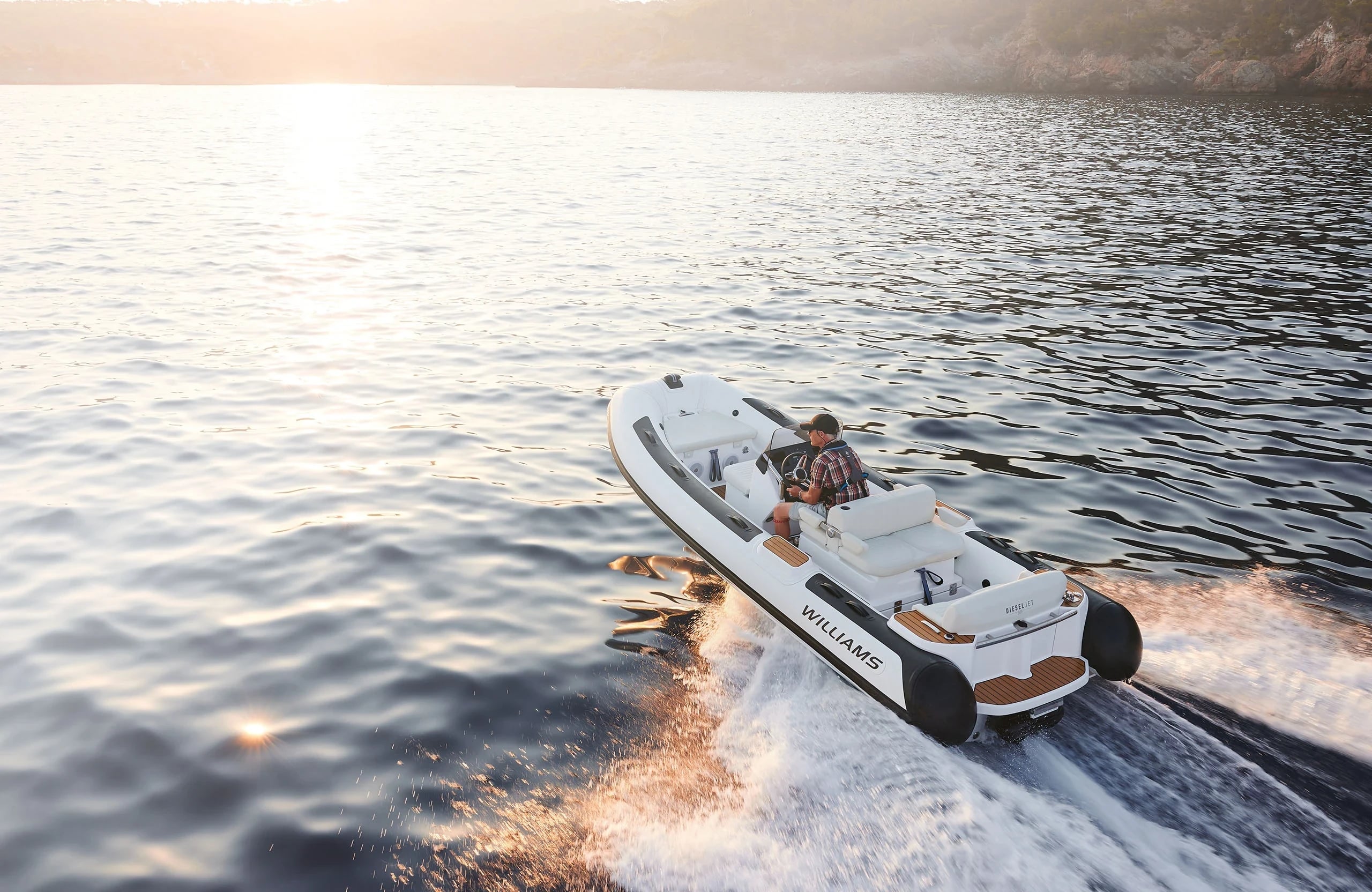
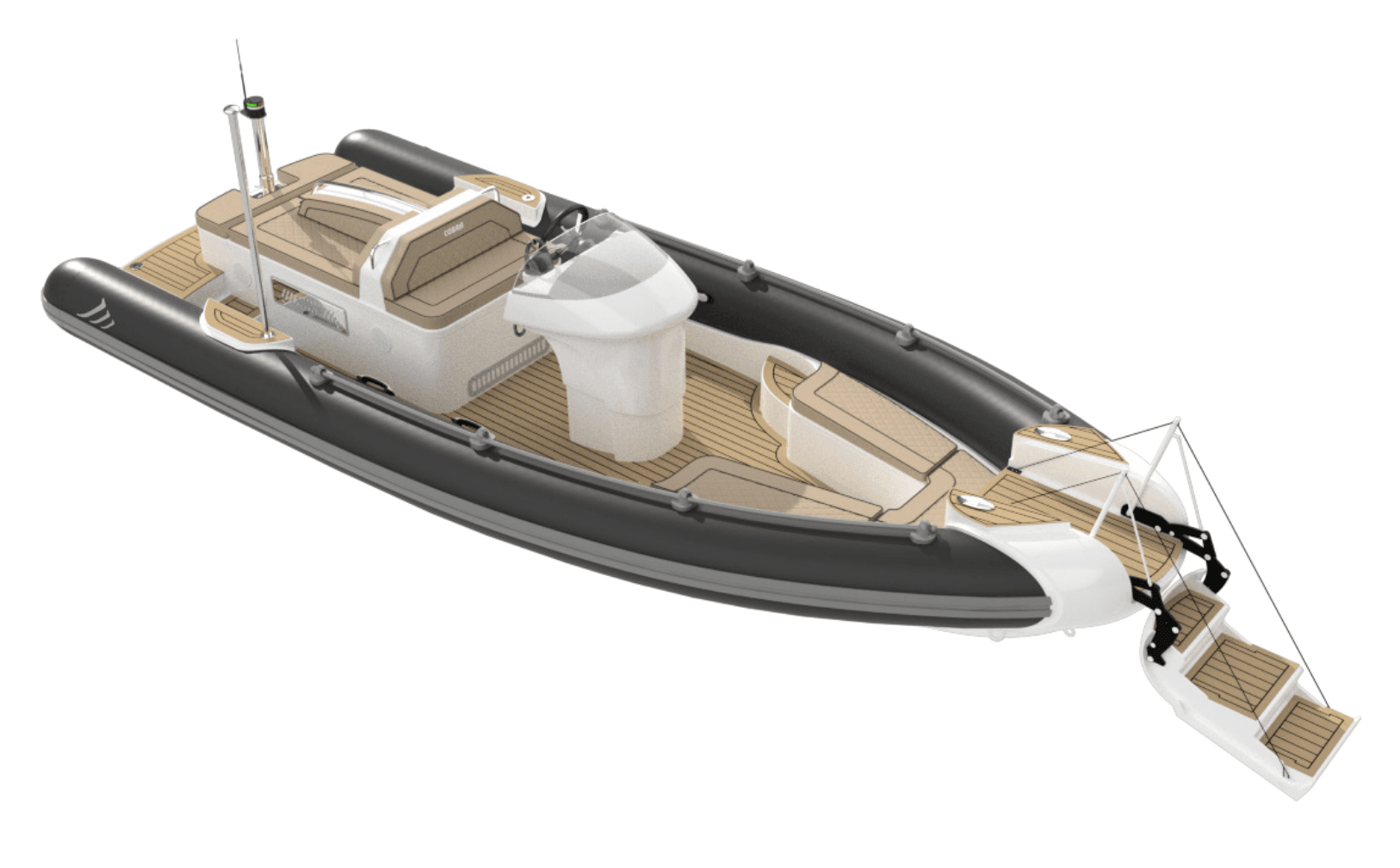
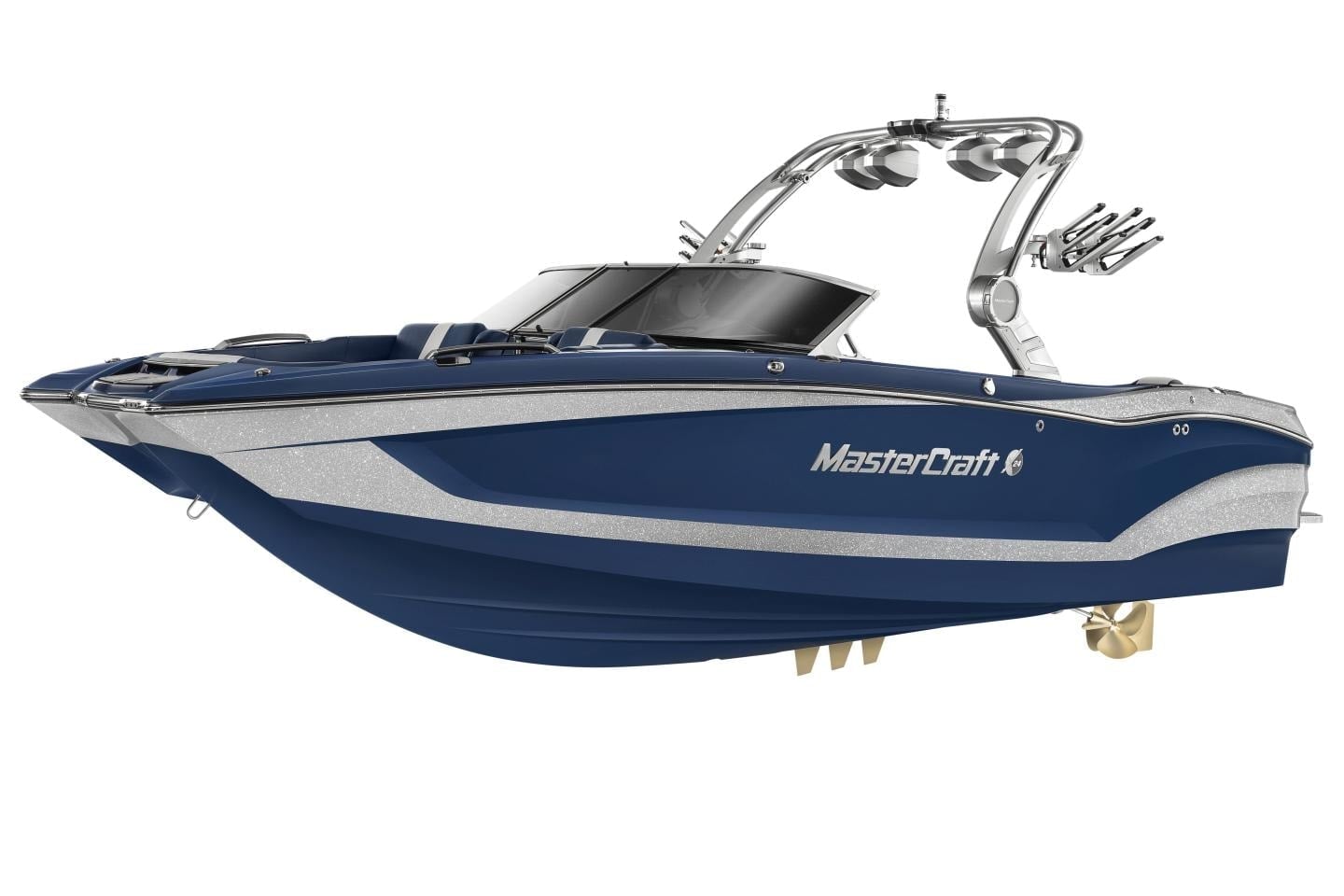
A tender that has carried owners and guests for eight or ten seasons is rarely worn out. It is, however, almost always out of step with the platform it lives on. The yacht has been repainted, the interior has been refreshed, the AV stack has been replaced twice. The tender, meanwhile, has the same engines it left the factory with, a gelcoat that has gone matt at the rubrails, and an upholstery palette that no longer matches anything. The question on the table is whether to spend on a refit, or whether the money is better directed at a new build or a younger used hull.
This guide walks through the decision the way we work through it with owners and project managers, on a hull-by-hull basis, when the boat goes into winter storage.
The honest starting point: why most tenders get refitted too late
Refit work on tenders sits in an awkward gap. It is too small to attract the attention of a yard that is busy with a 60m mothership, and too specialised to leave with a general boat-repair shop. As a result, the work tends to get deferred until the boat looks visibly tired, by which point the cost has crept beyond what most owners expected.
Industry refit data is consistent on the broader pattern. Boat International puts the typical mid-life mothership refit window at 8 to 12 years after build, and notes that around 70 per cent of owners undertake a major refit every 5 to 10 years. Tenders sit on a faster cycle. Hours per season are higher in proportion to displacement, salt exposure is constant, and the abuse loads (beach landings, davit cycles, guest mishandling) are more punishing per kilo of vessel than anything the mothership sees.
It is worth meeting the prevailing industry claim head-on. Refit-yard sources, Superyacht Content among them, argue that a well-built composite tender has an effectively indefinite lifespan and will outlive the metal mothership, with a refit running at roughly a third of the price of a new build. Physically, that is true. Operationally, it is the wrong test: the boat is rarely worn out, it is out of step with a yacht that has moved on around it, and "you can always refit" is advice written by the people who sell refits. The right question is not whether the hull can be saved but whether the saved hull still serves the programme.
Our working assumption: a well-built limousine tender or open tender will be worth refitting once, somewhere around year 7 to 9. After a second mid-life, you are usually better off replacing.
What you are actually deciding between
The decision is not binary. There are four practical paths, and the right one depends on the hull, the programme, and what the rest of the fleet looks like.
- Service-level refresh. Engines serviced, drives inspected, hull polished, upholstery recovered, electronics re-flashed. Two to four weeks at a competent yard, typically 8 to 15 per cent of the tender's replacement cost. Appropriate at year 4 to 6.
- Mid-life refit. Repower or major engine overhaul, full repaint, structural inspection of stringers and bulkheads, new electronics suite, new upholstery and trim, davit-attachment inspection, fuel-system refresh. Six to twelve weeks, typically 25 to 40 per cent of replacement cost. Appropriate at year 7 to 10 if the hull is sound and the design is still relevant.
- Restoration-grade rebuild. Bare-hull strip, new fuel tanks, complete repower, structural reinforcement, full systems replacement. Twelve to twenty weeks, typically 50 to 70 per cent of replacement cost. Only worth it for hulls with collectible value (early Hodgdon, Vikal, classic Castagnola) or for owners who refuse to part with a specific platform.
- Replacement. Sale on the brokerage market and order of new or younger used. The default once a hull is past 12 years and the second-hand value has stabilised.
The diagnostic checklist
Before any refit conversation, walk the boat with a surveyor and a yard project manager and answer the following.
Structure
- Is the laminate sound at the chines, transom, and engine bearers? A moisture meter and percussion test will pick up early delamination. Once the matrix begins separating around the engine beds, the cost curve climbs steeply.
- Are the davit lifting points still within their original certification? Repeated cycles fatigue the bonded inserts. A non-destructive examination at year 7 is normal; replacement is sometimes required earlier on hulls that live on dynamic hydraulic davits.
- Is the keel and skeg straight? Beach work and grounding events leave traces, and a hull that has taken a hit at the bow eye is rarely the same boat afterwards.
Powertrain
- Hours on the engines, hours since last major service, oil-analysis trend over the last three seasons.
- Drive-leg or jet condition. Diesel jets in particular have a service envelope (impeller wear, intake-tunnel erosion, tail-bearing condition) that does not always show up until the next haul-out.
- Fuel tank condition. Aluminium tanks of a certain era are reaching the end of their life, and a replacement involves cutting the deck. If the tanks need to come out, the project has effectively become a mid-life refit whether you wanted one or not.
Electrical and electronics
- Wiring harness age and condition, particularly at deck-fitting penetrations where corrosion starts.
- MFD and radar generations: any system more than two manufacturer cycles old will be unsupported within the next refit window.
- Battery chemistry: lead-acid banks installed during the original build are rarely worth keeping; lithium upgrades are often the best single-line item in a refit.
Cosmetic and ergonomic
- Gelcoat condition. Repaint vs polish vs accept-as-is. A polish-and-protect routine extends gelcoat life by years; a full repaint is a one-time reset.
- Upholstery, headliner, deck covering. These are the items guests notice first.
- Layout decisions that have aged badly: a forward-facing triple bench that nobody uses, a sunpad that compromises boarding, an aft locker too small for the toys that have since been added.
Compliance
- SOLAS rescue tender certifications expire and require recertification.
- Class status if the tender is used commercially: surveyor sign-off windows, gas-system inspection, bilge-system testing.
- Builder's plate, CE mark validity post-import. If the boat has crossed jurisdictions since the last refit, see our notes on importing a tender into the EU and UK.
The economics in plain numbers
Replacement cost is the anchor for every refit decision. The headline comparison, before any detail: a mid-life refit typically runs about 25 to 40 per cent of the cost of the equivalent new build, and is back in service in months rather than the 18 to 30 the new build would take. That ratio, not the absolute number, is what usually decides it. Pull a current quote for the equivalent new build (or a recent comparable on the used market) and work backwards. We use the following rough envelopes for planning, before any project enters detailed quoting.
| Tender size | New replacement (typical) | Service refresh | Mid-life refit | Restoration rebuild |
|---|---|---|---|---|
| 7 to 9m open tender | EUR 350k to 700k | EUR 35k to 80k | EUR 100k to 250k | EUR 220k to 400k |
| 9 to 11m limousine | EUR 800k to 1.6m | EUR 80k to 150k | EUR 250k to 550k | EUR 500k to 1m |
| 11 to 14m chase / limo | EUR 1.4m to 3m | EUR 120k to 250k | EUR 400k to 1m | EUR 850k to 1.8m |
These are envelopes, not quotes. Actuals shift hard with paint specification, engine choice, and the depth of the structural work. For a closer look at headline pricing, see cost of a superyacht tender.
When refit is the right answer
The refit case is strongest when three things are true at once.
- The hull design is still current. A Pascoe limousine, a Hodgdon, a Vikal beach lander built within the last decade has not been overtaken by a meaningfully better product. The reason to replace it would be cosmetic or sentimental, not functional.
- The yacht's garage and davit infrastructure is sized to the existing tender. Replacing the tender with anything materially different (longer, heavier, taller in the windscreen) involves yard work on the mothership. That cost is rarely worth eating.
- The replacement lead time is unacceptable. With current builder backlogs (see lead times and delivery), a new-build slot for a quality limousine is 18 to 30 months. A refit gets the boat back into service for next season.
Under those conditions, a well-scoped mid-life refit is straightforwardly the right call.
When replacement is the right answer
Replacement wins when any of the following is true.
- A second mid-life is on the table. Diminishing returns set in hard. The boat is past its design life, and the cumulative refit spend over two cycles will exceed the cost of a new hull.
- Powertrain technology has moved. A petrol-outboard tender from the early 2020s is operationally inferior to a current diesel-jet or hybrid for a busy charter programme. See electric and hybrid tenders for where the technology now sits.
- The mothership has changed hands. New owners change tender preferences. Refit money spent on a tender the next owner will not love is wasted.
- The garage has been redesigned. If you are refitting the yacht and the garage geometry is changing, match the tender to the new envelope.
- The boat has structural issues. Once the laminate is in question, refit costs become open-ended. Walk away.
How to scope the project
A refit that runs to budget starts with a defensive scope. We work in three documents.
- Pre-refit survey report. Independent surveyor, written report, photographs. This is the basis for everything that follows.
- Scope of works. Numbered, line by line, with a "decided", "deferred", or "monitor" status against each item. The deferred items are the ones that always cause overruns, so they get tracked separately.
- Yard contract with milestones. Payment tied to inspection points (engines re-installed and run-tested, paint accepted under defined lighting, sea trial completed against an agreed performance envelope), not to calendar dates.
If the contract reads as time-and-materials with no milestones, expect the project to drift.
Yard selection
Tender refits sit in a thinner market than mothership refits. The competent yards are the original builders (always the first call), a small set of specialist tender refit shops in the Mediterranean and the south of England, and a handful of mothership refit yards with dedicated small-craft bays. Avoid generalists.
Three questions to ask any yard before signing.
- How many tenders of this size and type have you delivered out of refit in the last 24 months?
- Who is the project manager assigned to my boat, and what is their background?
- Show me a finished example, in person, that left your yard 18 months ago.
The third question matters most. It tells you what the work looks like once it has had a season at sea.