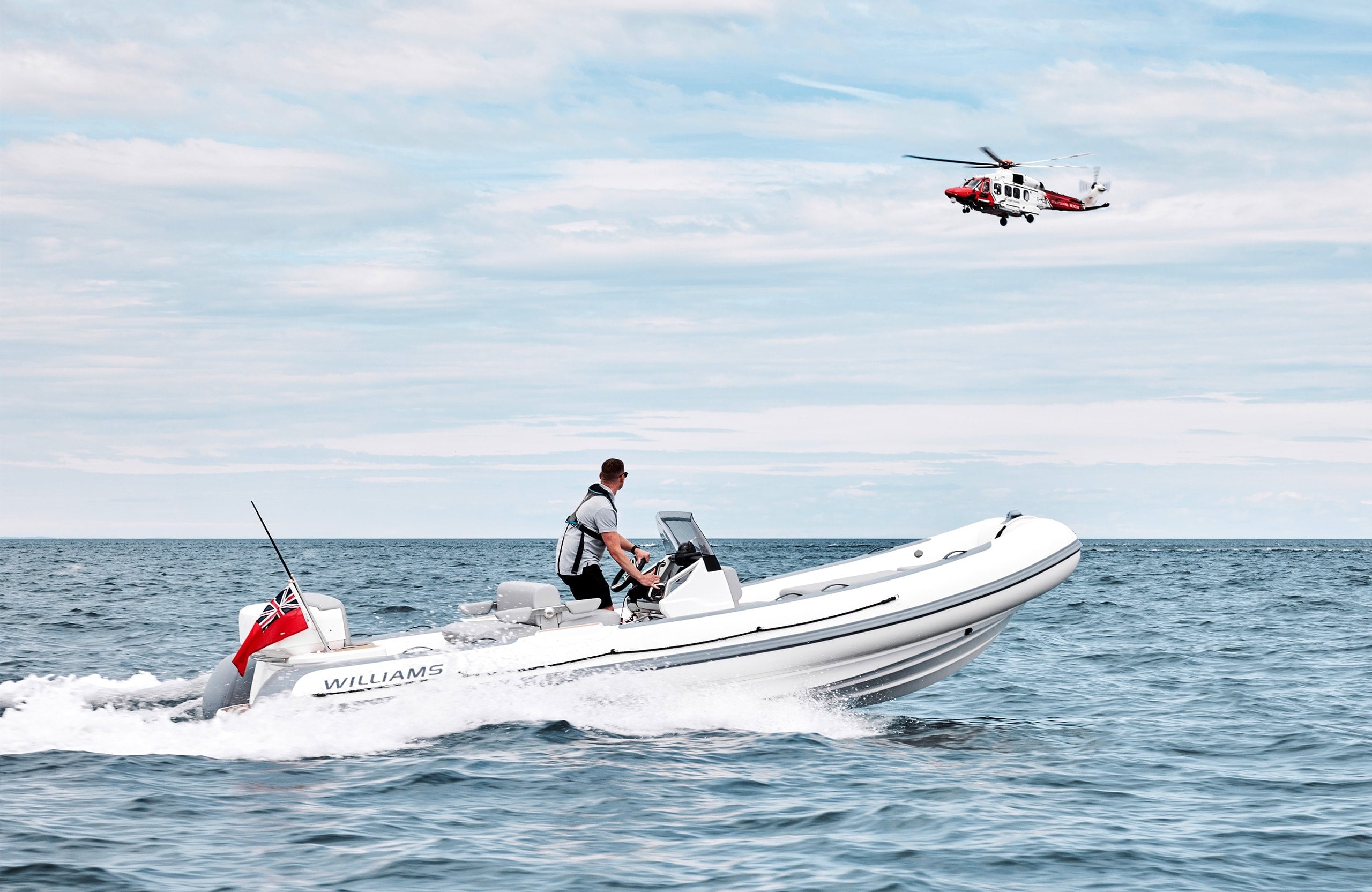
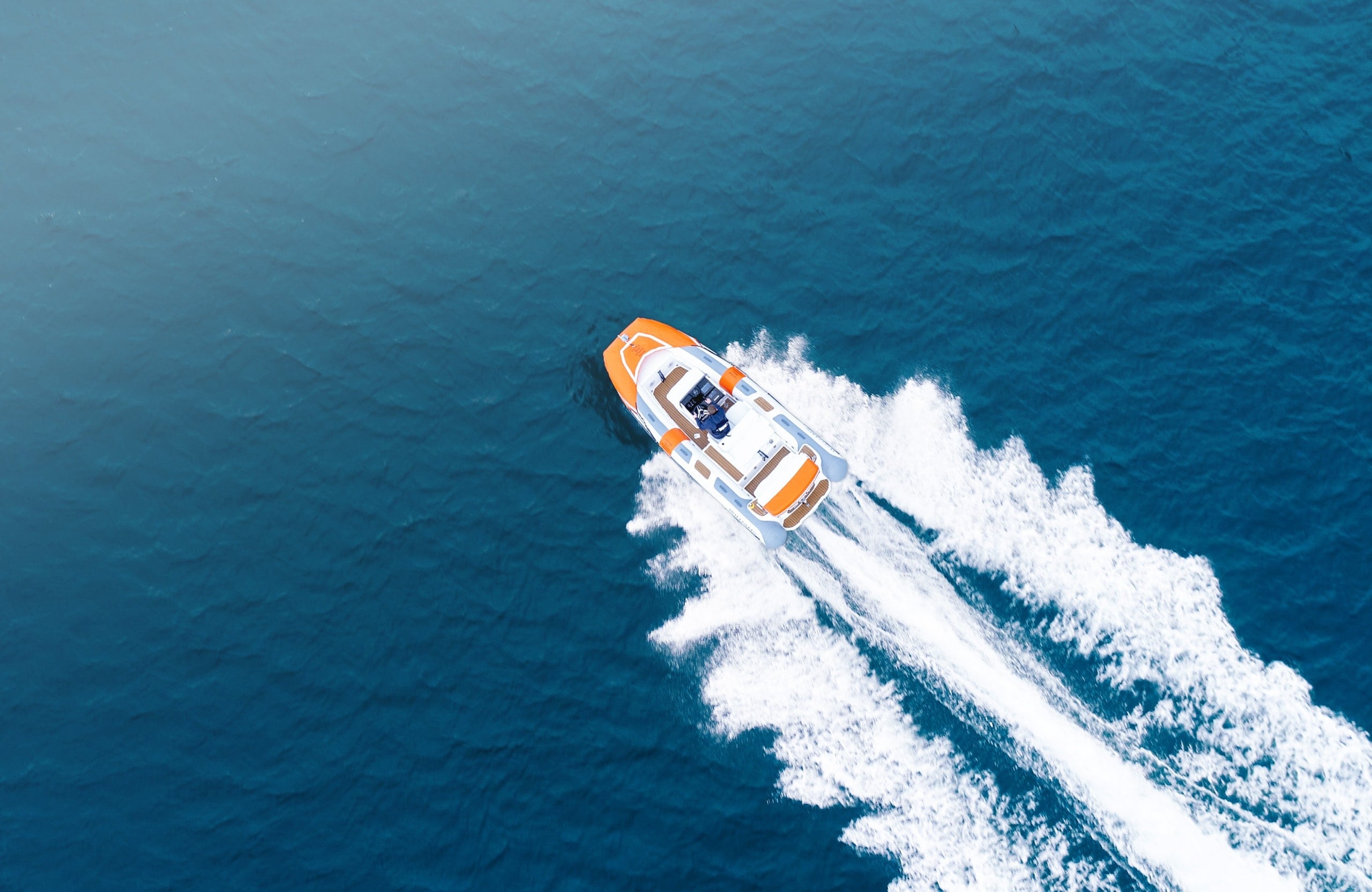
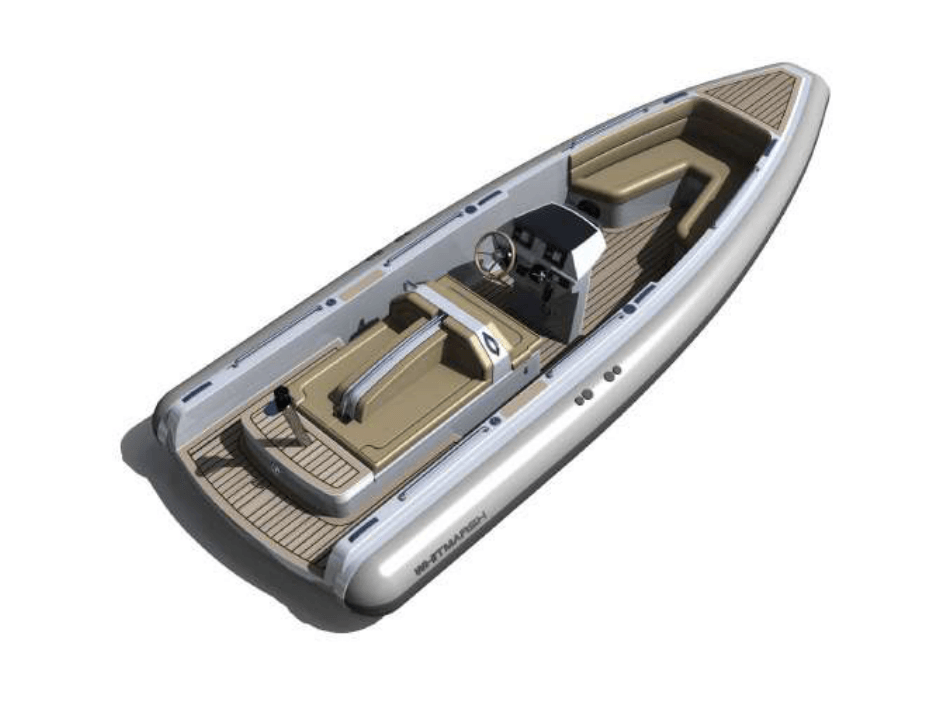
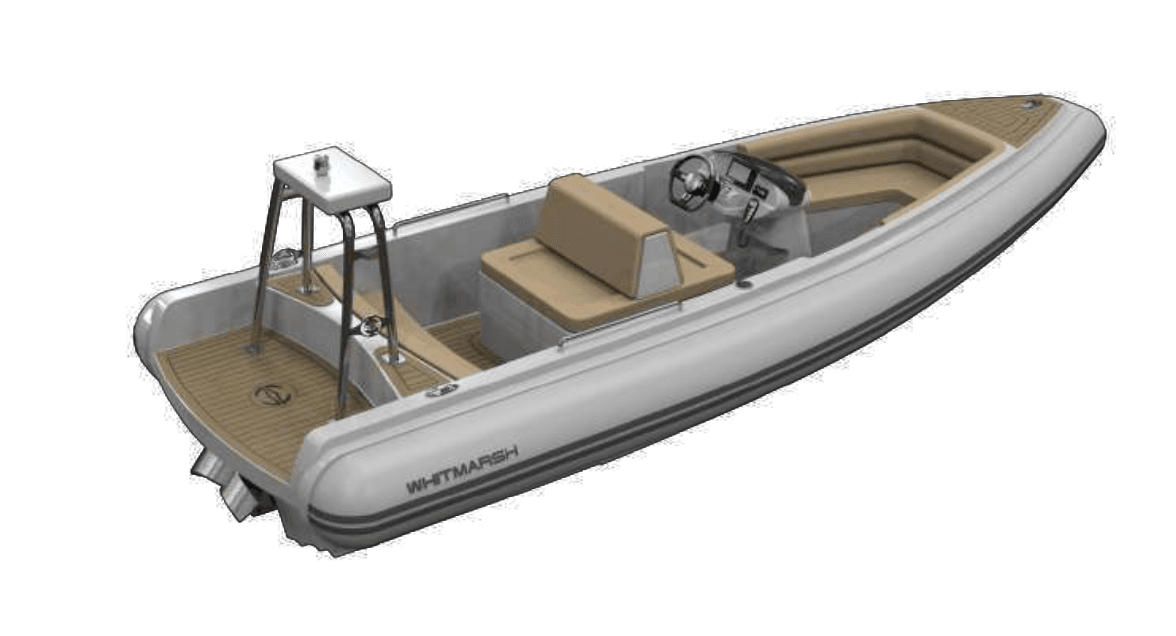
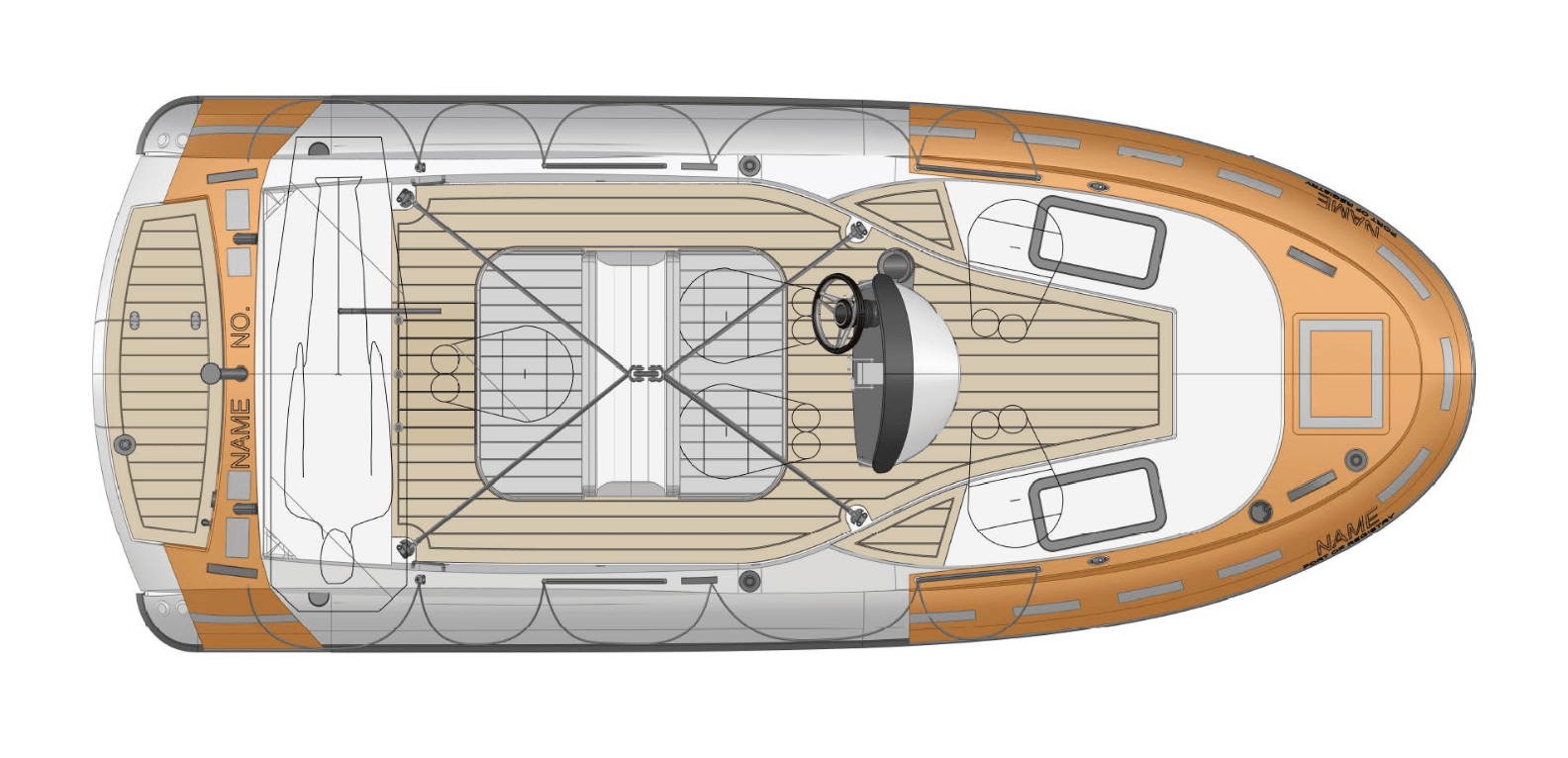
A SOLAS rescue tender is not a guest toy. It is a piece of life-saving appliance carried because the flag state requires it, type-approved against the IMO Life-Saving Appliance (LSA) Code, and surveyed every year alongside the mothership. If you are building or buying a yacht of 500 GT and over, the rescue tender is on the critical path the same way the lifeboat davits and the EEBDs are. Get the spec wrong and the vessel will not pass its annual safety construction survey.
This guide explains what SOLAS actually requires, where the LY3 and Red Ensign Group large yacht codes intersect with it, what a compliant tender looks like as a piece of equipment, and how the choice ripples into your garage sizing, launch and recovery, and crew training decisions. It is written for build managers, captains, and owner's reps making the spec call rather than for surveyors closing it out.
Why SOLAS reaches into private yachting at all
The Safety of Life at Sea convention is the IMO's baseline safety regime for ships engaged on international voyages. It does not apply to pleasure yachts as such. It reaches yachting through two routes:
- Yachts of 500 GT and over operated commercially (charter), where the flag state's large yacht code references SOLAS chapters and the LSA Code as the standard for life-saving appliances. On Red Ensign flags that code is now the REG Yacht Code, which consolidated the former LY3 and the Passenger Yacht Code; the current edition was published January 2024, per KRM Yacht. "LY3" persists as shorthand but is no longer the live instrument, so verify the current REG Yacht Code text and your flag's equivalencies with the flag state or Recognised Organisation rather than relying on a clause number.
- Yachts of 500 GT and over registered for private use under codes that elect to follow SOLAS for safety equipment, which most reputable flags do.
In practical terms: if your yacht is 500 GT or larger and you intend to charter, your rescue tender has to meet the LSA Code as a SOLAS-grade rescue boat. Below 500 GT, an LY2 or LY3 grade rescue tender will normally satisfy the flag, and the design space opens up. The split is covered in more detail in our tender classification rules page.
What the LSA Code actually says about a rescue boat
The construction and performance requirements live in chapter V of the IMO LSA Code. For a SOLAS rescue boat (the more relevant of the two categories for yachts), the headline requirements are:
- Length of not less than 3.8 m and not more than 8.5 m, with carrying capacity for at least five seated persons plus one stretcher casualty.
- Constructed of inherently buoyant materials or fitted with inherently buoyant material that keeps the boat afloat with all equipment when swamped.
- Capable of being rapidly manoeuvred for rescue purposes, towing the largest liferaft carried, and maintaining a speed of at least 6 knots in calm water with full complement and equipment.
- A minimum range, fuelled, of 4 hours at 6 knots.
- Self-bailing or fitted with rapid drainage.
- Equipped with permanent fuel system, navigation lights, painter, sea anchor, bailer, fire extinguisher, first aid kit, and the LSA Code's prescribed inventory.
Fast rescue boats, required on Ro-Ro passenger ships and increasingly specified on larger yachts, add a 20-knot calm-water speed minimum with a full crew, and self-righting capability after capsize. For most yachts the standard rescue boat suffices; specifying a fast rescue boat is a deliberate upgrade, usually because the owner wants a single platform that doubles as the offshore safety boat for water sports.
The regulatory chain runs SOLAS Chapter III, then the LSA Code, then the rescue-boat type-test standard IMO Resolution MSC.81(79); cite the named instruments and verify the current clause text with your class society or flag rather than a hardcoded number. The test regime is administered through national authorities. In the US, 46 CFR 160.156 sets out the equivalent rescue boat and fast rescue boat rules. First-of-class type testing involves a 3 m drop test, a self-righting test (for fast rescue boats), a swamp test, an overload lifting test, an endurance trial and a heavy-weather trial; passing it produces the Type Approval Certificate, and every subsequent hull then receives its own Certificate of Production Testing, per Pascoe International. Type approval is a manufacturing process, not a one-off inspection.
SOLAS versus LY2 versus non-compliant: which one do you actually need
| Yacht parameters | Tender standard typically required | Build implication |
|---|---|---|
| Under 500 GT, private | None mandated; flag may require basic safety boat | Free choice of open or limousine tender |
| Under 500 GT, commercial | LY3 rescue tender (lighter standard) | Many semi-custom builders offer LY-coded variants |
| 500 GT and over, private | SOLAS rescue boat strongly recommended | Single dedicated SOLAS tender carried |
| 500 GT and over, commercial (charter) | SOLAS rescue boat mandatory | Type-approved unit, surveyed annually |
| 500 GT and over with helideck | SOLAS rescue boat plus helicopter rescue plan | Often a fast rescue boat |
Owners often ask whether a beautifully built custom tender can also serve as the SOLAS unit. The answer is almost always no. The drop test, the self-bailing requirement, the permanently mounted painter and the prescribed inventory all push the design toward a purpose-built rescue platform. The pragmatic spec on most 60 m and up yachts is one SOLAS rescue tender, plus one or two guest-facing tenders that carry no safety burden.
The yards that build to SOLAS
The SOLAS rescue tender market is not large. It is dominated by a handful of specialists who hold current type approvals across multiple flags:
- Pascoe International builds the bulk of the fleet, with SL and SY series rescue tenders ranging from 4.6 m to 8.5 m, type-approved to MED, USCG, and most Red Ensign flags. The SY11 and similar models are the default on much of the new-build pipeline.
- Norsafe (now part of Survitec) supplies the heavier industrial end, mostly to vessels above the typical superyacht range.
- ASIS, Hukkelberg, and Vanguard each build rescue boats with type approvals applicable to commercial yachts.
- A handful of yards including Hodgdon and Cockwells build code-compliant rescue tenders that double as guest transport, but these are not SOLAS units.
When you specify a SOLAS tender, ask the builder to supply a current Type Approval Certificate listing the flag administrations that recognise it (if your flag is not on the list, the certificate has no value to you) and the per-hull Certificate of Production Testing for your specific boat. Lloyd's Register or another Recognised Organisation surveys the build, with the MCA or flag surveyor signing off any customisation.
Stowage, launch, and recovery
A SOLAS rescue tender has to be deployable quickly. The LSA Code requires that the boat can be launched, in calm water, by a crew of two within 5 minutes from the order being given, and recovered within similar time at full load. That requirement governs a lot of the garage and davit design:
- Davit SWL must include the boat fully loaded with people and equipment, with a 1.5 safety factor for the launching arrangement and 6 for the falls.
- The launch system has to work with the ship listed up to 20 degrees and trimmed up to 10 degrees.
- The painter must be permanently rigged and the boat ready for immediate use, not stowed dry on chocks under a cover that takes ten minutes to peel back.
- A boarding ladder or platform must be permanently rigged for casualty recovery from the water.
In practice this means a dedicated launching arrangement, usually a slewing davit on the boat deck or a side door with a powered cradle, separate from the guest tender stowage. Cramming the SOLAS unit into the main tender garage and asking the bosun to roll three Jet Skis out before the rescue boat can launch is not a compliant arrangement.
The annual survey and the certificate trail
SOLAS rescue tenders are inspected as part of the vessel's annual safety construction survey. The surveyor will want to see:
- The Type Approval Certificate.
- A current load test certificate for the launching appliance, on a five-year cycle with annual visual inspections.
- Records of monthly crew drills launching the boat into the water (LSA Code chapter III).
- A maintenance record for the engine, fuel system, and battery.
- Records of any service work on the davit, falls, and release gear.
Most operators run the rescue tender to a 100-hour or annual whichever-comes-first service interval and replace the falls every five years on the manufacturer's schedule. Pencil this into the refit and maintenance plan at the start of the build; retrofitting compliant launching gear at the first refit is expensive and slow.
How SOLAS affects the rest of the tender brief
Carrying a SOLAS rescue tender changes the rest of the fleet you can carry. A 60 m yacht with a 7 m SOLAS tender on the boat deck typically loses one of the two flush garage berths to the dedicated launching arrangement. That nudges the choice of guest tender toward a smaller limousine or a chase boat carried separately and parked at marina when the yacht is in the Med. We see three patterns repeatedly:
- SOLAS plus single guest limousine in the garage. Common on 50 to 70 m yachts. The SOLAS unit lives on the boat deck under a slewing davit; the limousine fills the aft garage; chase boat duties are absorbed by a Wajer or similar parked ashore.
- SOLAS plus open tender plus dedicated chase boat. Common on 70 to 90 m. The SOLAS unit is tucked into a side garage with a dedicated door; the boat deck carries a sport open tender; a 14 to 18 m chase boat shadows the yacht.
- SOLAS plus shadow vessel. On programs above 90 m, the SOLAS tender is on the mothership and the rest of the fleet rides the shadow.
Each pattern has a knock-on for crewing, insurance, and operating cost. None is right or wrong; the brief should drive it.
Common mistakes we see during build
- Specifying a SOLAS tender without designing the launching arrangement around it. The boat then sits on the boat deck and cannot be launched at the listed angles without rerigging the davit. The yard fixes this at sea trials at considerable cost.
- Buying a non-type-approved aluminium RIB and asking the surveyor to bless it. They will not. Type approval is a manufacturing process, not a one-off inspection.
- Carrying the certificate from a previous flag. Reflag triggers a re-acceptance review. Confirm the unit is type-approved on the new flag before signing.
- Using the SOLAS tender for guest transfers without recording the mileage. It increases service intervals and burns the engine through its design life faster than the certificate cycle assumes.
- Letting the bosun choose paint and trim that obscure the SOLAS markings. The rescue boat must be highly visible. International orange topsides and retroreflective tape are not optional.
Sources
- Pascoe official site — Pascoe