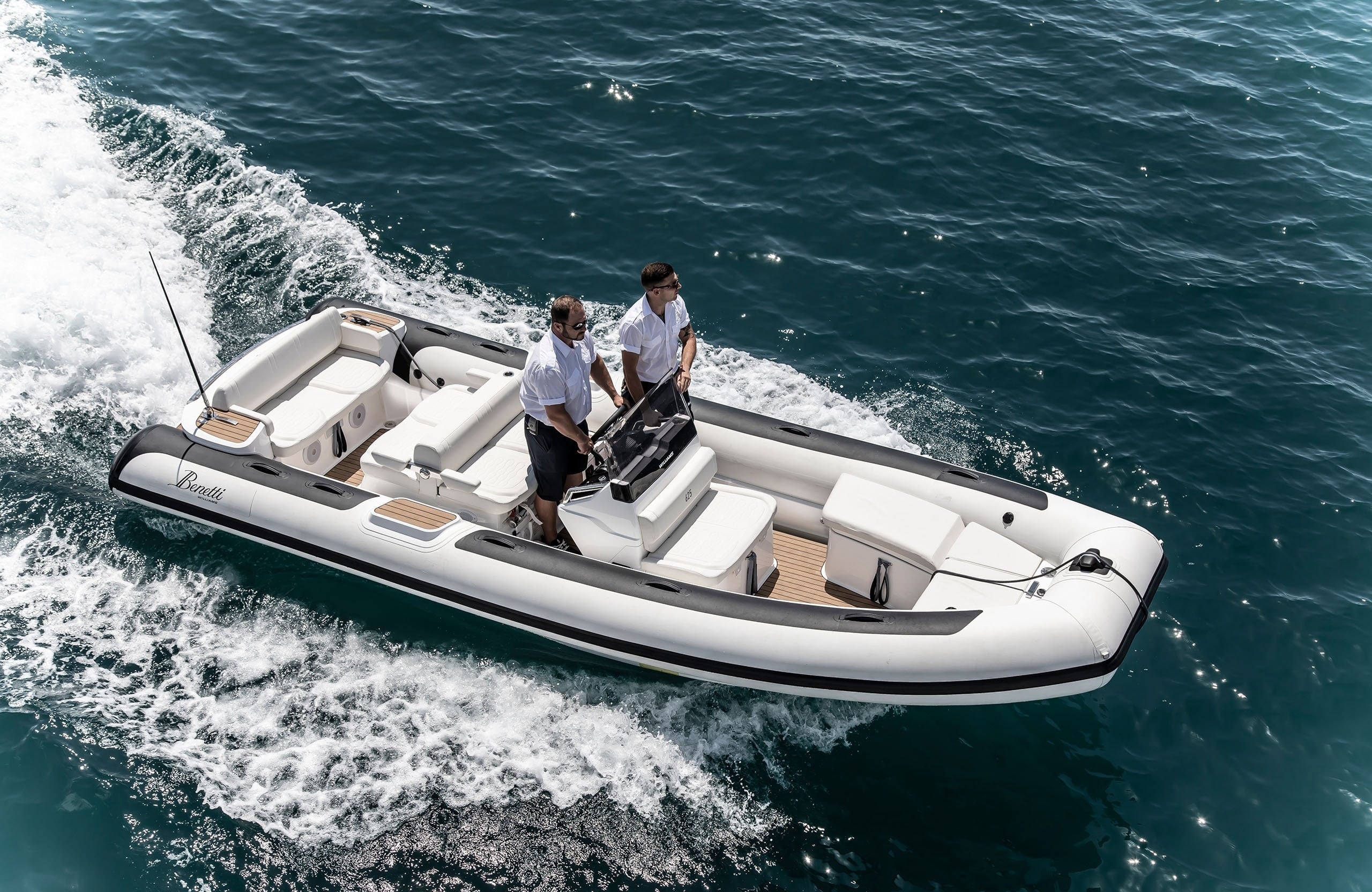
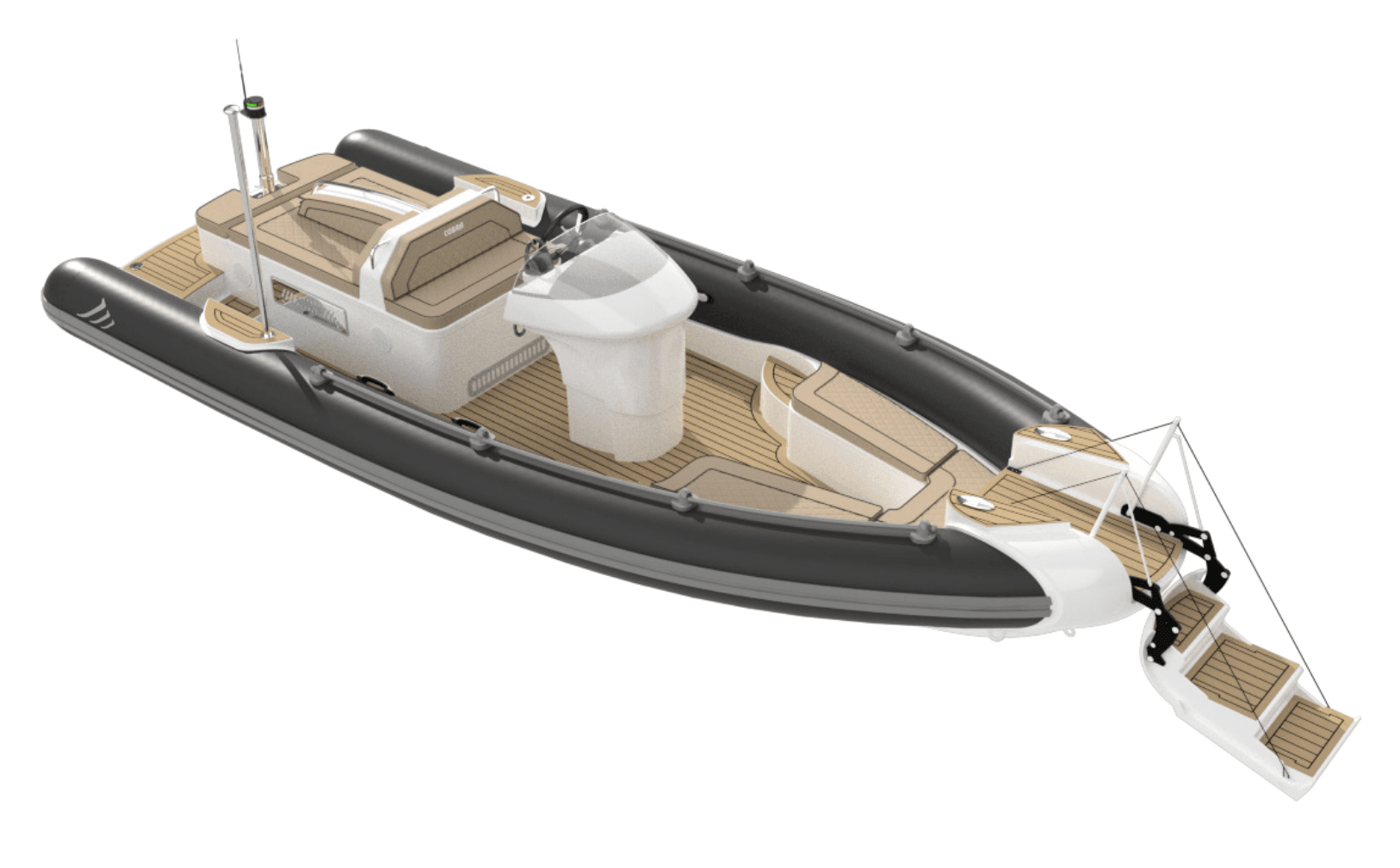
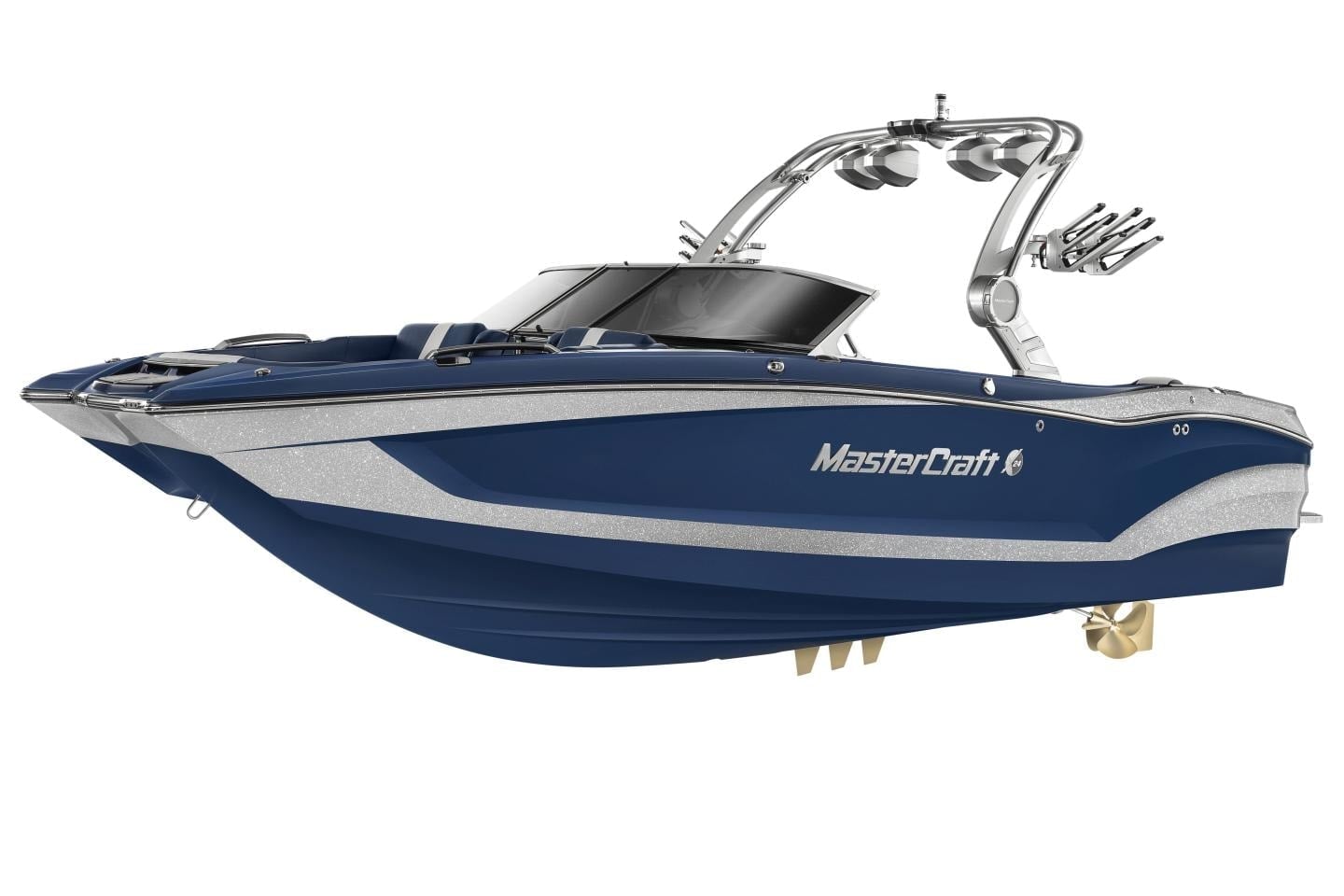
A superyacht tender needs servicing on a schedule, constant management of salt and corrosion, and proper winterisation if it is to last and keep its value. The boat lives the hardest life on the programme: high hours for its size, constant salt exposure, and abuse loads from beach work and davit cycles that the mothership never sees. This guide sets out the recurring work, the winter lay-up, the storage decision and the record that protects resale.
Scheduled maintenance and service intervals
The governing rule is hours, not the calendar. A tender on a busy charter season can run a year's worth of engine hours in eight weeks, and servicing to a date alone will run it well past its interval. Log everything against hours and follow the maker's schedule.
Engines and drives
- Engines. A full service at least annually or every 100 to 200 running hours, whichever comes first: oil and filters, impeller, anodes, belts, coolant and a load test. On a hard-run boat add an interim check mid-season.
- Waterjets. Inspect the intake, impeller and wear ring, check bearing and seal condition, and grease per schedule. Erosion at the intake tunnel is the quiet killer and does not always show until haul-out.
- Sterndrives. Gear-oil change and inspection for water ingress, bellows and gaiter condition, anode replacement, and a close look at the drive leg for corrosion at every service.
- Outboards. The simplest to service but unforgiving if flushing is skipped; gear oil, plugs, impeller and anodes on schedule.
Whichever propulsion the boat carries, the propulsion guide covers the trade-offs that decide how heavy the maintenance burden will be.
Antifoul and hull care
How the hull is treated depends on how the boat lives. A tender kept ashore between launches and only wetted for use may need no antifoul at all, just a clean and polish routine. A boat left afloat in season needs antifoul appropriate to the water and the speed, refreshed annually.
- Gelcoat and paint. Wash off salt after every use, and run a polish-and-protect routine through the season. This is the single cheapest way to keep the finish off the slow slide to matt and chalky, which is what guests notice first and what drags a resale price.
- Below the waterline. Inspect at every haul-out for blistering, impact damage at the keel and skeg from beach work, and the condition of running gear.
- Tubes, on a RIB. Clean, protect and inspect for abrasion and seam condition. Tube failure is a common reason a RIB looks tired before its hull is anywhere near worn out.
Corrosion and salt management
Salt is the constant enemy and most tender failures trace back to it. The defences are routine, not clever.
- Rinse everything after use: engines flushed, deck and fittings washed down, and the bilge kept dry and clean.
- Anodes checked at every service and replaced before they are spent, not after. A neglected anode means the next metal in line corrodes instead.
- Electrical connections and deck-fitting penetrations are where corrosion starts; inspect harnesses and terminals, and protect them.
- Stainless and bright work rinsed and treated, because even marine-grade stainless tea-stains in a salt environment if it is left.
Winterisation
For any boat facing a lay-up, winterisation done properly is the cheapest insurance against a spring full of failures. The core steps:
- Flush the engines with fresh water and fog the cylinders.
- Change oil and filters so the engine winters on clean oil, not a season of acids.
- Drain or treat the cooling system and add the correct antifreeze.
- Treat or stabilise the fuel and deal with any water in the tank.
- Protect the drives: gear oil, grease, and covers on intakes.
- Disconnect the batteries, charge them and keep them conditioned over winter.
- Wash off all salt, dry the boat thoroughly, and store it covered and well ventilated.
- Support the hull correctly on a proper cradle so it does not distort over months of static load.
Storage ashore versus the mothership garage
The storage decision is a genuine trade-off, not a default.
Stored ashore in a climate-managed facility, the boat sits in stable temperature and humidity, away from constant salt, with room around it to work. That is the gentler environment for a long winter lay-up and the easier one for any service or refit work.
Kept in the mothership garage, the boat stays ready to launch and travels with the yacht, which is the whole point in season. The cost is environment: a garage is humid, salt-laden and warm, and it is usually too tight to do real maintenance in. How the boat is launched and recovered into that space also shapes the wear it takes; see the davit systems and launch and recovery guide.
The common pattern for owners who care about the asset is to store ashore over winter and keep the boat aboard through the season.
Service records and resale value
A clean, documented service history is worth real money at resale. A boat with a complete log, every service recorded against hours, receipts for parts, and photographs of any significant work, sells faster and higher than an identical boat with a folder of guesses. The record is also what tells you, honestly, when maintenance has shaded into a refit and the refit versus replace question is on the table.
Keep the documentation as carefully as you keep the boat. It is the cheapest value you will ever add.
Outsourcing the upkeep
Maintenance is constant, specialised, and easy to defer until it becomes expensive. We manage scheduled servicing, winter lay-up and ashore storage so the boat is ready when the programme needs it; see storage and maintenance. When the work crosses into a planned refit, refit management runs the scope, the yard and the budget from the owner's side.