Tender size is not a free choice. On almost every yacht the length you can carry is set by the garage cavity and the launch and recovery system, and those are fixed long before the owner picks a hull. The useful way to think about superyacht tender sizes is as a band driven by the mothership: the bigger the yacht, the bigger the garage, and the bigger the tender it can swallow and lift. Get the relationship right and the tender does its job. Get it wrong and you have a beautiful boat that will not fit through the hatch.
Size bands by yacht length
These are the bands we work to when we help an owner choose a tender. They are guidance, not rules, because garage design varies, but they hold across most of the fleet.
- Sub 30 metre yachts. A single garage or transom tender of 3 to 5 metres. Often a compact RIB on a swim platform rather than a true enclosed garage. Watersports and a short beach run, nothing more.
- 30 to 40 metre yachts. A 5 to 7 metre primary tender, frequently paired with a jet ski or a small second toy. This is the band where a proper garage and a hydraulic launch system first appear.
- 40 to 50 metre yachts. A 6 to 8 metre primary tender, and the size at which a fully enclosed limousine becomes practical. Many yachts in this band carry a guest tender plus a smaller utility tender.
- 50 to 60 metre yachts. An 8 to 10 metre primary tender, almost always alongside a second hull. Garage volume is now large enough to plan a fleet rather than a single boat.
- 60 metre plus yachts. A 10 metre plus limousine as the flagship guest tender, frequently with an open sports tender and a separate utility tender. Above this size owners often add a chase boat to break the garage constraint entirely.
The 40 metre threshold matters most. Boat International notes that a yacht of around 40 metres with the ability to launch and recover a tender of 7 metres and above is the point at which a limousine tender becomes a realistic option (Boat International tenders guide). Below that you are usually in open tender territory.
The garage volume trade
Every metre of tender length is bought from somewhere. A tender garage is a fixed cavity in the hull, and it competes with the beach club, the engine room, and the lazarette for the same volume. That competition forces a trade that runs through every spec.
A limousine tender is the clearest case. The slim, low profile that lets a limousine slide into a garage is not only styling. Designers trade interior headroom for fitment, so the enclosed cabin that looks so generous in renders is often tighter overhead than guests expect. The boat is shaped by the hatch it has to clear, not by the comfort the owner imagined.
Three dimensions govern fit, and all three have to clear at once:
- Length and beam decide whether the hull sits on the cradle and clears the hatch opening.
- Height decides whether a console, a T-top, or an enclosed cabin will pass under the deckhead.
- Dry weight decides whether the davit or the launch and recovery system can lift the loaded boat at all.
A bigger tender is a more capable tender, but it consumes garage volume, weight budget, and crane capacity. We work through the geometry in the tender garage sizing reference and the longer garage sizing guide, because the cavity is where most size decisions are actually won or lost.
Limousine, open, and chase at size
Length is only half the picture. The same garage volume can hold very different boats, and the type you choose changes what each metre buys you.
A limousine maximises enclosed, weather-protected guest space for a given length, which is why it dominates the 40 metre plus transfer role. An open tender at the same length gives up the cabin and gains deck area, a lower weight, and a far better watersports platform. A chase boat abandons the garage altogether: it is a standalone hull that rendezvous with the mothership, so its size is set by the job rather than the cavity.
That is why a 60 metre yacht limited to a 10 metre garage tender will often add a chase boat. The garage caps the tender at 10 metres, but a 14 metre chase boat sitting on its own berth breaks the ceiling and adds range, speed, and a second deck. The trade between a larger tender and a chase boat is one of the most common decisions we see, and the sizing logic is set out at chase boat sizes.
For data-rich examples across the bands, the 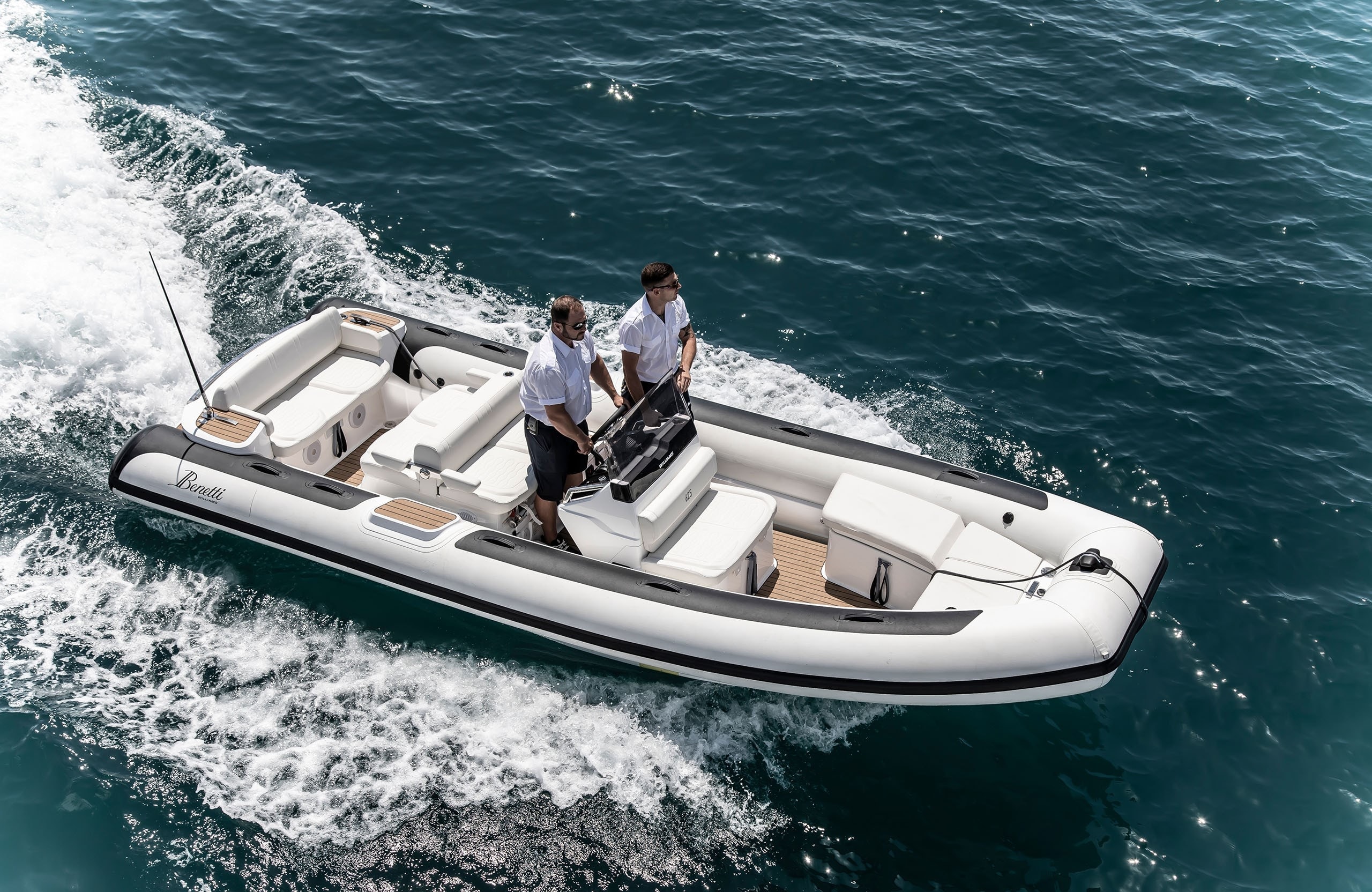 Williams · On the registerWilliams DieselJet 625LOA6.3mBeam2.41mTop Speed40knPrices on requestView on Superyacht Tenders → sits squarely in the sub 40 metre garage band, the
 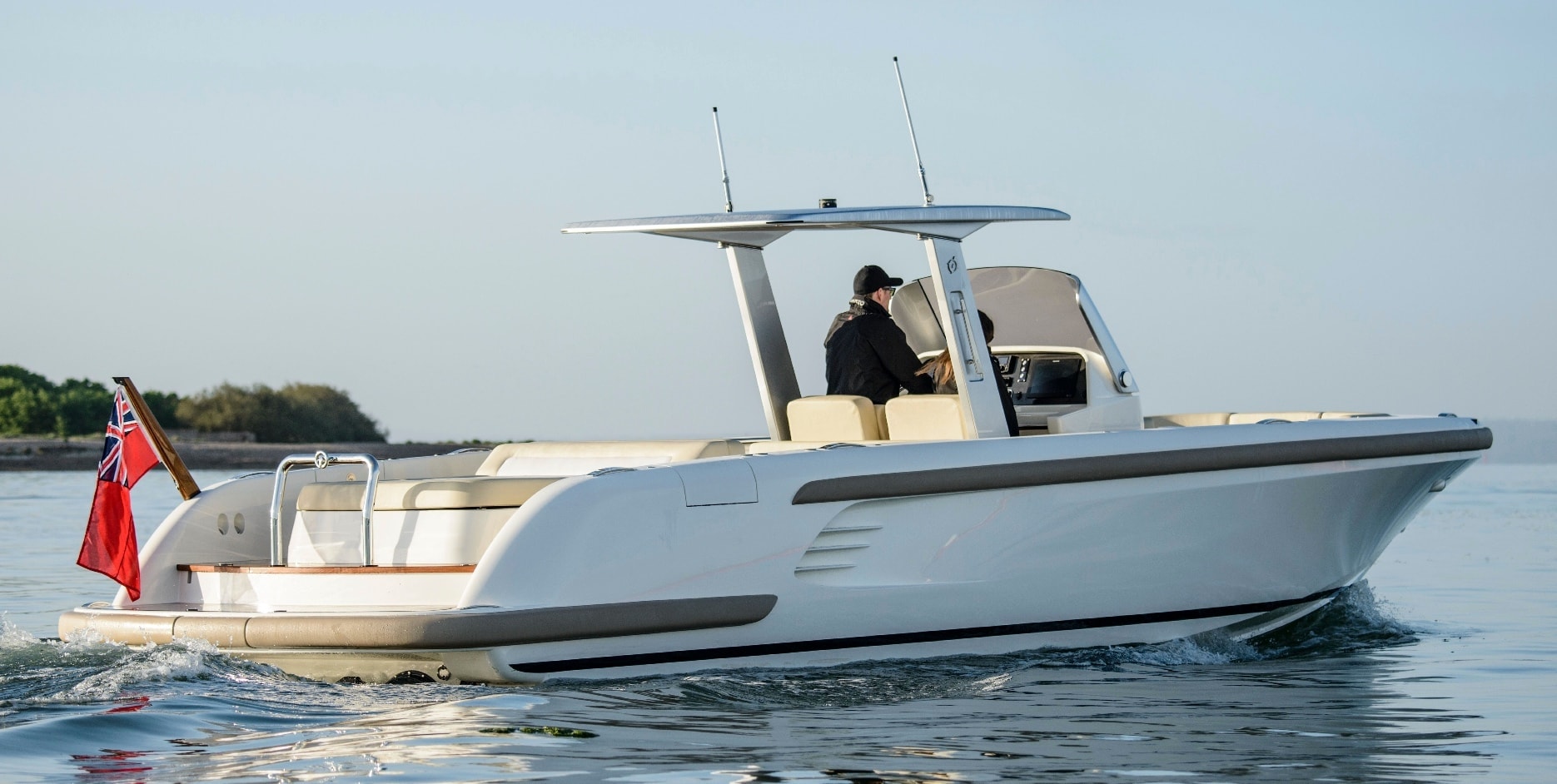 Compass · On the registerCompass 9.7m OpenLOA9.7mBeam2.95mTop Speed35knPrices on requestView on Superyacht Tenders → shows how a limousine is packaged for the 40 metre plus role, and the
 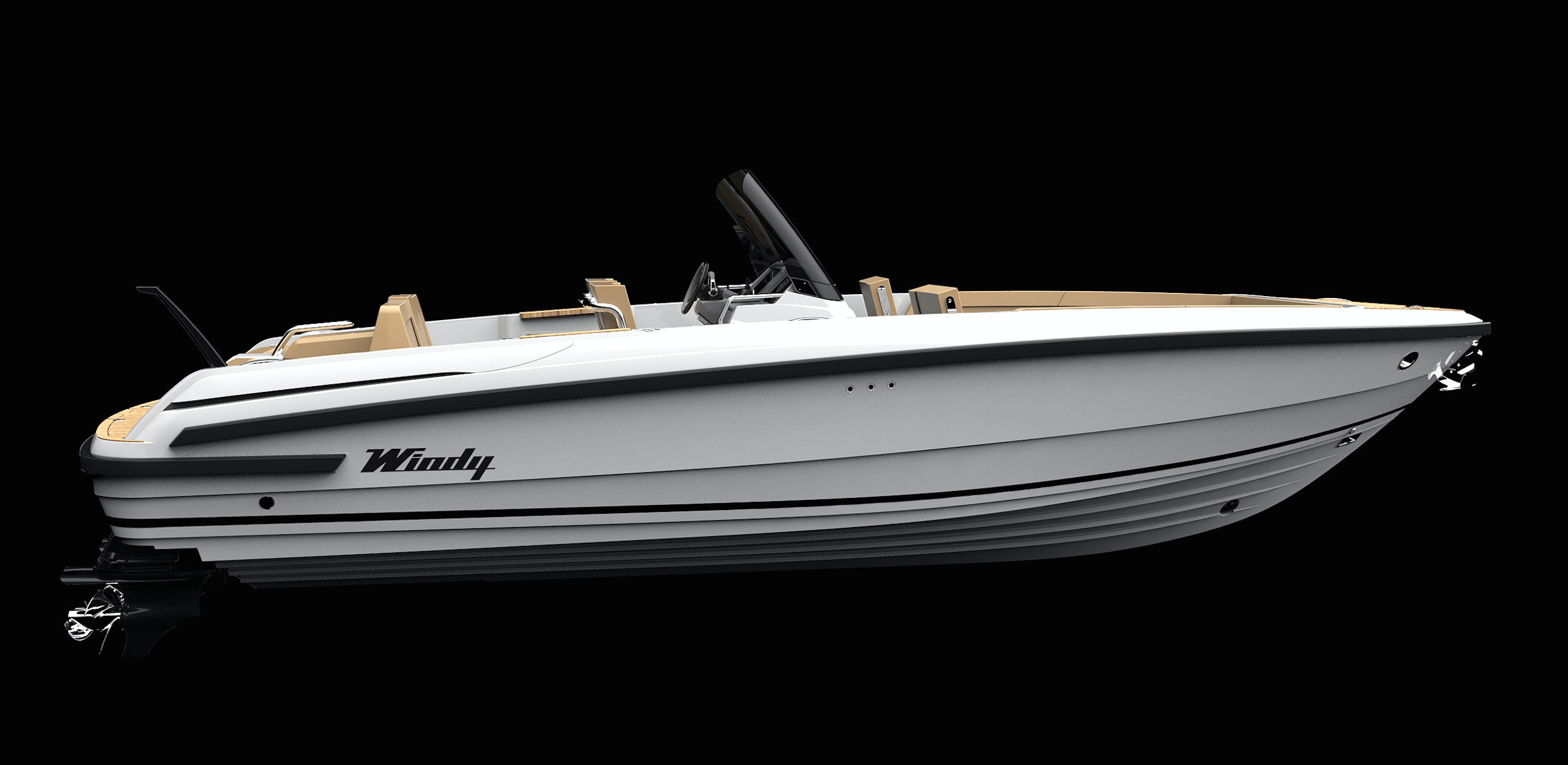 Windy · On the registerWindy SR28LOA8.4mBeam2.70mTop Speed45knPrices on requestView on Superyacht Tenders → illustrates the open sports end of the same size range.
Multi-tender fleets
Above roughly 50 metres the question stops being which tender and becomes which tenders. One hull rarely covers transfers, watersports, and provisioning, so the larger yacht carries a fleet. A typical 60 metre programme runs a guest limousine for transfers, an open sports tender for watersports and beach runs, and a utility or crew tender for stores, garbage, and dawn provisioning runs that owners never see.
Planning the fleet is a balance of roles against garage slots. Each boat wants a different length and a different launch arrangement, and they all draw on the same volume and crane budget. The sequencing matters too: the boat the crew launches at 6am is not the boat the principal steps into at noon, and the garage has to release both without a reshuffle. We set out the role-by-role method in the superyacht tender fleet planning guide, and the practical fit numbers feed straight back into the specification stage.
The fleet also shapes type. A multi-tender yacht can dedicate the open slot to a real watersports boat from the open tenders range, or specify a jet tender for shallow beach landings, precisely because the limousine is no longer doing every job at once.
What we tell clients
Start with the garage, not the tender. The cavity and the launch system set the ceiling, and almost every disappointing tender decision we have seen came from speccing the boat before confirming what the hull could actually carry and lift. Once the band is fixed, work out whether a single capable tender or a small fleet serves the brief, and only then choose between limousine, open, and chase at the length the garage allows.
If you are early in the process, begin at the superyacht tenders overview and read across to garage sizing and fleet planning. If the garage is already capping what you want, the answer is usually a chase boat rather than a bigger tender, and the trade is worth running before the build is locked.
Sources
- Compass Tenders, manufacturer site — Compass (retrieved May 2026)
- Williams DieselJet 625 - Williams Jet Tenders Official Product Page — Williams (retrieved Jun 2026)
- Windy SR28 official page — Windy (retrieved May 2026)