A limousine tender costs more than an open tender of the same length because you are paying for a finished, sealed, climate-controlled room that happens to float, rather than a hull with seats in it. The price gap is not a markup on luxury. It is the real cost of a cabin structure, large bonded glazing, an HVAC plant, acoustic treatment, and a yacht-grade interior, all engineered to survive salt, vibration, and daily guest use. This page explains what drives the number, gives realistic bands, and covers what the boat costs to own once it is in the water.
What drives the price
Start with the open tender as the baseline and add back everything the enclosed boat needs.
- Cabin structure. The superstructure is a second build on top of the hull. It carries load, resists flex, and has to be fair and finished inside and out. That is tooling, lamination, and fairing hours an open boat never sees.
- Glazing. Large bonded side and front glass is one of the most expensive single line items on a limousine. The glass is curved, tinted, and structurally bonded, and it has to stay watertight under slamming loads. Replacing a single pane later is a serious bill.
- Climate control. An enclosed cabin is unusable in a Mediterranean August without HVAC. That means a chilled-water or direct-expansion plant, ducting, and the power and cooling to feed it, all in a space with no room to spare.
- Acoustic and thermal insulation. The reason a good limousine feels calm at 22 knots is insulation behind every panel. It is invisible, heavy, and labour-intensive.
- Finish. Headliner, joinery, upholstery, flooring, and lighting are specified to match the mothership. This is where an owner can double the cabin cost without changing the boat's length.
- Custom work. Bespoke door mechanisms, hi-lo tables, drinks storage, and integration with the yacht's control system are all one-off engineering. Custom is the single biggest swing factor in the final invoice.
For a fuller breakdown of where the money goes across all tender types, see cost of a superyacht tender.
Price bands
Treat every figure here as a starting point, not a quote. Limousine pricing tracks length, classification, and finish, and the options list moves the number more than the base boat does.
- Compact enclosed limousines (roughly 8 to 9.5m). These start in the high six figures. As a reference point, Boat International reported the Pascoe 9.6m SL Limousine at around one million pounds ex VAT, which is a fair anchor for a fully specified boat at this size.
- Mid-size custom limousines (roughly 10 to 12m). From the established yards these run into seven figures, climbing with beam, finish level, and any move toward commercial coding.
- Large and SOLAS-coded flagships (12m and above). These sit higher again, particularly where the boat has to carry a large guest count under code, which forces structure, escape routes, and systems beyond what a private boat needs.
The cleanest way to read these bands is against the boat's job rather than its length. A high-capacity transit boat and an intimate VIP shuttle of the same LOA can sit a long way apart on price. The decision framework sits in choosing a limousine tender, and the length question itself is covered in limousine tender sizes.
Why two boats the same length cost differently
The "from" price tells you very little on its own. Three boats of identical length can sit a seven-figure spread apart.
The first driver is the cabin layout. A simple lounge with a single settee is far cheaper to build and finish than a multi-zone cabin with a separate steward station, bar, and forward seating. The layout choices and their cost implications are set out in limousine cabin layouts.
The second is classification. A privately operated boat and a SOLAS-coded boat built to carry guests commercially are different products, and the coded boat carries structure, safety systems, and certification that the private boat does not.
The third is the builder. The specialist yards covered in limousine tender builders price on engineering depth and finish quality, not on a length rate. If you want to understand what the category actually is before comparing quotes, start with what is a limousine tender.
A good illustration of how spec drives price within one builder is the limousine line itself.
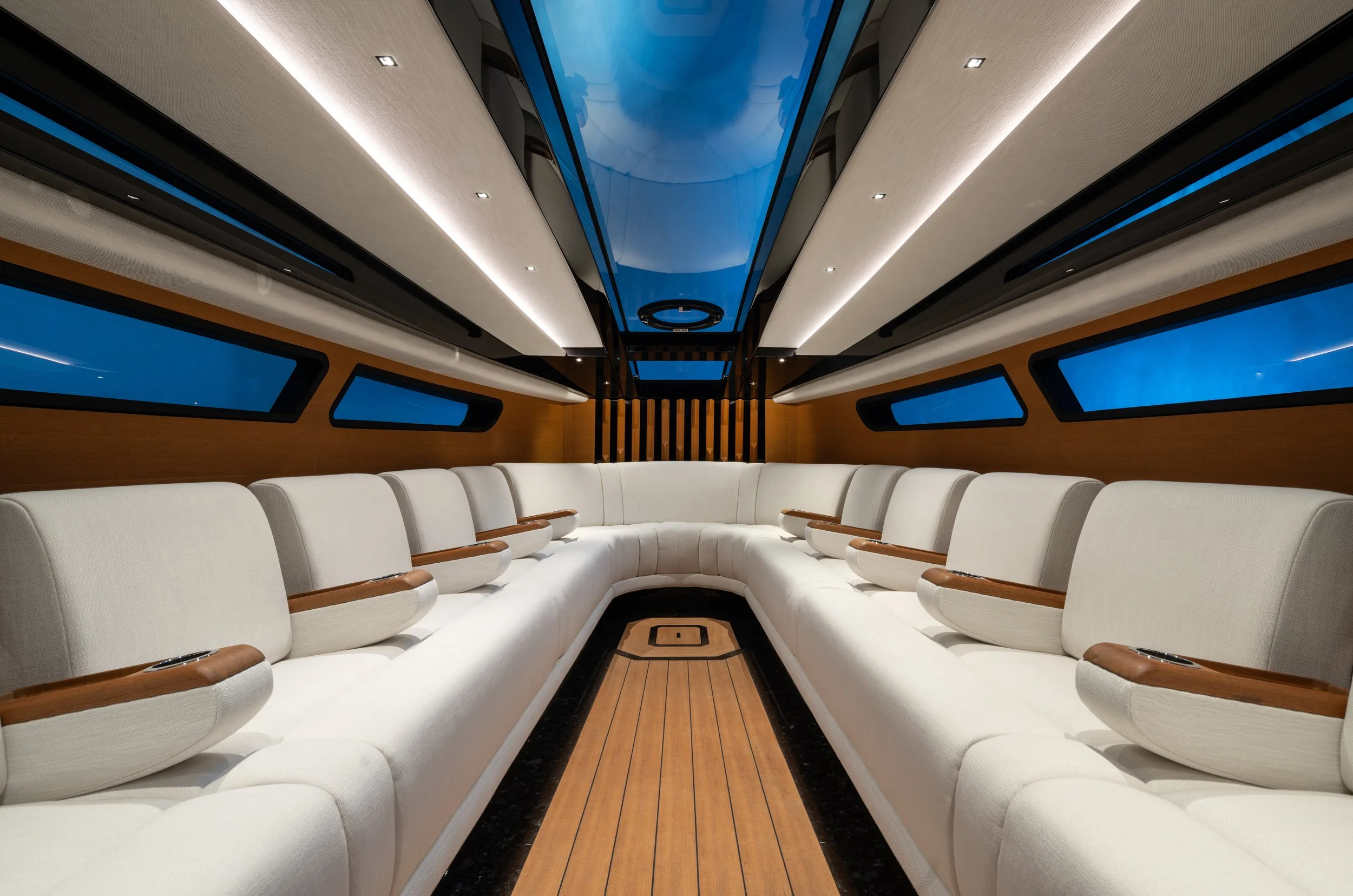 Pascoe · On the registerPascoe 10.4m TL LimousineLOA10.4mBeam2.95mTop Speed36knPrices on requestView on Superyacht Tenders →
Running and ownership costs
The purchase price is the start of the conversation, not the end. A limousine costs more to run than an open tender of the same size, for the same reasons it costs more to build.
- Systems maintenance. HVAC, glazing seals, door mechanisms, and cabin electronics all need servicing. The climate and finish package is the part of the boat that ages fastest and is most expensive to put right.
- Finish upkeep. Upholstery, headliner, and joinery in daily guest use need care and periodic refresh to keep the boat presenting at the level the mothership demands.
- Fuel and storage. A heavier, fully fitted boat burns more for the same passage than a stripped open tender, and an enclosed boat that lives ashore or on a berth between seasons adds storage cost.
- Crew time. A limousine is cleaned, prepared, and presented to a higher standard than a utility tender, and that is crew hours that belong in the running budget.
As a working rule, owners should budget a meaningful percentage of build value per year across servicing, antifoul, insurance, and crew time. The exact figure depends on use and berth, but the enclosed systems are what separate a limousine's running cost from an open boat's.
Where the money is well spent
Some cost is unavoidable and some is discretionary, and it pays to know which is which. The structure, glazing, and HVAC are not negotiable. A limousine without proper climate control or with cheap glazing is a worse boat, not a cheaper one, and it will show within two seasons. The discretionary spend is in the finish and the custom work, and that is where an owner should match the budget to how the boat is actually used.
A boat that runs guests across a busy anchorage every evening earns a high-end cabin. A boat that crosses to a private beach twice a week does not need the same fit-out to do its job well. Reading the price band against the use case, rather than against the length, is the difference between a boat that feels right and one that feels overspecified.
What we tell clients
We tell clients to stop comparing limousines to open tenders on price per metre, because they are not the same product. The enclosed boat is a small superstructure with a marine HVAC plant, structural glazing, and a yacht interior, and every one of those adds real cost that an open boat avoids. Once an owner accepts that, the conversation becomes useful: decide the job first, then the size, then the classification, and let those three set the band before anyone talks finish.
The mistake we see most often is buying the cabin twice, specifying a high-capacity transit layout and then loading it with the finish of an intimate VIP shuttle. Pick one. The boat will cost less, run better, and last longer. If you want to see how the category compares across builders and sizes before you brief a yard, start with the limousine tenders overview and the roundup at best limousine tenders.
Sources
- Pascoe official site — Pascoe
- 10m Limousine | Luxury Tenders for Superyachts - Pascoe International — Pascoe (retrieved Jun 2026)