A limousine tender is an enclosed, climate-controlled guest shuttle sized to move principals and guests between the yacht and shore in privacy and comfort. The defining feature, the cabin, also sets the size floor: you cannot build a credible limo as small as an open tender, because the cabin needs length and height to be usable. That single constraint drives the whole sizing conversation, and it is where most owner briefs go wrong before they start.
The working length bands
Limousine tenders cluster in a narrow band, roughly 8 to 12m. The market does not split into many models the way open tenders do, because the cabin sets a hard minimum and the garage a hard maximum. Three bands cover almost every order we see.
- 8 to 9m: the entry limo. The smallest length that carries a genuine enclosed cabin with seating for around 8 guests. Beam sits near 2.7m. Headroom is tight and usually below full standing height. This band suits a 40 to 55m mothership with a modest garage. The
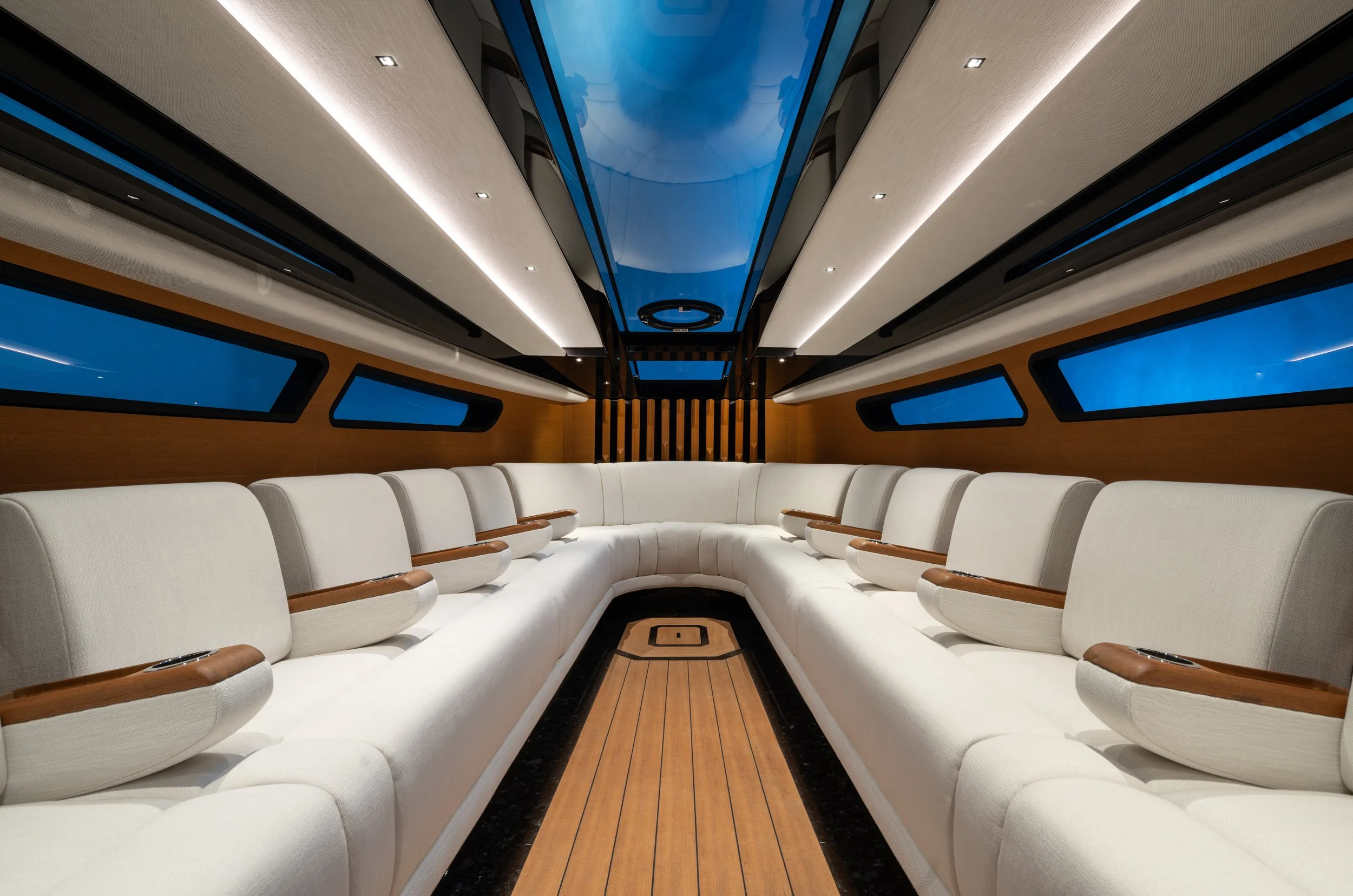 Pascoe · On the registerPascoe 10.4m TL LimousineLOA10.4mBeam2.95mTop Speed36knPrices on requestView on Superyacht Tenders → sits one tier above this entry point.
 - 9.5 to 11m: the volume sweet spot. The most common band for new orders. Beam runs 2.9 to 3.2m, seating reaches 10 to 14 guests, and most boats in this range offer near full standing headroom in the cabin. This is where the format works best, and where builders concentrate their semi-custom platforms.
- 11 to 12m: the flagship limo. Full standing headroom, 14 to 16 guests, a real pantry or wet bar, and often a forward and aft external seating area as well as the cabin. This band only fits 60m-plus motherships with a tall garage. The
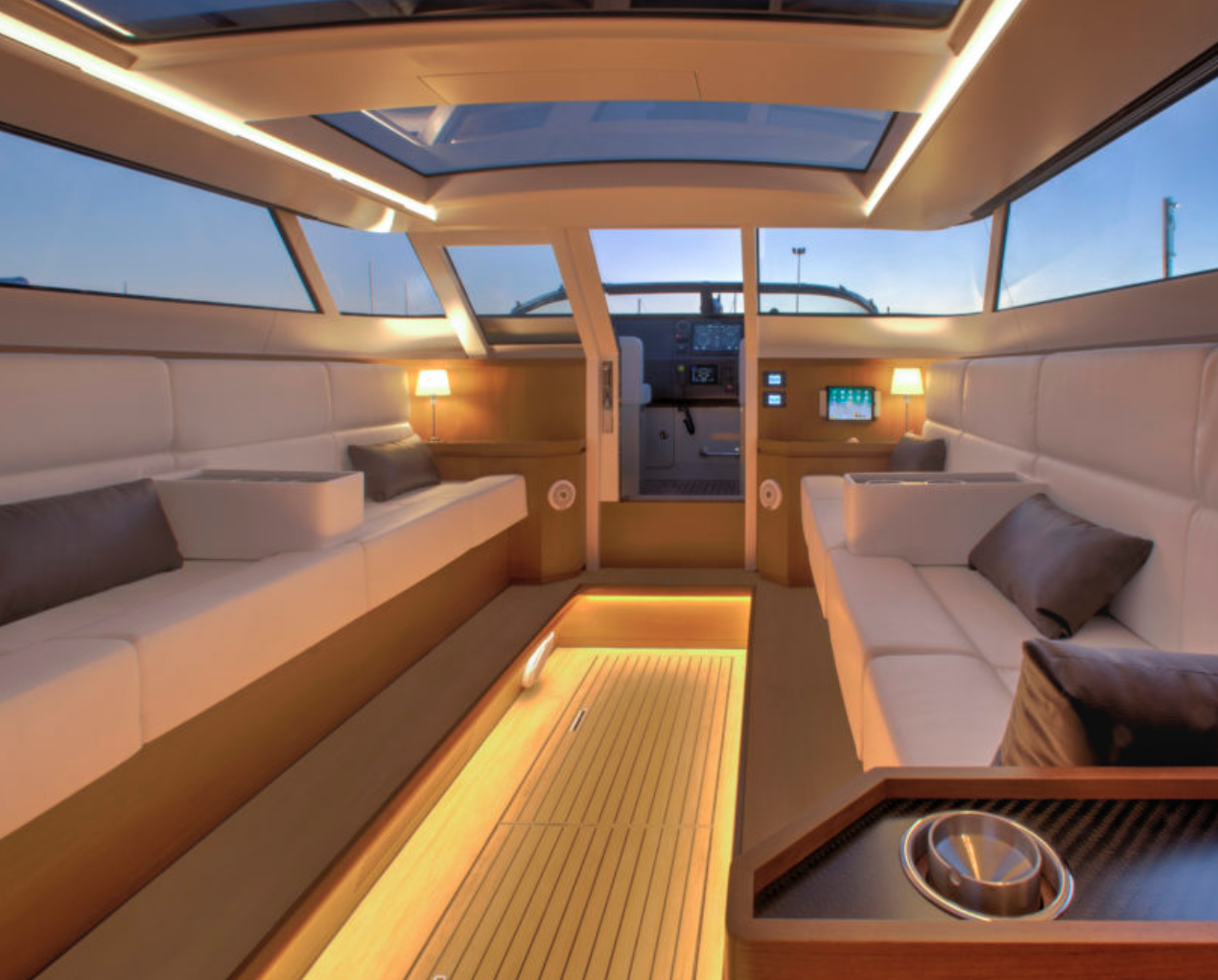 Reliant Yachts · On the registerReliant Yachts LimousineLOA11.5mBeam3.59mTop Speed35knPrices on requestView on Superyacht Tenders → sits in this larger bracket.
Above 12m you are usually into a custom one-off or a SOLAS-coded crossover, and the boat behaves more like a small day boat than a stowed tender.
Why the enclosed cabin pushes the minimum up
An open tender can be 5 or 6m and still do its job. A limo cannot, and the reason is geometry. To seat guests upright under a hard roof with any headroom at all, the cabin needs both length for the seating module and height for the structure above it. You cannot compress that into a 6m hull without the cabin reading as a crouch space.
This is why 8m is the practical floor. A Pascoe 8.0m at 2.7m beam is about the smallest hull that holds a true enclosed cabin with seating for eight, and even then headroom is constrained. Builders who go shorter end up with a covered runabout, not a limousine. If your garage will not take 8m, the honest answer is usually a convertible limo tender or an open boat. We cover the format choice in full at what is a limousine tender.
Headroom versus garage height: the core trade
This is the single hardest constraint in the segment, worth understanding before you fall in love with a render.
A comfortable cabin wants full standing headroom, roughly 1.85 to 2.0m clear inside, measured with the carpet down and the air-con duct in. To deliver that, the builder raises the cabin roof. But the boat then has to slide into a garage with a fixed stowage height, and on a 60m-plus Mediterranean yacht that height is often the tightest dimension on the whole boat. As one builder puts it, the fully enclosed limo is "particularly suited to 60-metre-plus Mediterranean yachts with low stowage heights" (Boat International). The two requirements pull in opposite directions.
Three things resolve the tension, and you specify them in this order.
- Measure the garage opening and stowage height first. Every other number follows from it. Use the tender garage sizing method to get the clear height with the cradle in, not the brochure aperture.
- Choose the band that fits, not the band you want. A taller cabin on a shorter hull is a worse boat than a right-sized cabin on the next band up. If the garage caps you at 9m, do not force an 11m cabin profile into it.
- Consider a lowering roof or T-top. Some boats drop the roof or top for stowage and raise it in use, buying headroom without losing the garage. This adds cost and a mechanism to maintain, but it is often the only way to get standing headroom into a tight garage.
The full method, including how clearance interacts with beam and cradle geometry, is in our tender garage sizing guide.
Passenger capacity by size
Capacity tracks length closely, but the brochure number and the working number diverge. Coding caps the legal maximum, sea state caps the comfortable maximum, and the brief decides which matters.
- 8 to 9m: around 8 guests seated, plus a steward position. Good for a short hop to the beach club, glasses down.
- 9.5 to 11m: 10 to 14 guests depending on layout. A Pascoe in this range is rated for up to 14 to 16 in the brochure, but plan around 10 to 12 if you want everyone seated comfortably with coats and bags.
- 11 to 12m: 14 to 16 guests with room for a pantry and external seating. This is the band for a full charter group moving together.
The layout drives the real number as much as length does. See limousine cabin layouts for how U-shape, L-shape, and forward-facing arrangements change the seat count within the same hull.
Matching the tender to the mothership
Size the limo to the yacht. The garage and crane set the ceiling; the guest count sets the floor.
The entry threshold is roughly a 40m mothership able to launch and recover a 7m-plus tender. Below that, garage geometry and lifting capacity rarely support an enclosed cabin boat, and a different tender format will serve you better. As the yacht grows, the available band grows with it: a 45 to 55m yacht typically lands in the 8 to 10m band, a 60m-plus yacht opens up the 11 to 12m flagship limos.
Three questions settle the match.
- What does the garage actually take? Clear height, length, and beam with the cradle in. This caps the boat.
- How many guests move together? A principal-and-partner programme needs far less boat than a charter group of twelve.
- How far is the typical run? A two-minute hop to a private beach asks less than a 40-minute crossing in chop, where headroom and seating start to matter.
Work through those alongside choosing a limousine tender and the cost implications at limousine tender cost, because each band steps up in price as well as length.
What we tell clients
Start with the garage, not the boat. We have watched too many owners specify an 11m flagship limo with full standing headroom, then discover the garage caps them at 9.5m and the whole drawing has to be redone. Measure the stowage height first, pick the band that fits, and only then argue about the cabin.
The 9.5 to 11m band is where the format is at its best for most yachts: enough length for near full headroom and 10 to 14 guests, small enough to fit a sensible garage on a 50 to 60m yacht. Reach for the 11 to 12m flagship only when the garage supports it and the guest count needs it. If the garage will not take 8m at all, accept that a true limo is not the right tool and look at an open or convertible boat instead.
To start from the format and work down to a size, begin at the limousine tenders overview. If you already know the band and want to pressure-test it against your garage, go straight to tender garage sizing.
Sources
- Pascoe official site — Pascoe
- 10m Limousine | Luxury Tenders for Superyachts - Pascoe International — Pascoe (retrieved Jun 2026)