A limousine tender is an enclosed, climate-controlled cabin tender built to move guests between a superyacht and the shore in formal comfort, in any weather, at any hour. It is the tender you launch when the run matters as much as the destination: a black-tie arrival, a transfer in rain or chop, a long passage to a restaurant down the coast. Where an open tender carries guests in the air behind a windscreen, a limousine seals them inside a heated, air-conditioned cabin with full glazing and private-jet seating. The category sits within the wider tender family, and the distinction is worth getting right before you specify one.
The enclosed cabin is the whole point
Everything that defines a limousine tender follows from one decision: enclose the guests. Boat International describes the type as "aptly named for its fully enclosed cabin that mirrors the comfort and elegance of a luxury limousine," with climate control and weather protection as standard rather than optional (Boat International superyacht tenders guide).
Inside, the cabin is finished to the standard of the mothership's interior, not the standard of a day boat. Expect leather or fabric seating laid out in a saloon or facing-bench arrangement, joinery and headliners that match the yacht, a specialist AV system, and a climate-control package with engine-driven air conditioning and cabin heating. Expansive glazing keeps the cabin bright and the view open, so guests can watch the coastline or the anchorage without stepping into the weather. Many designs add a retractable glass roof so the cabin can open to the air on a calm evening and close down the moment the wind gets up.
The cabin also drives the dimensions. Seating six to ten guests with standing headroom, a day head, and a pantry takes length, so limousines tend to run longer than the open tenders sharing the same garage. We cover the band in limousine tender sizes and the interior options in limousine cabin layouts.
How it differs from an open tender
The cleanest way to understand a limousine is to put it next to its open sibling. Both are guest tenders. Both launch from the garage. The difference is what happens to the guests on the way to shore.
- Weather. An open tender works beautifully in fair conditions and becomes uncomfortable in rain, spray, or wind. A limousine is weather-agnostic by design, which is the entire reason owners order one.
- Formality. Guests step off a limousine the way they step out of a car, dry and composed. That matters for evening events, business guests, and anyone who arrived in clothes not chosen for sea spray.
- Climate. A limousine holds a set cabin temperature in Caribbean heat or a cold northern morning. An open tender offers shade and a breeze, nothing more.
- Access and weight. The open tender wins on beach landings, watersports, and sheer lightness. The enclosed cabin adds weight and draft and trades away the casual beach run.
For the full side-by-side we maintain a dedicated page at limousine vs open tender. One hybrid worth knowing is the convertible limo tender, which opens up like an open boat in good weather and closes into a limousine when it turns, giving an owner one hull that does both jobs.
The missions it is built for
A limousine earns its garage slot on a handful of recurring runs.
- VIP and formal arrivals. Principals, charter guests, and business visitors who need to arrive dry and presentable. The cabin is the brief.
- Bad-weather transfers. When the open tender would soak the guests, the limousine still runs. In a wet-season Mediterranean evening or a grey northern cruise, it is often the only guest tender that leaves the garage.
- Long shore runs. A 30-minute transfer to a town or restaurant down the coast is tolerable in a climate-controlled cabin and unpleasant in an open boat. Distance favours enclosure.
- Privacy. Tinted glazing and an enclosed cabin keep guests out of view at a busy anchorage or quay, which is part of the appeal for high-profile owners.
The common thread is comfort over a sustained transit. A limousine is not the boat you take to drop swimmers on a sandbar; it is the boat you take when the people inside should not feel they are on a boat at all.
Where it fits in a fleet
Most superyachts that carry a limousine carry it alongside an open tender, not instead of one. The two split the work: the open boat handles beach trips, watersports, and casual daytime runs, and the limousine handles formal, foul-weather, and long-distance transfers. On larger yachts with the garage volume for two guest tenders, this pairing is the default rather than the exception.
On smaller yachts that can only carry one guest tender, the choice comes down to how the boat is used. A charter yacht working evening events and a mixed-weather itinerary leans toward a limousine or a convertible. A family boat built around beaches and watersports leans toward an open tender. We walk owners and captains through that decision at choosing a limousine tender.
A clear example of the type is the
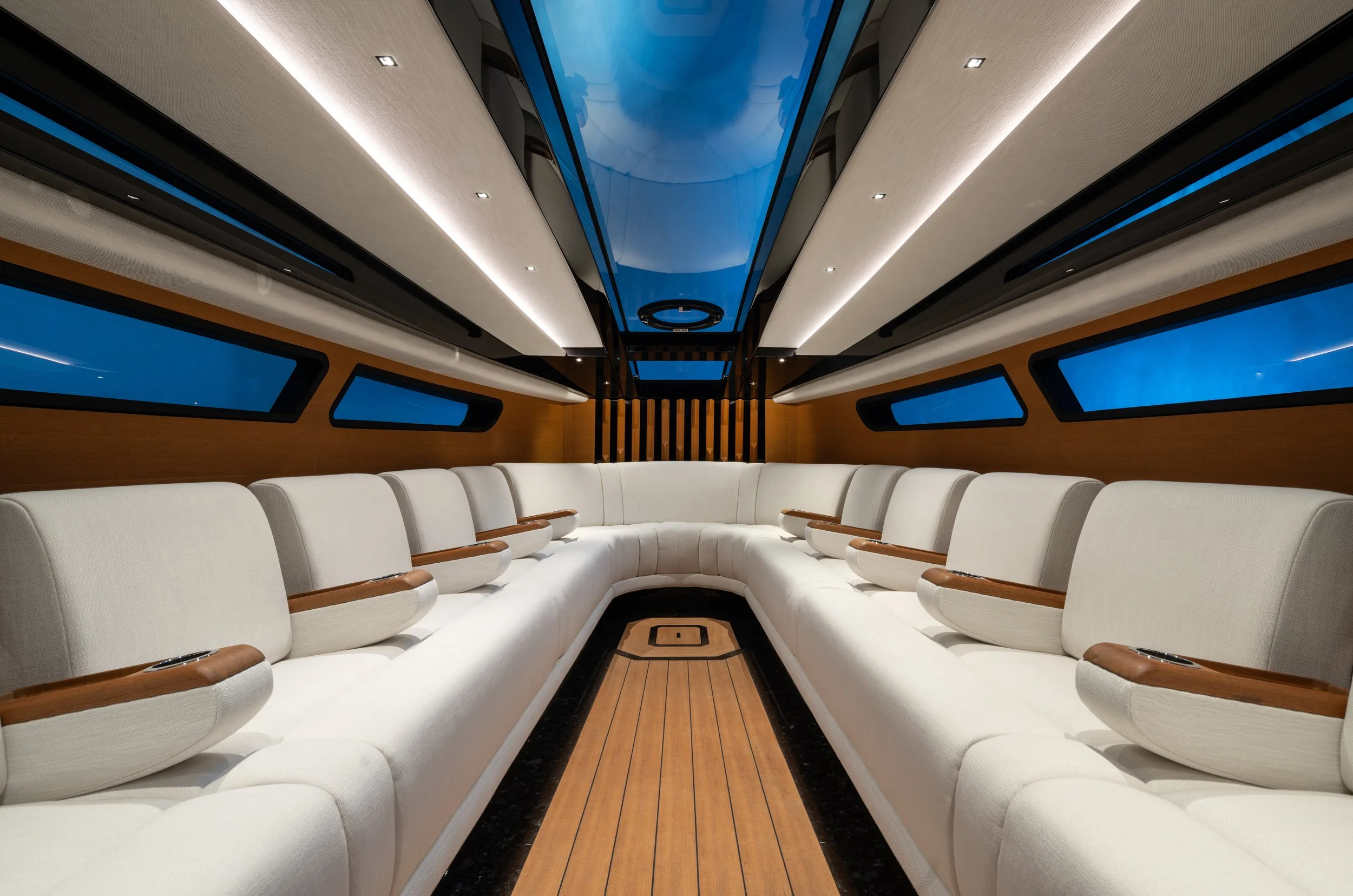 Pascoe · On the registerPascoe 10.4m TL LimousineLOA10.4mBeam2.95mTop Speed36knPrices on requestView on Superyacht Tenders →
which packages the enclosed cabin, glazing, and climate control into a hull sized for a mid-to-large yacht garage.
Builders and what they cost
The limousine tender is a specialist build, not a production line. A small group of yards dominate the segment: Pascoe International in the UK, Hodgdon in Maine, and Vikal in Western Australia between them account for most of the bespoke orders we track. Pascoe alone reports more than 270 tenders in active service after two decades of building for the segment, and its limousines feature joystick control, automated lighting, and engine-driven climate systems as standard. We keep a full review at limousine tender builders and list current and new stock at the limousine tenders overview and new limousines.
Pricing follows length, finish, and customisation, and because every cabin is tailored to its mothership there is no flat list price. The enclosed cabin, glazing, and climate package put a limousine above a comparable open tender of the same length. We break the numbers down at limousine tender cost, and the builder profiles sit under builders.
What we tell clients
When an owner or captain asks whether they need a limousine, we start with the itinerary, not the spec sheet. If the programme runs evening events, formal arrivals, mixed weather, or long coastal transfers, the limousine pays for itself the first time the open tender stays in the garage. If the boat lives on beaches and watersports in reliable sun, an open tender does the job for less weight and less money.
The strongest position, where the garage allows, is to carry both: an open tender for the beach and a limousine for the weather and the evening. Where only one tender fits, a convertible is often the honest compromise. Start at the limousine tenders overview to see the range, then read across to limousine vs open tender and choosing a limousine tender to settle the decision against your own use case.
Sources
- 10m Limousine | Luxury Tenders for Superyachts - Pascoe International — Pascoe (retrieved Jun 2026)