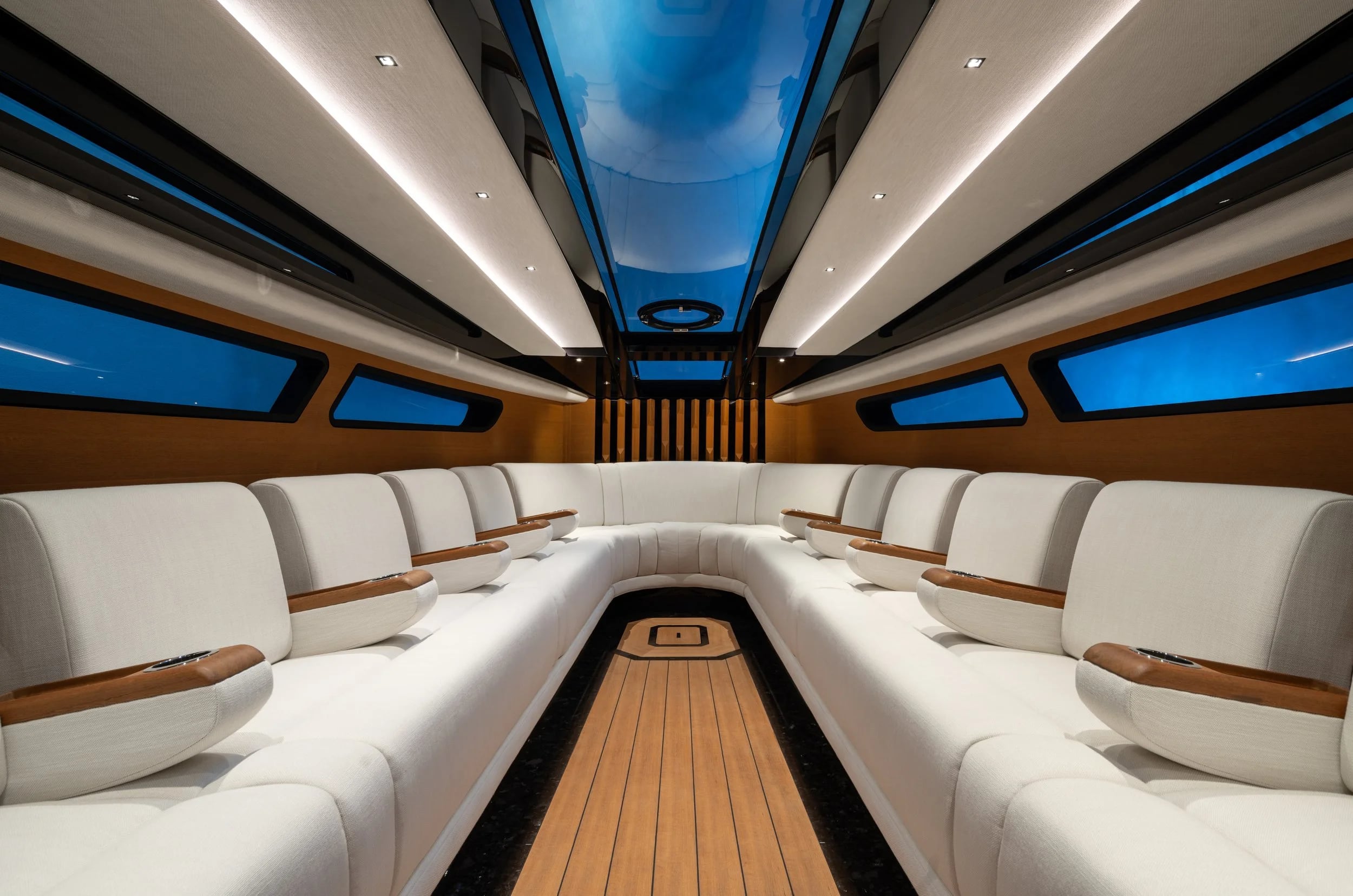
The Best Limousine Tenders (2026)

The best limousine tender is the enclosed boat that moves owner and guests ashore in any weather, in formal dress, dry, and clears the garage door. This is the owner's-side shortlist, a reference spec table, and the inputs that actually decide it.

Reviewed 17 May 2026

A limousine tender is the most visible asset on a programme and the one owners ask for first when they upgrade. "Best" is not the prettiest boat at the show, it is the one whose cabin layout suits the guest pattern, whose height clears the garage door with launch gear installed, and whose finish survives the season without looking tired. This is the owner's-side shortlist; for the full process see the best superyacht tenders and the limousine tenders pillar.

What a limousine tender is, and is not

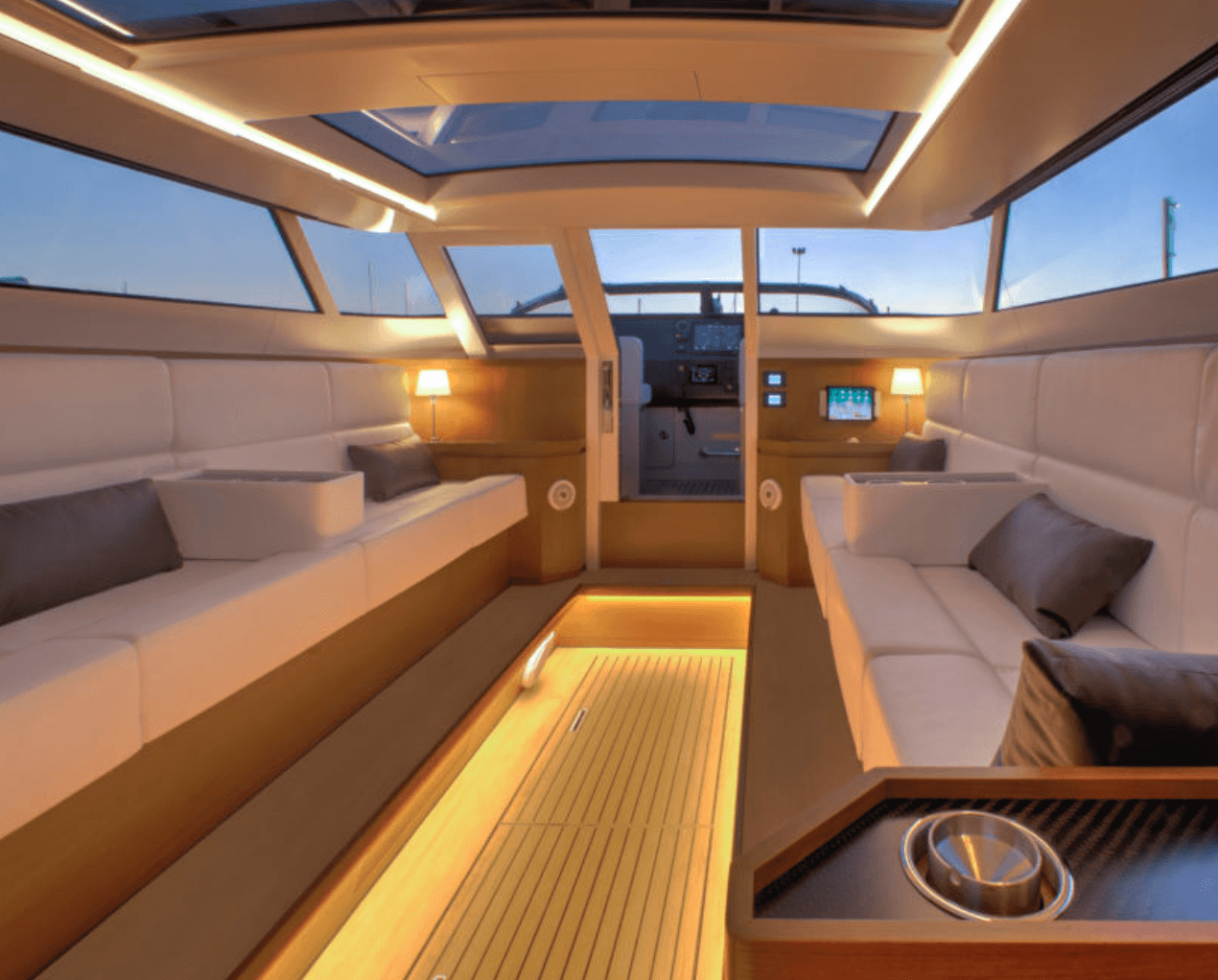
A limousine tender is a fully enclosed, climate-controlled, weatherproof boat with a dressed interior, built to move owner and guests ashore dry and in formal dress whatever the weather. That distinguishes it from an open tender (fair-weather day use) and a chase boat (a separate fast hull for missions, not transfer). The enclosure is the whole point and also the whole problem: it makes the boat heavier for its length and taller, which is what makes garage fit the binding constraint.

When an owner actually needs one

A limousine earns its garage space when guests must be moved in any weather, in formal dress, on a charter or busy private programme: think arrivals at a port in a mistral, or a black-tie transfer in light rain. Where the cruising is fair-weather and casual, a fast open boat may serve better and lift more easily. The honest test is the guest pattern and the weather window, not prestige.

What separates a great limousine tender

  • Cabin layout and seating. A 9 to 11 m limo seats roughly 8 to 12 guests; the capacity ceiling is usually SOLAS or coastal certification, not space. The furniture plan consumes the most owner time.
  • Climate and acoustics. The air-conditioning BTU at 32 Celsius sustained, and cabin noise in dB(A) at cruise, separate a good limo from a tiring one. Ask for measured figures, not adjectives.
  • Motorised access. Powered doors, a boarding passerelle and low, dry transfer geometry at the swim platform.
  • Mothership-matching design. A semi-custom hull dressed to the yacht versus an off-the-shelf interior; this is a real cost fork.
  • Garage and lift fit. A 10 m limo is typically 2.6 to 2.8 m off the cradle against roughly 2.0 m for an open boat. The headliner must clear the door track with the cradle raised. See tender garage sizing.

The builders we shortlist

The enclosed-limousine segment is concentrated. The names that recur on our briefs:

  • Pascoe, the British semi-custom and full-custom specialist, strong on the very-high-spec finish end, vertically integrated from design to sea trials.
  • Compass, a focused semi-custom limo line; the T/T H3 is presented as a 12-guest climate-controlled cabin boat with bespoke finish (verify the current spec with the builder).
  • Castoldi, limo variants of the waterjet platform, the answer when shallow draft or beach access is in the brief.
  • Wajer, enclosed and convertible models on a semi-custom track with short, predictable build cycles.
  • Williams, the EvoJet 70 as a compact limousine-class option for motherships over roughly 40 m, with an electric EvoJet 70E variant (58.5 kWh), per itBoat.
  • Yachtwerft Meyer, the Silverline (roughly 8 to 9.5 m) and Impetus (roughly 10.5 to 12 m) lines, 30-plus knots, open or limo, per Northrop & Johnson.

Outside the linked register, Falcon Tenders, Hodgdon and Tenderworks are all routinely on a serious limousine shortlist and should not be discounted because they have no page here.

Reference specifications

Indicative published figures for two common limousine reference points. These are reference points for the segment, not a ranking.

SpecFalcon 9m LimousineCastoldi Jet Tender 34 Limo
LOA9.0 m10.5 m
Beam2.85 m2.8 m
Height2.0 mNot published
Dry weight4,545 kg5,800 kg
Power2x Yanmar 4LV 250 ZT 3702x Yanmar 4LV 250 hp, Castoldi Turbodrive 284 HCT waterjet
Top speed30 kn35 kn
Capacity12 + 2 crew12 + 2 crew
List priceNot publishedNot published

Source: BOAT International, best tenders 2025. The Castoldi 34 is also offered as an Open Sport Limo on twin 440 hp Yanmar power for up to roughly 50 knots, per Northrop & Johnson.

Propulsion and the move to hybrid and electric

Limousines are mainly twin sterndrive on 9 to 12 m hulls, twin diesel waterjet where shallow draft or beach access is needed, and twin shaft on heavier 12 to 14 m boats; the tender propulsion guide covers the trade-off. The notable 2026 shift is electrification at the top of the segment: electric Williams EvoJet variants and Falcon's hybrid-electric closed limousine show the category moving first, because short-cycle, emissions-sensitive transfer work is exactly where the current battery envelope is credible. See electric and hybrid yacht tenders.

How to choose

Fix the brief and the garage envelope first, then shortlist three or four of the builders above and put them in a side-by-side comparison on the specs that bind: loaded weight, height on the cradle, recovery sea state, cabin dB(A) and air-conditioning capacity, parts support, not the brochure top speed. We run that comparison from the owner's side; tell us the mothership and the guest pattern and the shortlist follows.
What is the best limousine tender?
There is no single best. The segment is concentrated around Pascoe, Compass, Castoldi, Wajer, Williams and Yachtwerft Meyer, with Falcon, Hodgdon and Tenderworks credible outside the linked register. The right one is decided by cabin layout, the garage-height penalty and the finish standard, not the badge. See the limousine tenders pillar.
What is the difference between a limousine tender and an open tender?
A limousine is fully enclosed, climate-controlled and weatherproof with a dressed interior; an open tender is uncovered for fair-weather day use. A limo is heavier for its length and harder to fit through a garage door because the cabin sets the height, which is usually the binding constraint.
How big is a limousine tender?
The mainstream is 8.5 to 12 metres. Below 8 m the enclosed cabin becomes claustrophobic; above 14 m it is really a chase boat with a limo deck. The cabin sets the garage-height requirement, which is usually what binds, not the length.
When does an owner actually need a limousine tender?
When guests must be moved ashore in formal dress, in any weather, on charter or a busy programme: the all-weather A-to-B role an open boat cannot cover. If the cruising is fair-weather and casual, a fast open tender may earn its garage space better. The decision is the guest pattern, not prestige.
How much does a limousine tender cost?
No builder publishes list prices, so treat these as indicative owner's-side working bands only: roughly 700,000 to 1,200,000 EUR for an 8 to 9 m semi-custom boat, 1.2 to 2.2 million for 9 to 11 m, and 2.2 to 4 million-plus for custom 11 m and up, before transport and options. Propulsion, interior finish and the air-conditioning and AV fit-out move the headline most.
Are limousine tenders going hybrid or electric?
Increasingly, yes, at the top end. Builders now offer hybrid and fully electric limousines (for example electric Williams EvoJet variants and Falcon's hybrid-electric closed limousine), suited to short-cycle, emissions-sensitive transfer work. See electric and hybrid yacht tenders for where it fits.