A RIB tender is one of the widest price categories in the whole tender market. The same three letters cover a sub-six-metre console boat you could buy off a dealer's floor and a fully bespoke carbon launch built to match a 90 metre yacht. The number on the invoice can differ by two orders of magnitude, and almost all of that spread is explained by a handful of choices. This page walks through what those choices are, the bands they land you in, and what the boat costs to run once it is aboard. If you want the broader picture across all tender types, start at cost of a superyacht tender.
What drives the price
Five variables set the cost of a RIB, and they stack. Change one and you move within a band. Change three and you move between bands.
- Tube material. PVC is the cheapest collar fabric and the shortest-lived. CSM (Hypalon) costs more per metre and lasts far longer. The choice is a real cost lever at the order stage and again at retube. We cover the trade in full at RIB tube materials.
- Hull construction. A standard moulded GRP hull is the baseline. Advanced composite, and then full pre-preg carbon cured in an autoclave, each add a tier. Carbon buys stiffness and weight savings that a production hull cannot, and you pay for it.
- Propulsion. Outboards are the cheapest and simplest. Sterndrives sit above them. A waterjet, the format most guest RIBs on larger yachts use, is the most expensive driveline and the one that most affects garage layout.
- Finish. A production gelcoat boat and a bespoke painted hull with a colour-matched collar and a custom upholstery package are not the same product. Finish alone can move a build a full tier.
- Builder. The yard sets the floor. A volume production builder, a mid-market specialist, and a bespoke carbon yard occupy different price worlds before you have specified a single option. See RIB builders compared for who sits where.
Two boats of identical length can sit a long way apart once these stack up. Length is the first thing buyers ask about, but it is rarely the biggest driver. For how size and price interact, see RIB tender sizes.
The price bands, from production to bespoke
We think in four bands. The figures below are directional, expressed as "from," and they move with the euro, the model year, and the options list.
- Production console RIBs. Small dealer-floor boats from the volume builders, typically sub-six-metre, PVC or entry Hypalon collar, outboard. These start in the low tens of thousands. This is the cheapest way into a competent RIB and the right answer for a simple beach-run tender.
- Production and semi-custom guest RIBs. The 4.5 to 7.5 metre jet RIBs that fill garages on 30 to 60 metre yachts. Moulded GRP hull, Hypalon collar, waterjet, garage-friendly geometry. These run from the high tens of thousands into the low hundreds of thousands depending on length and spec.
- Large sport and custom RIBs. The 9 to 14 metre boats where the tender doubles as an owner's sport boat. Higher-spec hulls, larger drivelines, a real finish. These sit in the mid to high hundreds of thousands. The
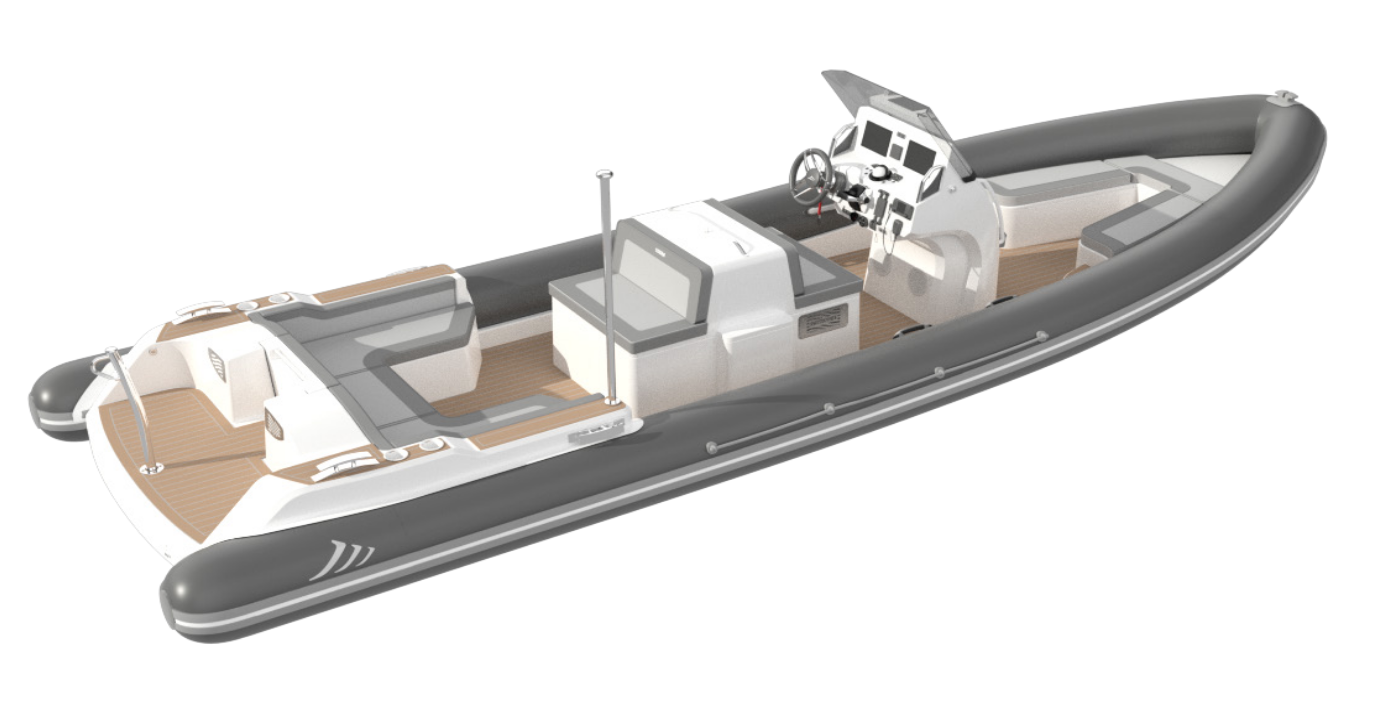 Cobra · On the registerCobra 8mLOA8.0mBeam2.55mTop Speed40knPrices on requestView on Superyacht Tenders → sits at the working end of this band.
 - Bespoke carbon superyacht RIBs. Full carbon hulls, bespoke layout, colour match to the mothership, and the highest tube and finish specifications. These start well into seven figures. The
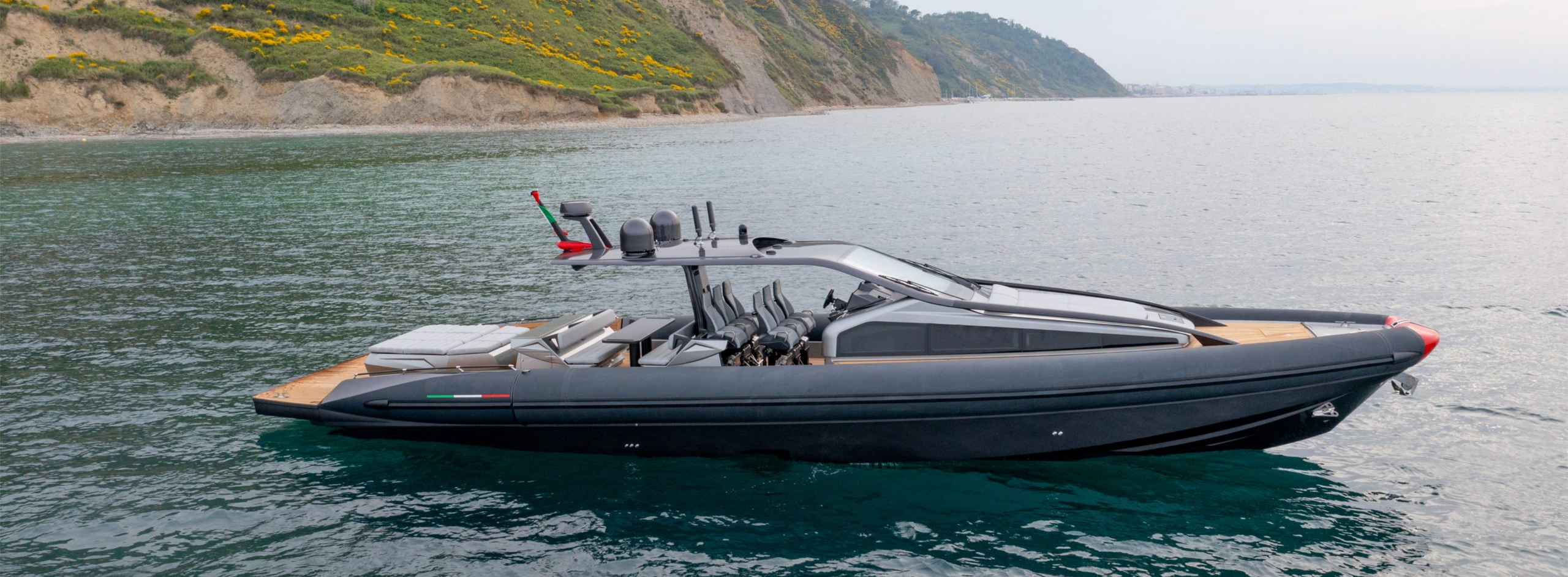 Anvera · On the registerAnvera 58SLOA17.5mBeam5.12mTop Speed53knPrices on requestView on Superyacht Tenders → is a good marker for the performance end of this band.
The jumps between bands are larger than the spread within any one band, which is why specification discipline matters more than haggling. Decide which band the brief actually needs before you start optioning. The framework for that decision is at choosing a RIB tender.
What you are paying for at the top of the range
It is worth being specific about why a bespoke RIB costs what it does, because the gap looks irrational until you break it down. A flagship carbon RIB is not a production boat with a higher price tag. It is a different object: a pre-preg carbon hull built in an autoclave, a collar specified and constructed to a far higher standard than a production tube, a driveline matched to an exact performance target, and a hull moulded to fit one garage envelope to the millimetre. Add a paint finish that matches the yacht and an interior built to the same brief, and the cost follows the labour and the materials rather than any markup. The collar alone is a meaningful share of the bill, which is why RIB collar construction is worth understanding before you sign.
Running costs, including the retube
Purchase price is the headline. Running cost is the part owners underestimate. A RIB carries the same standing costs as any tender: insurance, servicing, fuel, antifoul, and winter storage. Across the tender fleet, industry estimates put annual upkeep in a band of a few thousand euros per boat, and a RIB sits inside that. The Lengers Yachts running-cost overview puts tender upkeep in roughly the 2,000 to 8,000 euro per year range, which matches what we see.
The cost unique to RIBs is the retube. A collar is a wear item. PVC tubes typically need replacing around the ten-year mark, sometimes sooner under hard Mediterranean sun. Well-kept Hypalon collars last far longer, commonly fifteen to thirty years. When the day comes, a full Hypalon retube runs around 1,000 pounds per metre as a rule of thumb, more once you add handles, wear patches, and a colour match. That is not a fault: it is the planned mid-life cost of owning a RIB, and it is the strongest argument for paying up for Hypalon at the order stage if the boat will see heavy sun and a long ownership.
Where the value sits
A RIB holds value better than buyers expect, and better than many enclosed tenders of the same age, because the format is proven, the market is deep, and a tired collar can be renewed without touching the hull. That last point matters: a retube resets the part of the boat that ages fastest, so a ten-year-old hull with a fresh collar presents far better than its age suggests. The risk runs the other way at the bottom of the market, where a cheap PVC boat reaches the end of its collar life and the retube cost approaches the residual value of the whole boat. The value question is really a band question, the same one that runs through this whole page. For the wider RIB picture see the RIB tenders overview, and for the full tender market the superyacht tenders overview.
What we tell clients
Decide the band before you decide the boat. Most overspending we see comes from buying up a band for capability that the actual use case never calls on, and most underspending comes from buying a cheap collar that needs replacing inside the ownership. Pick the band the brief needs, specify Hypalon if the boat will live in the sun and stay in the fleet, and budget the retube from day one rather than treating it as a surprise. Do that and the RIB is one of the better-value boats in the garage. If you want curated picks across the bands, the best RIB tenders guide is the place to start, and if you are still deciding whether a RIB is the right format at all, read what is a RIB tender.
Sources
- Cobra Design and Hand Build Process | Customisable RIB Boats — Cobra (retrieved May 2026)
- Explore the Nautique Inboard Range | Cobra Custom RIBs — Cobra (retrieved May 2026)