Choosing a RIB tender is a series of decisions taken in order, not a feature comparison taken at random. Get the order wrong and you end up with a boat that looks right on paper and does not fit the garage, or fits the garage and cannot do the job. This guide walks the decisions in the sequence we use with clients: brief, fit, tubes, hull, propulsion, console, finish, then builder. If you are new to the category, start with what is a RIB tender and come back here to specify one.
1. Define the brief
Before any spec, write down three things: duty, guests, and conditions. Duty is the job. Is this a crew workboat, a guest day boat, a beach shuttle, or a fast chase platform? Guests is the realistic peak headcount, not the optimistic one. Conditions is where it runs: flat marina hops, open Mediterranean chop, or exposed coastal water. Those three answers drive every choice below. A crew RIB and a guest RIB built to the same length are different boats, and the brief is what separates them.
2. Size to the garage or davit
This is the hard constraint, so it comes second. The garage opening and the davit rating set a ceiling that no amount of want can lift. Measure the cavity in three dimensions and confirm the lifting arrangement against the loaded weight, not the dry weight. Our RIB tender sizes guide maps the standard bands.
Most guest RIBs settle in the 6 to 9 metre band, which boats.com calls the volume sweet spot for a yacht tender. Crew RIBs run shorter at 4 to 6 metres, and sport or chase RIBs push out to 9 to 14 metres. The industry rule of thumb is blunt: choose the largest tender you can carry, lift, and crew, then stop. Size up from the constraint, never down from the dream.
3. Choose the tube material
Tubes are the part owners ignore and regret. The choice is between Hypalon (or a modern CSM equivalent) and PVC. For Med and tropical programmes, Hypalon is the default: it resists UV, fuel, and abrasion, and it lasts 10 to 15 years in real service. PVC is cheaper and lighter but degrades in 5 to 8 years, so it only earns its place on a lightly used, garaged boat. We break the trade down in RIB tube materials, and the way the tube attaches to the hull matters just as much, which is covered in RIB collar construction.
4. Decide hull and deadrise
The hull under the tubes decides how the boat rides. Deadrise, the angle of the V at the transom, is the number to watch. A deep-V of 22 to 24 degrees cuts chop and stays comfortable offshore but needs more power and burns more fuel. A shallower V of 16 to 20 degrees is drier in the marina, more stable at rest, and easier to plane, which suits a beach shuttle. Hull material is the other axis: fibreglass gives the finish and shaping that guest boats want, aluminium gives the toughness and easy repair that crew and expedition boats want. Match the deadrise to the conditions you wrote down in step one.
5. Pick the propulsion
Propulsion follows hull and duty, not preference. There are three options and the choice is usually clear once the brief is set.
- Outboard. The most common driveline overall. Best range, easiest service, simplest replacement. The default for crew and chase RIBs, and for anything that needs to be worked hard and fixed quickly.
- Jet. Increasingly specified on guest RIBs because there is no exposed propeller at the swim platform and the package is compact, which makes it garage-friendly. The Yachting Magazine tender guidance notes the same swim-platform safety logic. The trade is a little less range and a higher service cost.
- Sterndrive. Older spec, still seen on larger inboard RIBs above 7 metres, but rare on new tenders. Specify it only if a particular hull is built around it.
6. Console and cabin
Now lay out the deck. An open console keeps weight and height down and maximises seating, which is what most garaged tenders want. A T-top adds shade at the cost of garage height, so check it against step two. For owners who run longer passages or want a head and a berth, a cabin RIB changes the brief entirely; see cabin RIB tenders before you commit, because the freeboard and weight push you back up against the garage ceiling.
7. Finish and detailing
Finish is where guest boats earn their keep and where budgets run away. Match the gelcoat and upholstery to the mothership, specify the tube colour to hide scuffs, and decide early on teak, hydraulic boarding, and integrated fendering. These are cheap to design in and expensive to retrofit. None of them should be allowed to compromise the four decisions above.
8. Shortlist the builder
Only now do you name builders, because the brief tells you which yard fits. Sport and performance briefs point to builders like the 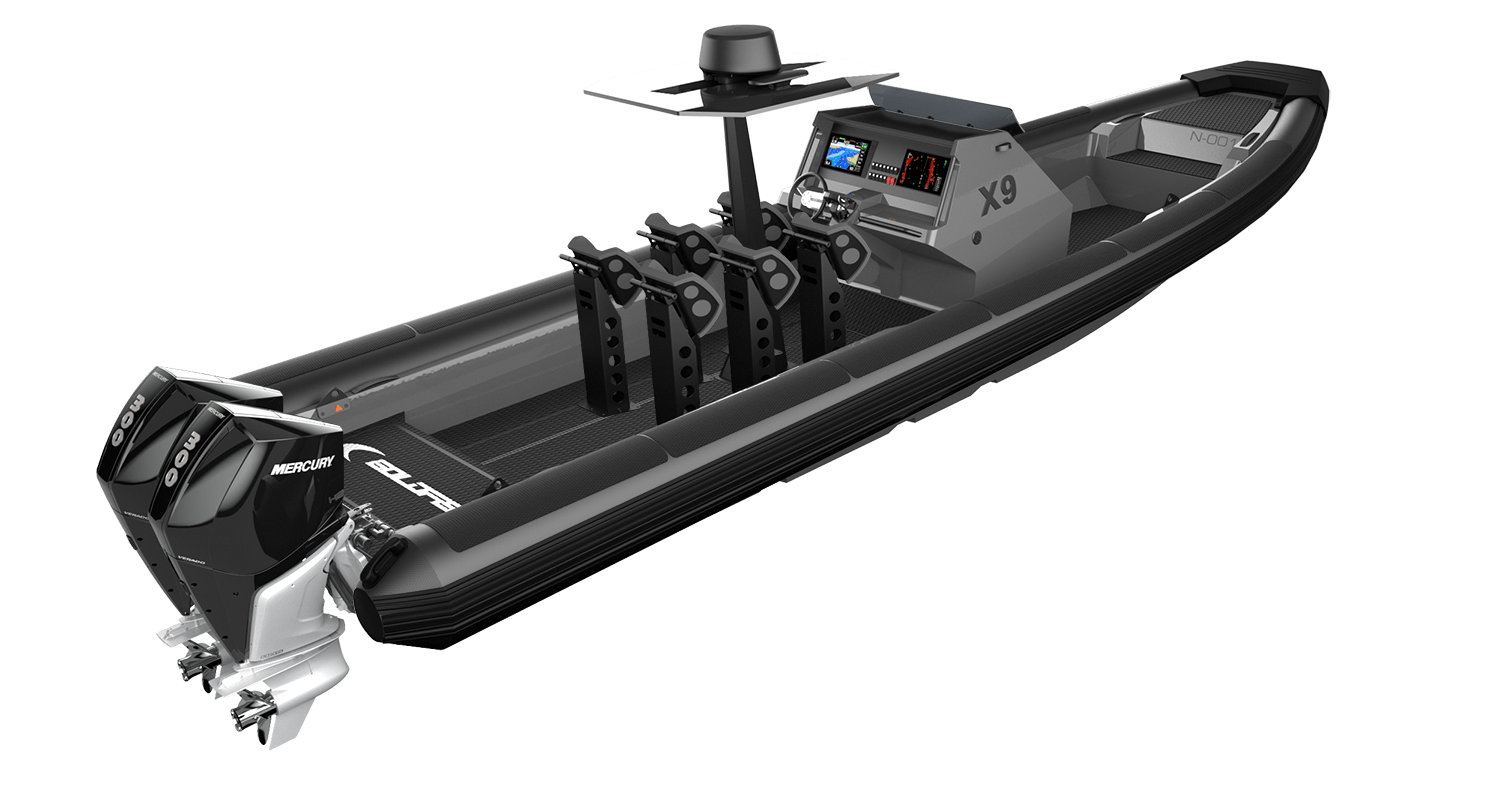 Goldfish · On the registerGoldfish X9LOA9.0mBeam2.30mTop Speed74knPrices on requestView on Superyacht Tenders → end of the market. Italian guest and luxury briefs point toward yards such as
 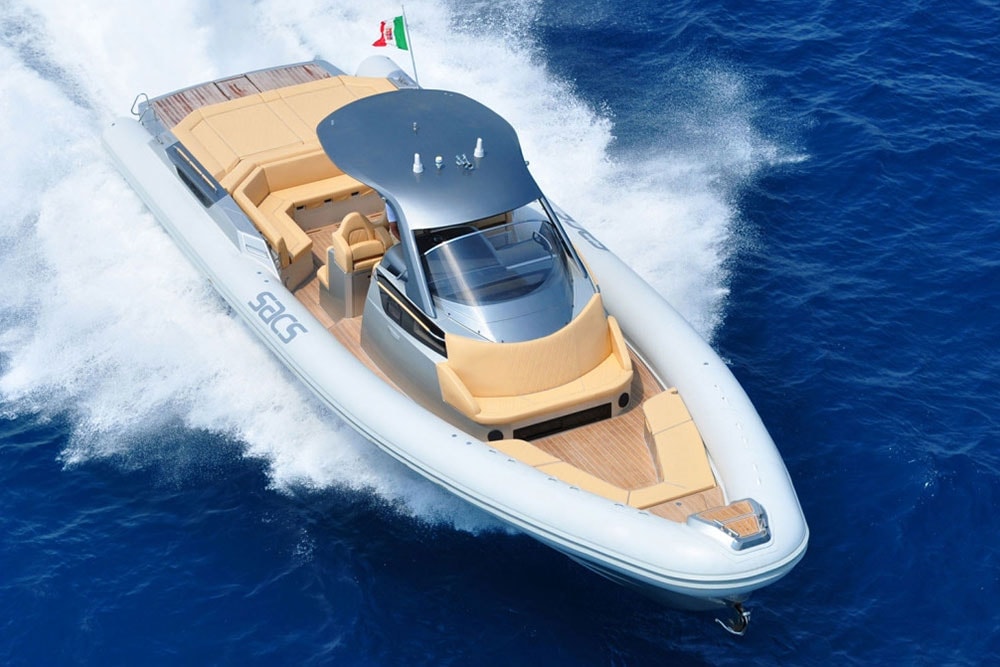 SACS · On the registerSACS Strider 15LOA15.0mBeam4.50mTop Speed42knPrices on requestView on Superyacht Tenders →. Tough, simple, work-ready briefs suit a hull like the
 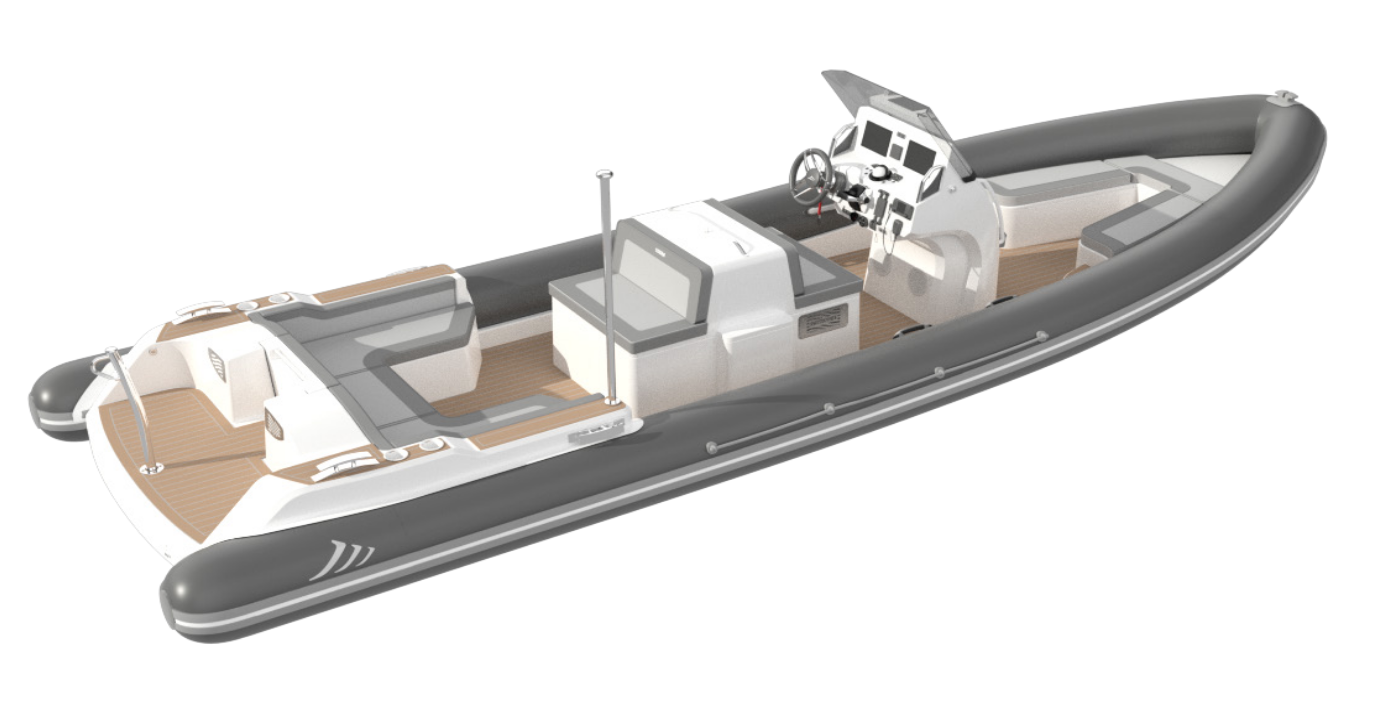 Cobra · On the registerCobra 8mLOA8.0mBeam2.55mTop Speed40knPrices on requestView on Superyacht Tenders →. Use RIB builders compared and our best RIB tenders shortlist to match the yard to the brief rather than the brochure. Cost varies widely across that field, so set the budget against the spec in RIB tender cost, and if you are still weighing the format itself, read RIB vs solid tender.
What we tell clients
The order is the discipline. We see owners fall in love with a builder, a colour, or a 40-knot top speed, then work backwards and discover the boat will not lift or will not fit. Start with the brief, let the garage set the ceiling, choose tubes and hull for the conditions, then let propulsion, layout, and finish fall out of those answers. Builders come last because by then the brief has already chosen them for you. When you are ready to look at real boats against this framework, browse new RIBs and pre-owned RIBs, and use the RIB tenders overview to read across the supporting guides.
Sources
- Cobra Design and Hand Build Process | Customisable RIB Boats — Cobra (retrieved May 2026)
- Explore the Nautique Inboard Range | Cobra Custom RIBs — Cobra (retrieved May 2026)