A RIB tender is a rigid hull wrapped in an inflatable collar, and that collar is exactly why the size question is more involved than a single length figure. The tube adds beam, buoyancy, and freeboard without adding hull volume, so a RIB carries more people per metre than an equivalent solid-hull tender and fits a garage differently. When we talk about rib tender sizes we are really talking about three numbers at once: length, tube diameter, and beam. Get all three right against the garage and the mission and the boat does its job. Treat length as the only number and you end up with a hull that either falls short of its brief or will not clear the hatch.
Size bands
These are the bands we work to when an owner is choosing a RIB tender. They are guidance rather than rules, because tube diameter and deck layout shift what each metre delivers, but they hold across most of the fleet.
- 3 to 4.5 metres, small davit and crew RIB. The compact end. A tubed dinghy on a swim-platform davit, a beach shuttle, or a crew runabout for a sub 30 metre yacht. Three to five people, an outboard, and not much else. Usually a second or third boat rather than the primary tender.
- 4.5 to 7 metres, primary guest RIB. The volume band. This is where most yacht RIBs live: a console or small cabin, seating for six to ten, and enough freeboard for a proper beach run. The default primary tender for yachts in the 30 to 50 metre range.
- 7 to 9 metres, large guest and utility RIB. A full-beam guest platform with a head, sun pads, and serious watersports pull. Also the size at which a dedicated utility or crew RIB earns its slot. This is roughly the ceiling for most tender garages.
- 9 to 11 metres, dayboat RIB. A real dayboat with cabin layouts appearing, twin engines, and range for coastal hops. Too big for most garages, so it lives on deck chocks, on heavy davits, or as a standalone hull.
- 11 to 15 metres and beyond, chase-capable RIB. Small yachts in their own right. Twin or triple power, 200 nautical miles plus of range, and increasingly run as a chase boat rather than a tender. The crossover from tender to chase boat sits around 11 to 14 metres.
Industry coverage tracks the same span. ONBOARD Magazine puts the working range for superyacht RIB tenders at roughly 4.5 to 13 metres seating four to ten guests plus crew, with anything larger drifting into the chase boat bracket (ONBOARD Magazine superyacht RIB tenders).
For data-rich examples across the bands, the 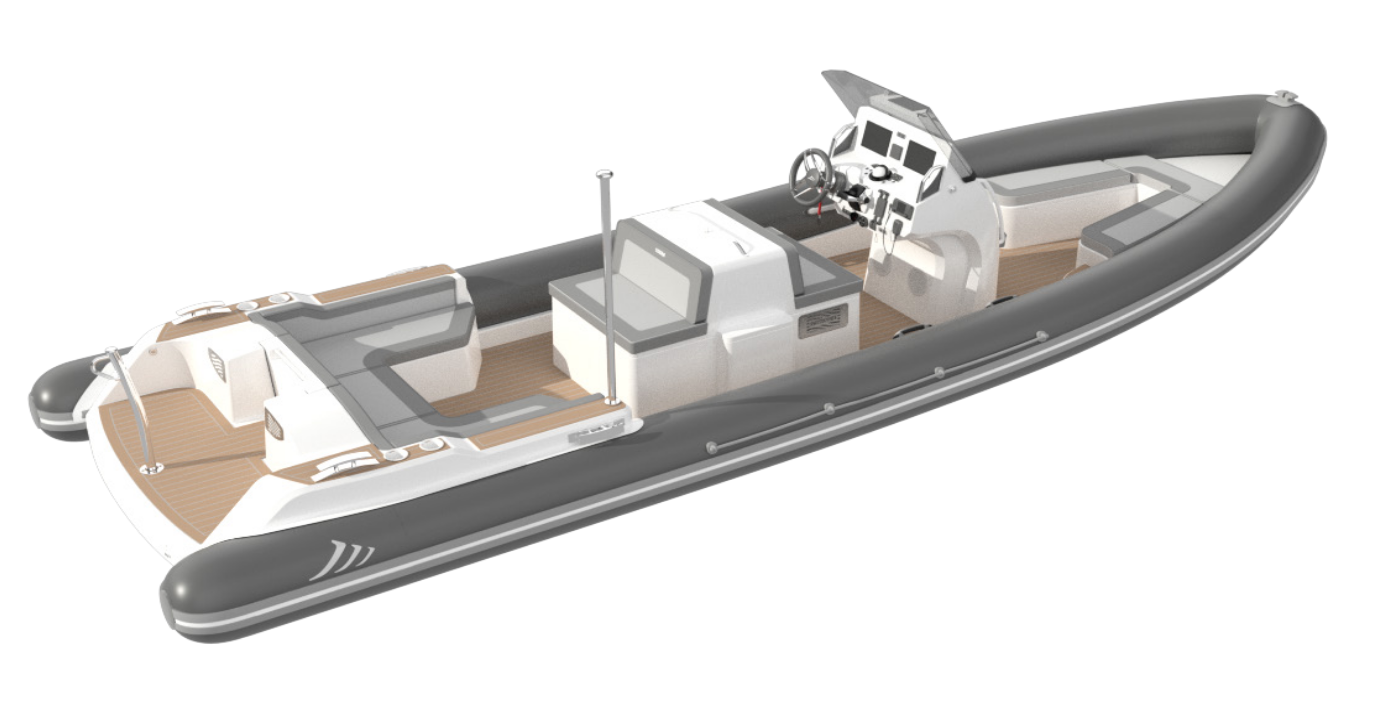 Cobra · On the registerCobra 8mLOA8.0mBeam2.55mTop Speed40knPrices on requestView on Superyacht Tenders → sits in the large guest band that most garages can still swallow, the
 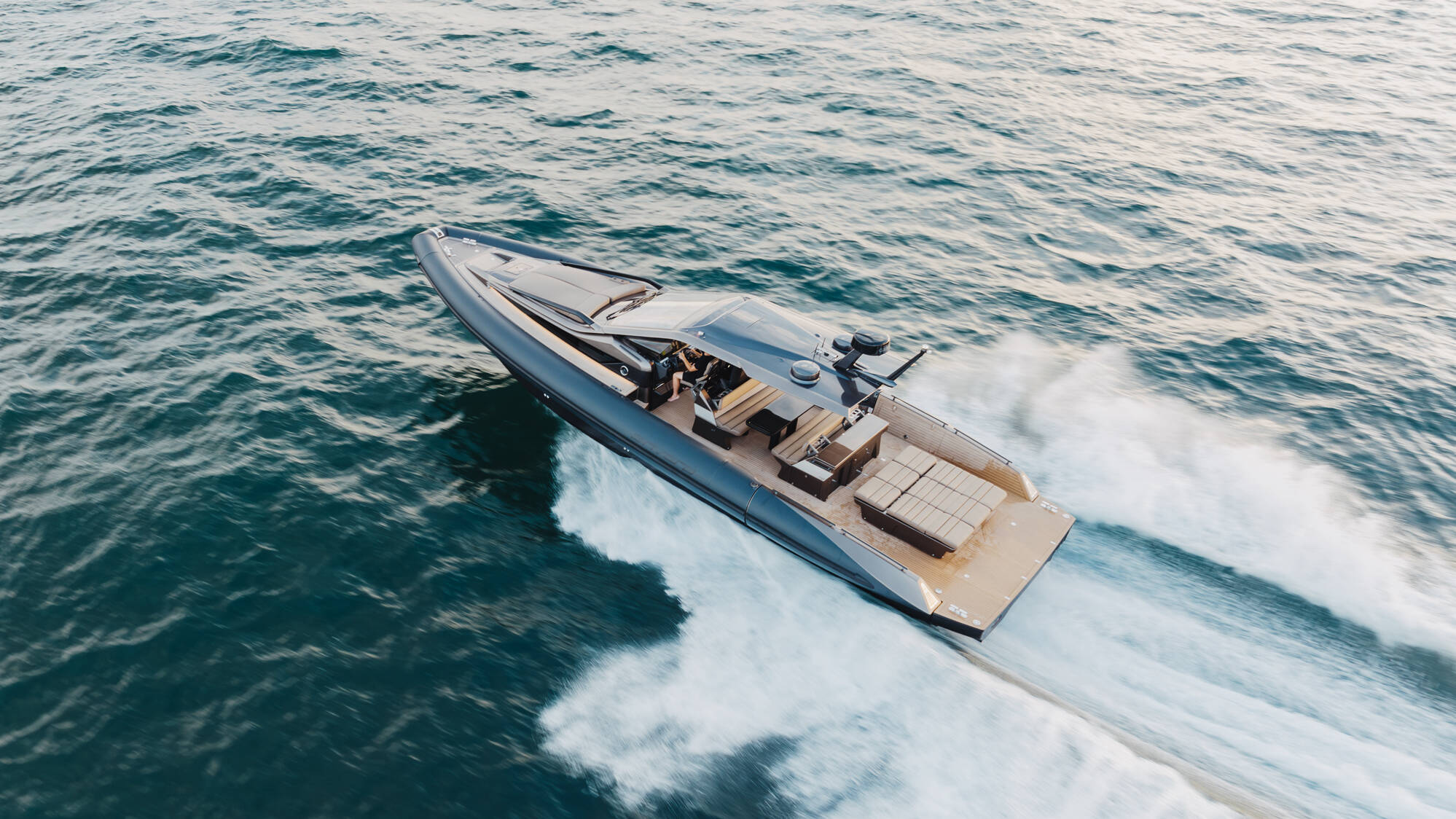 Anvera · On the registerAnvera 48 SLOA14.5mBeam4.91mTop Speed50knPrices on requestView on Superyacht Tenders → shows the high-performance dayboat end, and the
 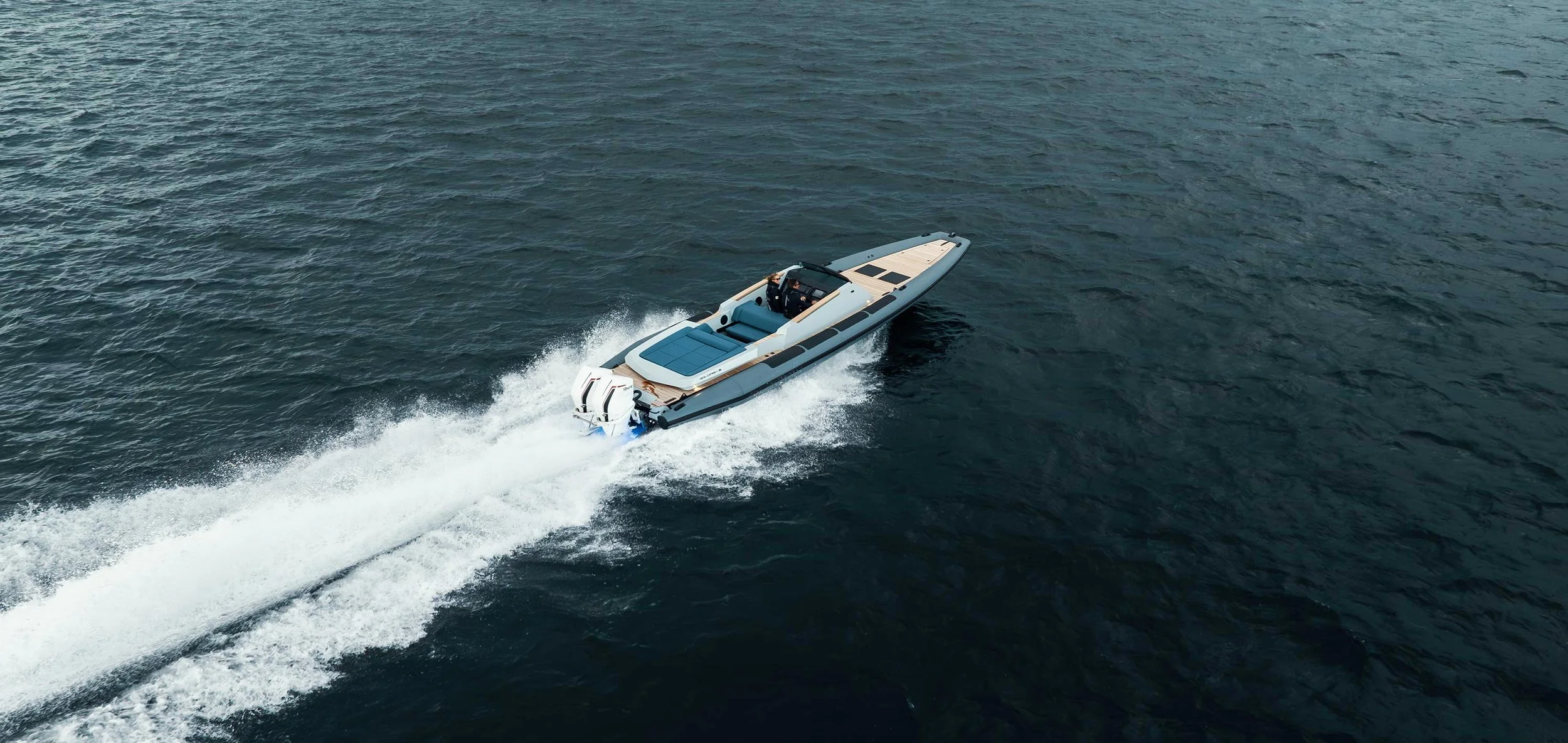 Goldfish · On the registerGoldfish 40 SuperSportLOA11.6mBeam3.40mTop Speed87knPrices on requestView on Superyacht Tenders → illustrates the chase-capable scale where a RIB stops being a garage boat at all.
Tube diameter and beam versus capacity
Length sells the boat. Tube diameter and beam decide what it actually carries, because a RIB's rated capacity comes from buoyancy and stability, and both come from the collar far more than from the hull underneath it.
Tube diameter is the headline. A larger tube adds buoyancy and pushes the beam out without lengthening the hull, so for a given length a fatter tube raises both the people count and the felt safety on board. Two 6 metre RIBs can carry very different loads: the one on a 50cm tube sits higher, drier, and rated for more bodies than the one on a 40cm tube. That is why builders quote tube diameter alongside length on every spec sheet.
Beam follows from tube diameter and sets three things at once:
- Capacity and stability. More beam means more deck, more seating, and a hull that resists rolling when guests crowd one side at a swim stop.
- Garage fit. Beam is usually the dimension that binds first. A RIB's tubes make it wider than a solid-hull tender of the same length, so the hull that clears on length can still foul the cradle or the hatch on width.
- Performance trim. A wide, deep-tube RIB is forgiving and dry but carries more wetted area; a slimmer tube runs faster and lighter but wets the crew. The mission decides which way to lean.
The practical takeaway is that you cannot read a RIB's capability from its length alone. We cover how the collar itself is built, and why diameter and chamber count matter, in RIB collar construction.
Garage and davit fit
Every RIB on a yacht has to get on and off the boat, and that is where size meets reality. There are three stowage routes, and each caps size differently.
A swim-platform davit suits the small end, roughly 3 to 4.5 metres, where loaded weight stays inside the davit's safe working load. A tender garage takes the middle band, but the cavity is fixed volume that competes with the beach club and lazarette, and beam usually binds before length because of the tubes. Most garages cap a RIB at 8 to 10 metres. Above that you are into deck chocks, heavy A-frame davits, or a standalone hull.
Three dimensions have to clear at once, and the RIB's collar complicates all three:
- Length and beam decide whether the hull sits on the cradle and clears the hatch, with tube width often the limiting figure.
- Height decides whether a console, T-top, or cabin passes under the deckhead.
- Loaded weight decides whether the launch and recovery system can lift the boat at all.
The geometry is where most RIB size decisions are actually won or lost, and we work through it in the tender garage sizing reference. The broader picture of how tender length is set by the mothership sits in superyacht tender sizes.
Matching size to yacht and mission
Once the garage sets the ceiling, the mission picks the hull within it. A RIB is bought to do a job, and the job should drive the band.
Beach and watersports programmes want beam, deck, and a forgiving ride, which pushes toward the wider end of the 4.5 to 7 metre band. Guest transfers and overnight comfort pull toward cabin RIB tenders at 7 metres and up, where a head and shelter become possible. Crew and provisioning runs want a tough utility RIB the deck team can throw at any task. Long coastal day-runs and shadowing the mothership at speed push past 11 metres into chase-capable territory, where a RIB is better run as a chase boat on its own berth than forced into a garage it will never fit.
The common trap is over-speccing length to win a garage it cannot fit, or under-speccing tube and ending up with a boat that feels nervous loaded. A bigger, fatter-tubed, more capable RIB also costs more to buy, lift, and maintain, and we set the numbers out in RIB tender cost. For a curated look across the bands, the best RIB tenders round-up is the place to start.
What we tell clients
Start with the garage and the mission, not the brochure length. Confirm what the hull can lift and what the cavity can swallow on beam, then pick the band that serves the brief, and only inside that band argue about tube diameter and deck layout. Almost every disappointing RIB decision we have seen came from reading length as the whole story and forgetting that the collar sets capacity and the hatch sets the ceiling.
If you are early in the process, begin at the RIB tenders overview and read across to collar construction and garage sizing. If the band you want is bigger than the garage allows, the honest answer is usually a chase boat rather than a RIB you cannot stow.
Sources
- Anvera Commercial Chase Boat Program - Anvera Yacht — Anvera (retrieved May 2026)
- Anvera 42 - Official Model Page, Anvera Yacht — Anvera (retrieved May 2026)
- Anvera 48 | The perfect following tender for your mega yacht. — Anvera (retrieved May 2026)
- Cobra Design and Hand Build Process | Customisable RIB Boats — Cobra (retrieved May 2026)
- Explore the Nautique Inboard Range | Cobra Custom RIBs — Cobra (retrieved May 2026)
- 40 SuperSport | Goldfish Boat — Goldfish (retrieved May 2026)