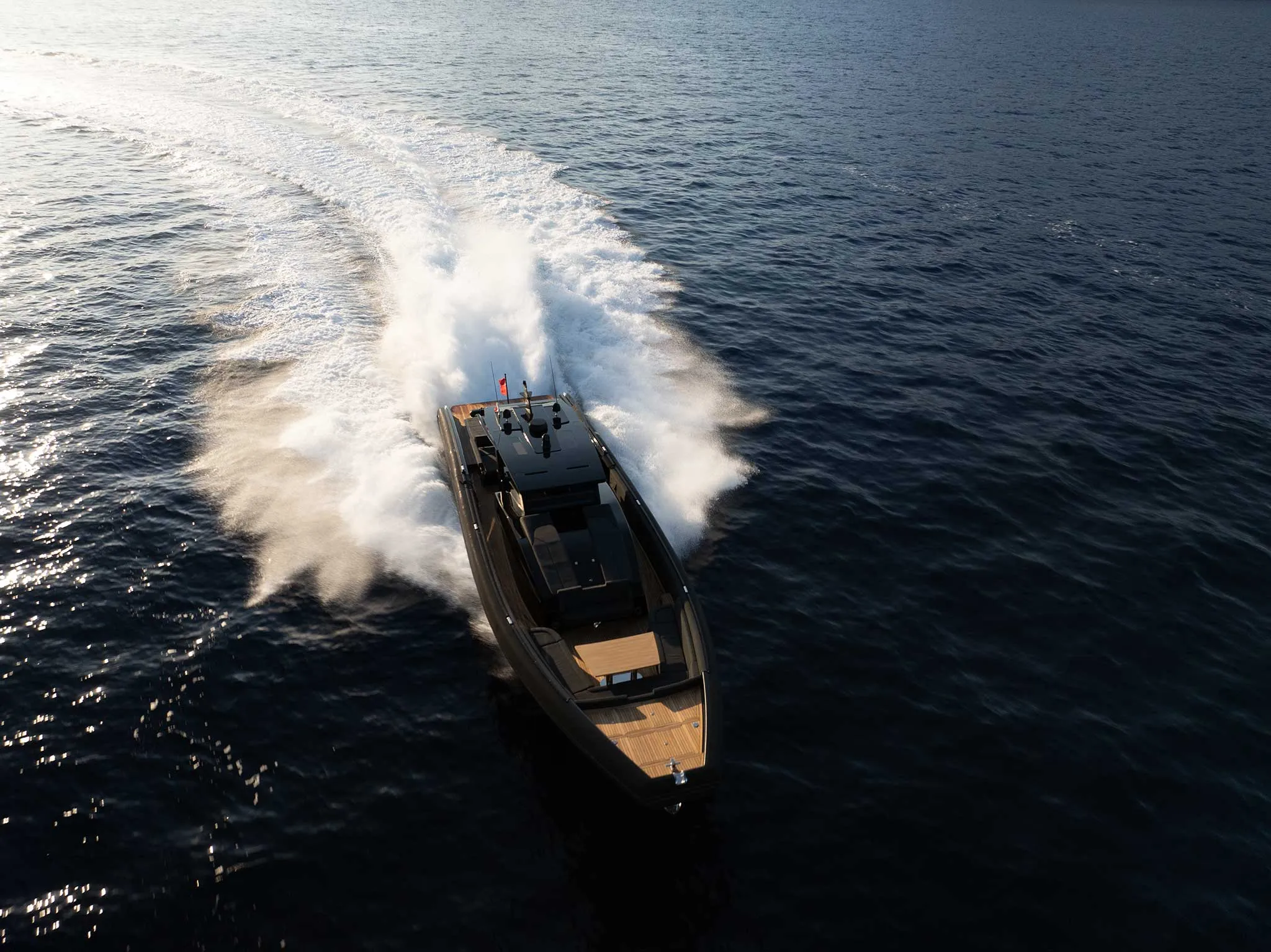
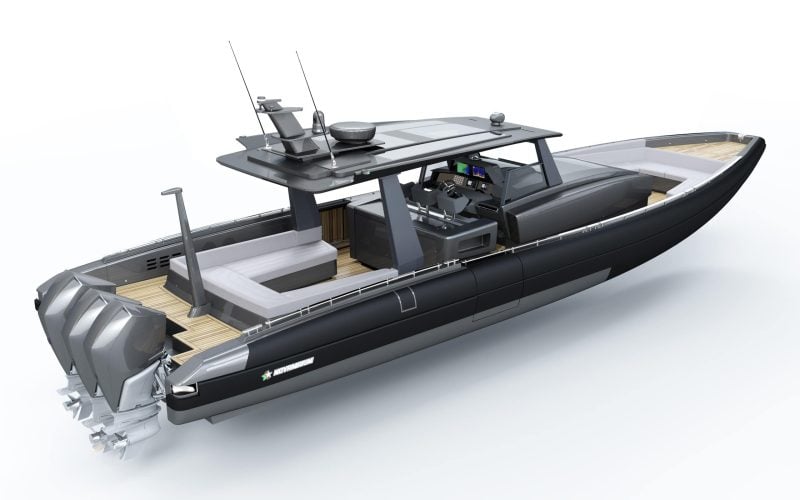
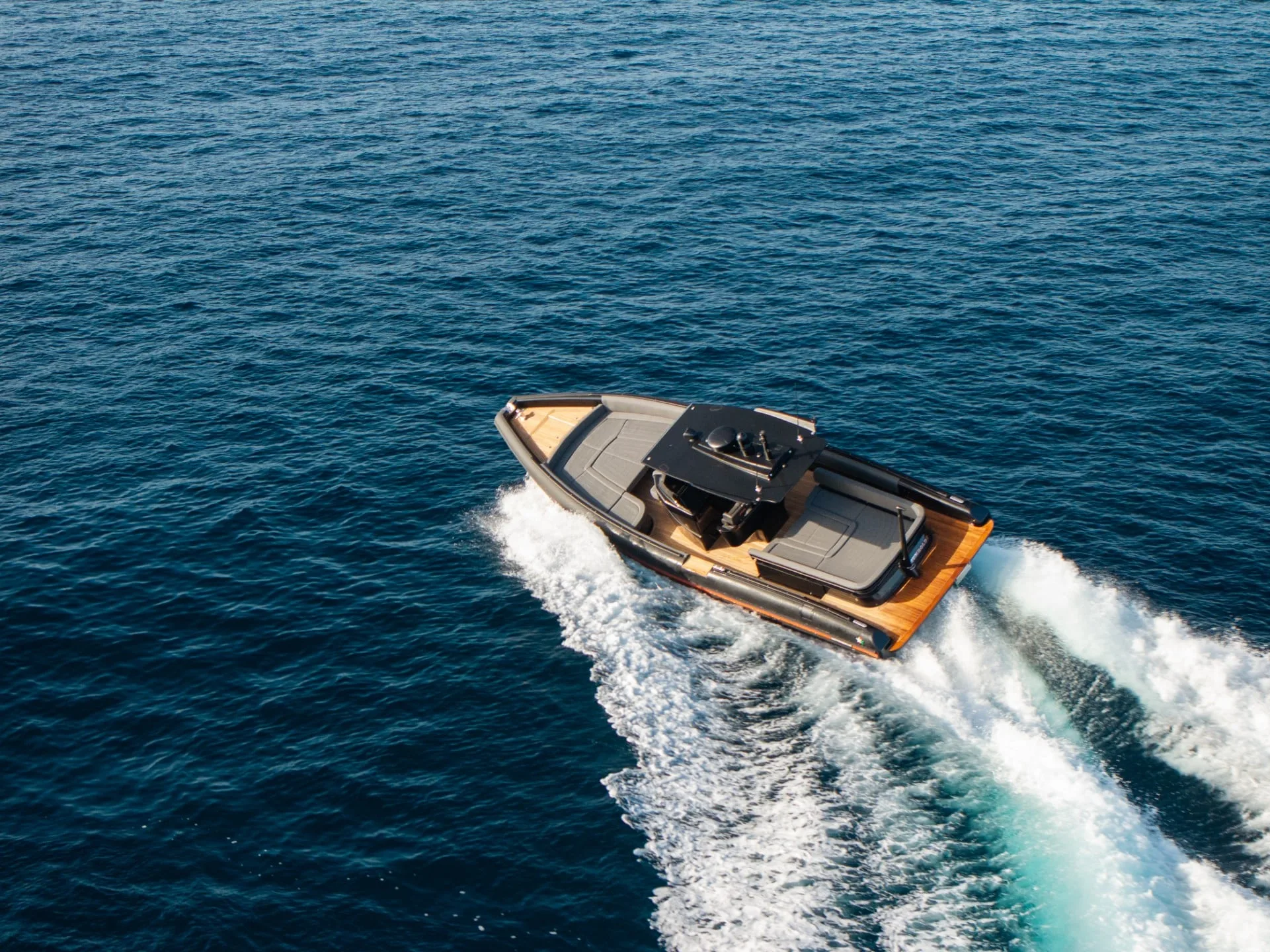
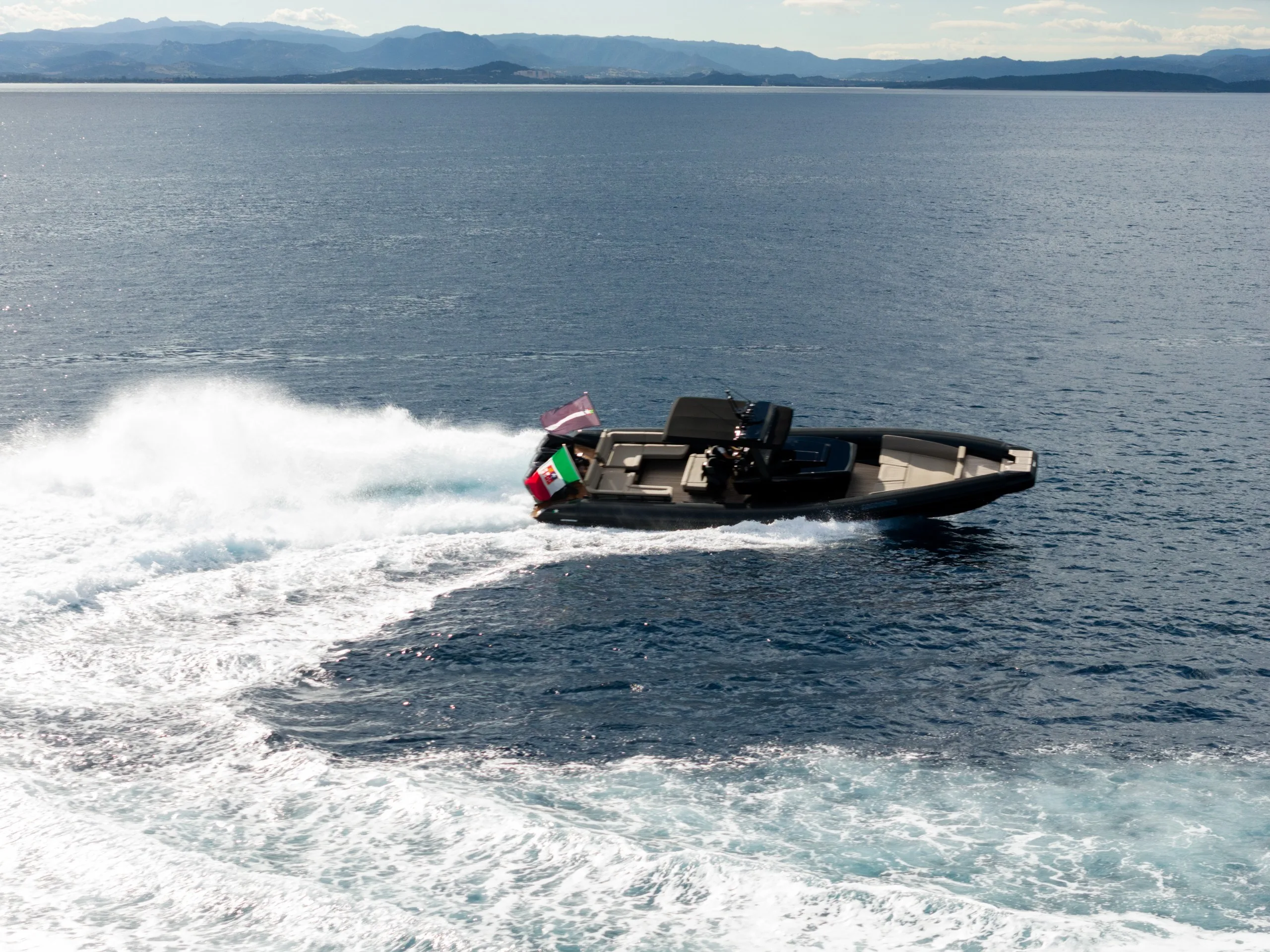
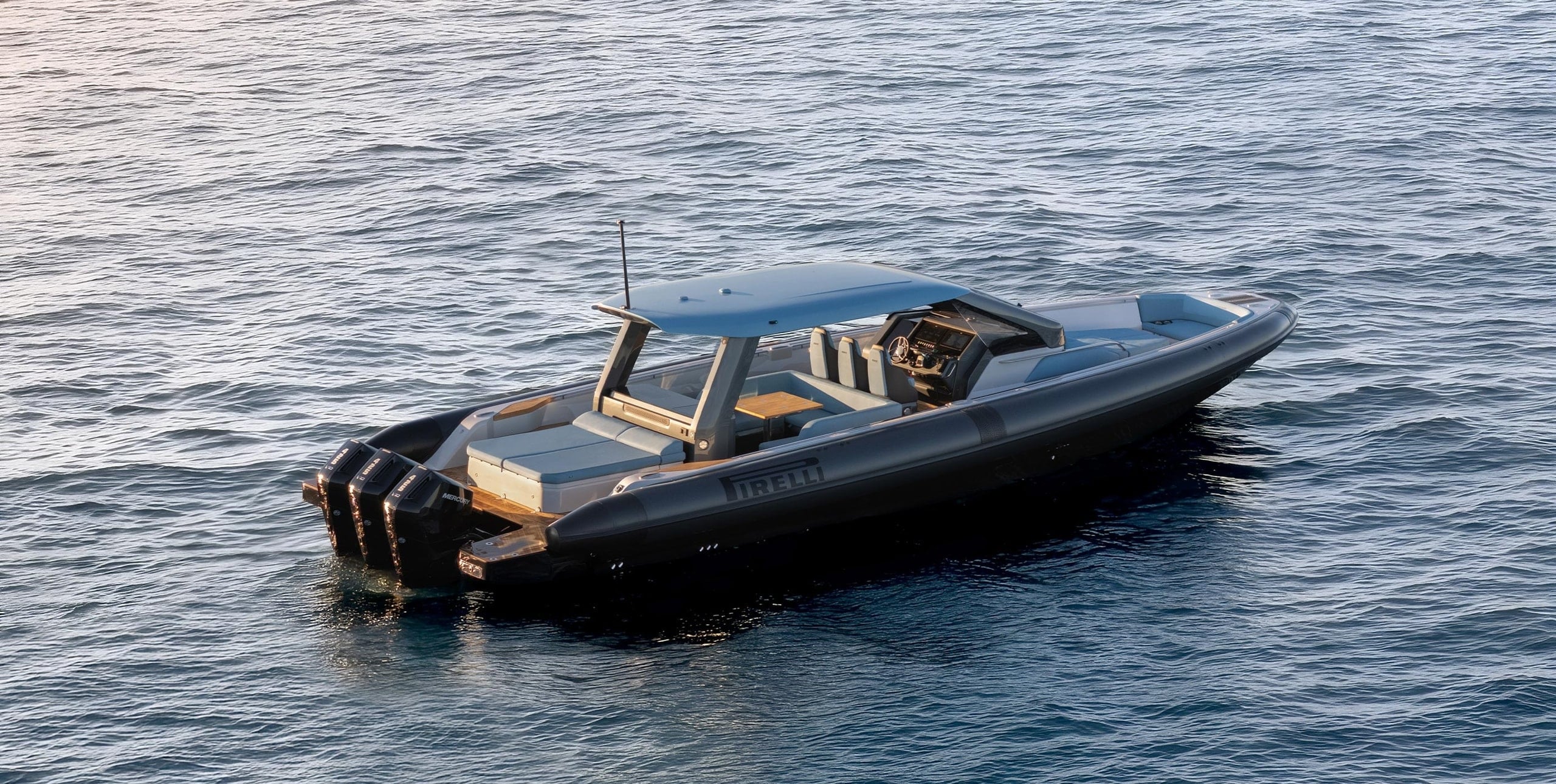
A cabin rib is a rigid inflatable built large enough to carry an enclosed or partial cabin, usually set behind a T-top or a full wheelhouse. It is the point on the rib range where the boat stops being a pure open day platform and starts offering shelter, a head, and sometimes a berth. Owners reach for one when an open rib leaves crew and guests too exposed, when the day plan runs longer than a beach transfer, or when the boat needs to work in weather. The category sits between a standard open rib tender and a chase boat, and the distinctions are worth getting right before you specify one.
What a cabin adds to a rib
The hull underneath a cabin rib is the same deep-V rigid inflatable that makes the type seaworthy. The cabin changes what the boat can do around that hull.
- Shelter. A partial or full cabin takes the helm and at least some seating out of spray, wind, and sun. Ribcraft describes its cabin and wheelhouse range as running from partially enclosed to fully enclosed for all-weather protection, with frameless reinforced windows for visibility (Ribcraft).
- Range. Shelter is what makes range usable. An open rib can carry fuel for a long run, but few crews want to drive three hours exposed. A cabin lets the boat cover a coastal transit in comfort rather than just on paper.
- Crew comfort. Cabin ribs are commonly fitted with heating, air conditioning, an integrated head, and shock-mitigation seating that cuts fatigue on long hours at sea. These are the features that let a deckhand run the boat all day without being beaten up by it.
- Overnighting. From around 11 metres a cabin rib can carry one or two berths, a basin, and a head. That turns the boat from a day platform into something a crew can sleep aboard on a delivery or a remote anchorage.
How it overlaps with chase boats
This is where owners get confused, so it is worth being precise. A cabin is a feature. A chase boat is a role. The two often coincide, but they are not the same thing.
A cabin rib of 12 to 14 metres, with range, a head, and a berth, makes a capable small chase boat. At that size the shelter and fuel load let it run independently alongside the mothership, which is exactly the job a chase boat does. The smaller end of the chase boat market is, in effect, a larger and better-equipped rib.
The test we use is where the boat lives and what job it does. If the cabin rib stows in the garage and launches as the yacht's primary tender, it is a tender that happens to have a cabin. If it runs from its own berth, carries its own crew, and operates as a parallel platform to the mothership, it has crossed into chase boat territory regardless of how it is built. Most cabin ribs sit on the tender side of that line. A handful, specified for range and independence, sit on the chase boat side.
Typical sizes
Cabin layout is governed almost entirely by length, because the tubes eat a fixed share of the beam and the cabin has to fit in what is left.
- 9 to 10 metres. A micro cabin or hardtop wheelhouse. The cabin shelters the helm and a navigator, with stowage rather than accommodation below. Good for crew transfers and pilot work in weather.
- 11 to 12 metres. A proper cabin appears. You get a head, a galley point, and a single berth or a convertible seat. This is the common cabin-rib sweet spot for a yacht that wants a sheltered tender without ordering a full day boat.
- 13 to 14 metres. Two berths, a usable head, and seating for a charter group under cover. At this length the boat reads as a small chase boat and is often specified as one.
For how cabin choices interact with stowage and guest count across the wider range, see our rib tender sizes guide. The cabin always costs you waterline length and weight, so a cabin rib carries fewer guests than an open rib of the same size.
A few production and semi-custom builders work this segment hard. The 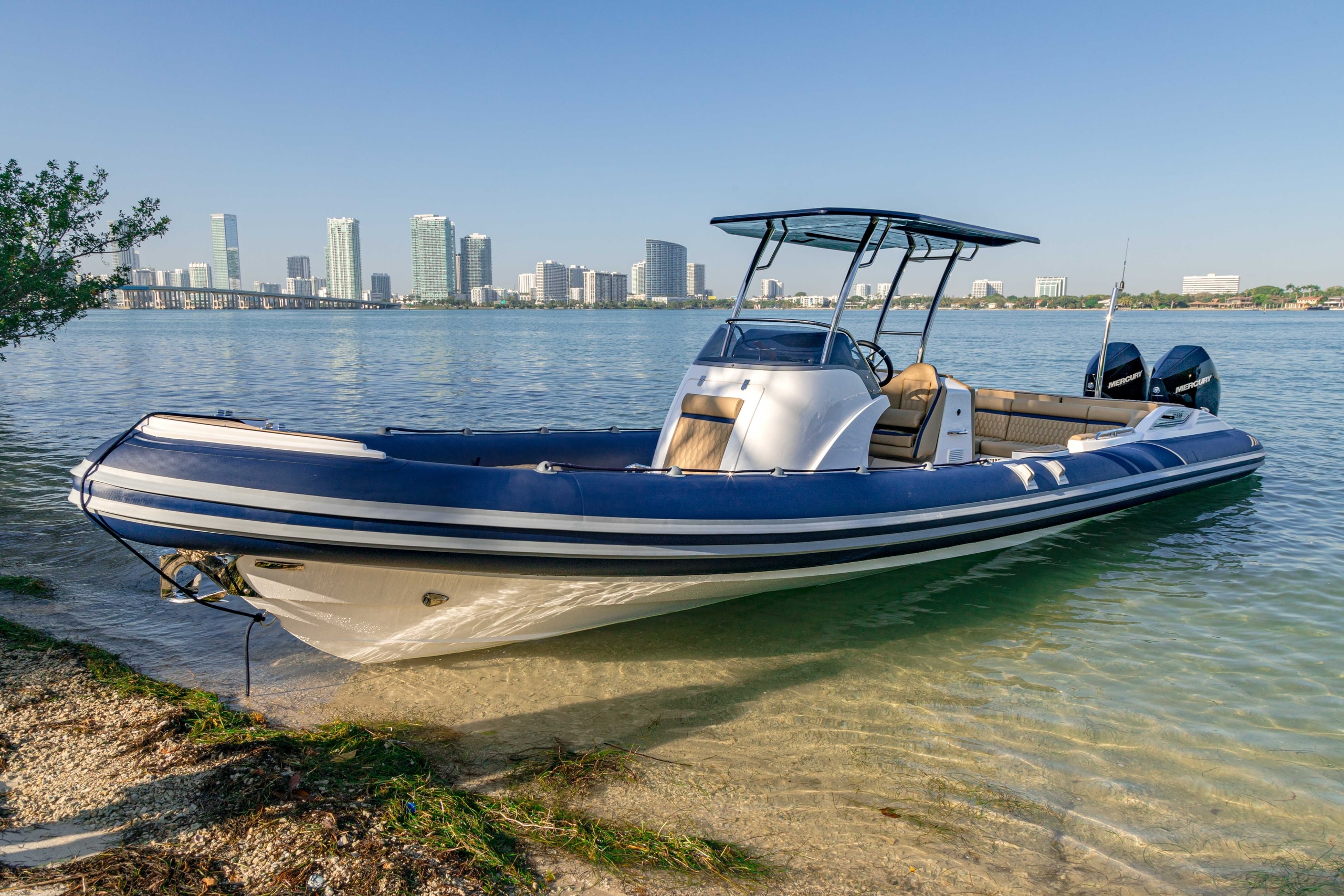 Cobra · On the registerCobra NAUTIQUE 9.7LOA9.7mBeam3.10mTop Speed58knPrices on requestView on Superyacht Tenders → shows how much can be packed into the lower end of the band, while larger Italian and UK yards build cabin and T-top variants up into chase boat length.
When an owner specifies one over an open rib
An open rib wins on simplicity, weight, guest capacity, and cost. It is the right default for most yachts. A cabin rib earns its place when one of these is true.
- The boat runs in weather. Northern Europe, shoulder-season Mediterranean, and any exposed coastline punish open ribs. A cabin keeps the boat usable when an open one stays on the chocks.
- The runs are long. Provisioning, crew changes, and airport transfers across a bay or up a coast are quicker and far more pleasant from a sheltered helm than an open one.
- The boat needs to overnight. Deliveries, regatta support, and remote-anchorage work all benefit from a berth and a head aboard the tender itself.
- Crew endurance matters. A boat the deckhand can run all day, in spray, without fatigue is a safer boat. Shock-mitigation seating and an enclosed helm are the reason.
If none of those apply, the cabin is dead weight and lost guest seating. We say so plainly when an owner asks. For the full decision framework see choosing a rib tender, and for where the cabin premium lands see rib tender cost. A cabin, wheelhouse, and the systems that go with it add meaningfully to both purchase and running cost.
What we tell clients
Start from the job, not the cabin. Most yachts are better served by a well-specified open rib that maximises guest seating and stows cleanly in the garage. The cabin rib is the right call in a narrower set of cases: exposed cruising grounds, long working runs, overnighting, or a tender that doubles as a light chase boat. When one of those is in the brief, a cabin or wheelhouse stops being a luxury and becomes the thing that keeps the boat in service.
Be honest about where the boat will live. A cabin rib in the garage is a sheltered tender. A cabin rib on its own berth, running independently, is a small chase boat, and it should be specified against that role rather than against the rest of the tender fleet. If you are weighing the two, read what is a chase boat alongside this page, then start from the RIB tenders overview and our best rib tenders review to see how the cabin and open variants compare across the builders we track.