A RIB tender is a rigid inflatable boat used as a yacht's day boat: a solid moulded hull below the waterline, joined to an inflatable tube, the collar, that runs around the topsides. The two halves do different jobs. The hull gives the boat its shape, its deadrise, and its ability to plane. The collar gives it buoyancy, stability, shock absorption, and a fender that wraps the whole perimeter. Put them together and you get the most common tender in the world, and the reason almost every garage on a modern yacht is sized around one. The category is the backbone of our RIB tenders overview, and it sits alongside solid tenders and beach landers in a typical fleet.
The rigid hull plus the collar
Start with the two parts, because the whole category follows from them.
The rigid hull is a moulded deep-V or modified-V in GRP, composite, or aluminium. It carries the deadrise that lets the boat cut chop and the running surface that lets it plane efficiently. That is the half a RIB shares with any conventional powerboat.
The collar is what makes it a RIB. It is an inflatable tube, divided into sealed chambers, bonded along the gunwale. As the Wikipedia entry on the rigid inflatable boat puts it, the tubes are "inflated with air to high pressure to give the sides resilient rigidity along the boat's topsides." That single feature drives stability, buoyancy, fendering, and ride quality at once. We break the build down at RIB collar construction, and the tube fabric itself, CSM and Hypalon against PVC, at RIB tube materials.
Why RIBs dominate tender duty
Four properties make the RIB the default tender, and no single one of them is replaceable.
- Stability. The collar sits low and wide on the topsides, so the boat resists rolling when guests step in from a swim platform or a beach. A loaded RIB stays flat where a narrow solid hull would heel.
- Fendering. The tube is a fender that wraps the entire perimeter. A RIB can lie against a yacht's hull side, a quay, or another tender without a rubbing strake doing all the work. For a boat that comes alongside fifteen times a day, this matters more than almost anything else.
- Load and buoyancy. Sealed air chambers add reserve buoyancy high on the hull. A RIB carries more people for its length than a solid tender of the same waterline, and the sealed tubes mean it stays afloat even with water in the boat.
- Seakeeping. The collar absorbs the slam of wind chop and wake. The result is the variable-geometry ride that lets a RIB run hard in conditions that would stop a rigid hull of the same size.
We expand on the trade in RIB vs solid tender, and the production landscape at RIB builders compared.
RIB versus solid GRP tender
The honest answer is that both have a place, and the choice is about what the boat is for.
A solid GRP tender, with no collar, gives you more enclosed volume, a cleaner sheerline, and a higher-finish look that some owners prefer for a formal limousine shuttle. It needs proper fendering, it sits heavier for its beam, and it is less forgiving when guests board from the water. A RIB gives up some of that enclosed volume and styling in exchange for stability, a built-in fender, and a lighter, more seaworthy platform. For guest transfers, watersports, dive runs, and anchor-out duty, the RIB usually wins. For a glass-enclosed shuttle on a large yacht, the solid tender often does. Yards such as 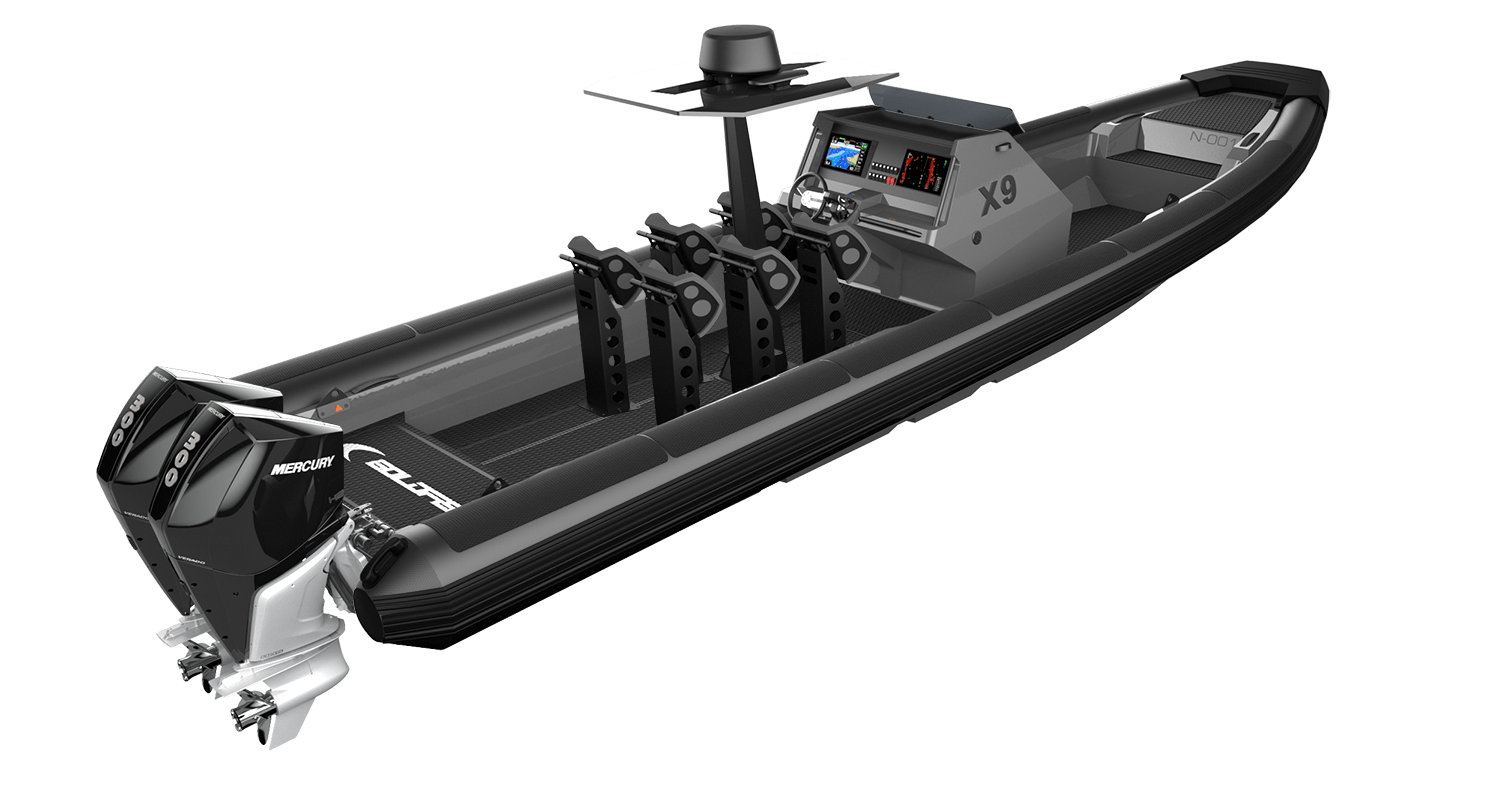 Goldfish · On the registerGoldfish X9LOA9.0mBeam2.30mTop Speed74knPrices on requestView on Superyacht Tenders → sit at the performance end of the RIB market, where the collar is engineered as hard as the hull.
RIB versus beach lander
A beach lander is a different tool again. It is built to drive bow-first onto sand and discharge guests dry over a fold-down bow ramp, with the hull and propulsion protected for grounding. A RIB is not designed to be beached repeatedly; the collar and running gear are not built for it. Where a programme is genuinely beach-focused, the beach lander earns its slot. Where the job is everything else, transfers, toys, diving, coastal runs, the RIB is the more versatile hull. Many larger fleets carry both.
Sizes and where RIBs fit in a fleet
RIB tenders run from roughly 4 to 14 metres, and the band tells you the role. Guest RIBs cluster at 6 to 9 metres, the volume sweet spot, and are often jet-driven so there is no exposed propeller near a swim platform. Sport and chase RIBs run 9 to 14 metres for crews who want a fast independent platform. Production semi-custom builders such as 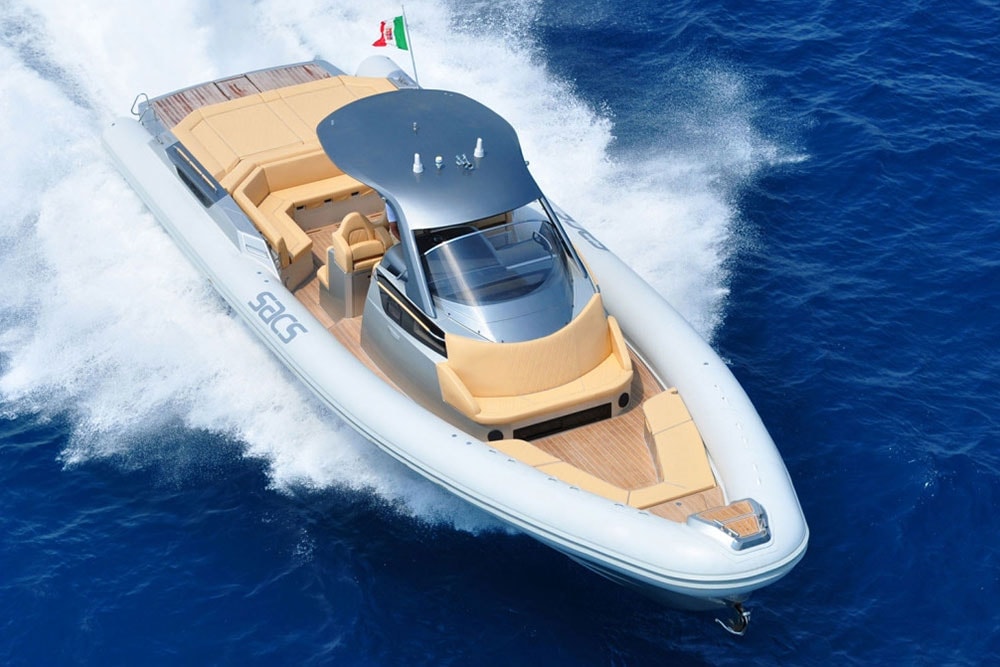 SACS · On the registerSACS Strider 15LOA15.0mBeam4.50mTop Speed42knPrices on requestView on Superyacht Tenders → cover most of that span, while specialists like
 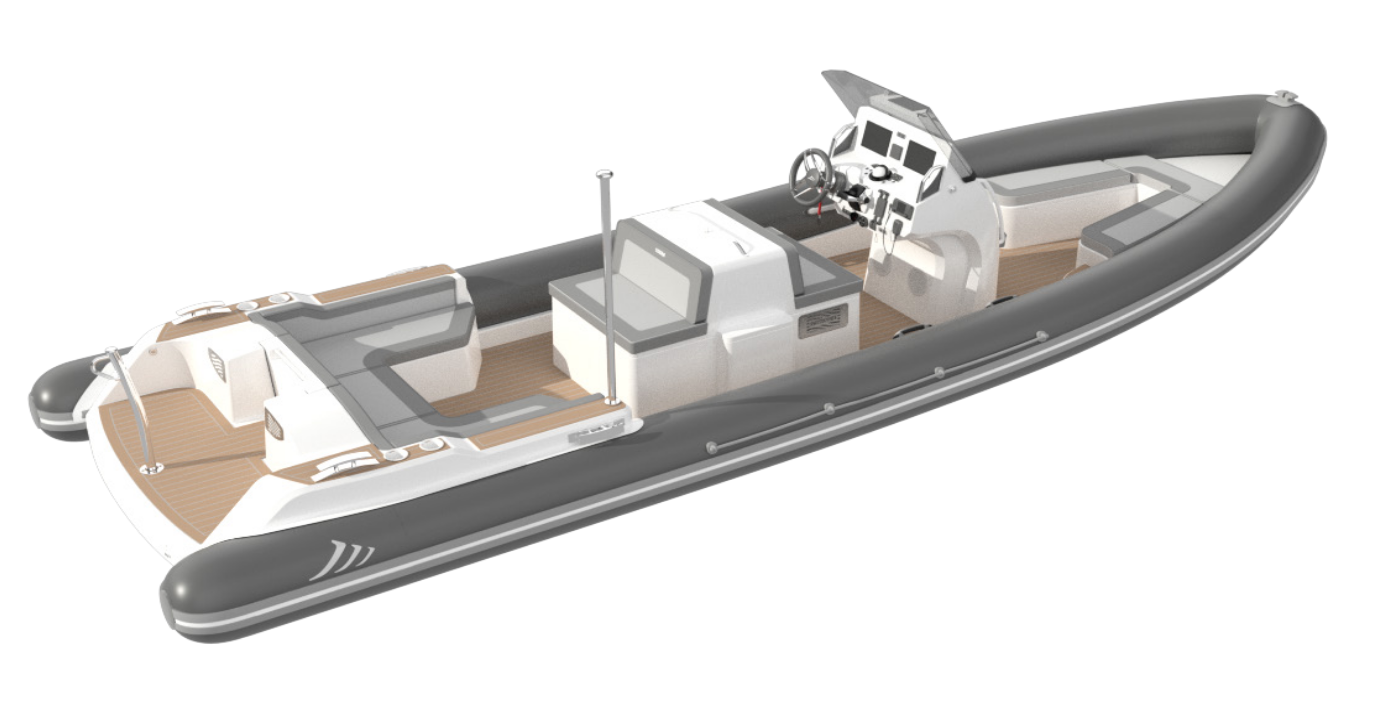 Cobra · On the registerCobra 8mLOA8.0mBeam2.55mTop Speed40knPrices on requestView on Superyacht Tenders → hold the British performance niche. We map the full range at RIB tender sizes and the enclosed variants at cabin RIB tenders.
In a fleet, the RIB is almost always the primary tender: the boat that does the daily guest transfers and the anchor-out work. A larger yacht adds a solid limousine for formal shuttles, a beach lander for sand, and toys around the edges. The RIB is the one that earns its garage slot every single day. For the new-build market see new RIBs and the specialist RIB builders.
What we tell clients
When an owner or captain asks us where to start, we say the same thing. Specify the primary RIB first, because it is the boat that gets used most and constrains everything else in the garage. Get the size right for the guest count and the swim-platform geometry, choose the tube material for where the yacht actually cruises, CSM or Hypalon for the tropics, and only then look at the second and third boats. Budget follows from that, and we lay the numbers out at RIB tender cost.
If you are still deciding whether a RIB is the right primary tender at all, start at choosing a RIB tender and read across to RIB vs solid tender. If you already know you want one and need the shortlist, our best RIB tenders guide is the place to begin.
Sources
- Strider 10 | Sacs Marine — SACS (retrieved May 2026)
- Rebel 40, Sacs Marine — SACS (retrieved May 2026)
- Strider 13, Sacs Marine — SACS (retrieved May 2026)
- Cobra Design and Hand Build Process | Customisable RIB Boats — Cobra (retrieved May 2026)
- Explore the Nautique Inboard Range | Cobra Custom RIBs — Cobra (retrieved May 2026)
- On Test, Sacs Strider 15, Yachting News — SACS (retrieved May 2026)