A SOLAS rescue boat and a guest tender can sit side by side in the same garage and look almost identical. They are not the same boat. One is a certified survival craft the yacht is legally required to carry and launch on demand. The other is a leisure boat for beach runs, watersports, and guest transfers. The distinction runs through purpose, certification, equipment, capacity, and readiness, and it decides whether a yacht dual-purposes one hull or carries both. This page sets the two side by side.
| Spec | Williams SOLAS 625 | Williams DieselJet 625 | Williams SOLAS 565 |
|---|---|---|---|
| Length overall | 6.3 m | 6.3 m | 5.7 m |
| Beam | 2.41 m | 2.41 m | 2.41 m |
| Top speed | 40 kn | 40 kn | 38 kn |
| Guests | 11 | 11 | 9 |
| Propulsion | jet | jet | jet |
| Price | Prices on request | Prices on request | Prices on request |
The working definition
Use this test. If the boat is the craft the yacht must launch to recover a person from the water and stand by the liferafts in an abandonment, it is a rescue boat. If its job is to move guests, gear, and toys between the yacht and the shore, it is a tender. A SOLAS tender blurs the line because it can do both, but the legal identity of the boat is fixed by what the yacht's safety certificate counts it as, not by how the crew use it day to day.
The rule that forces the question is straightforward. Commercially registered yachts above 500 GT must carry a rescue boat that meets SOLAS and the LSA Code. A privately registered leisure tender carries no such obligation. That single line is the root of every difference below. The wider regulatory picture sits in SOLAS requirements and SOLAS compliance basics.
Purpose
A rescue boat exists to save life. Its design brief is man-overboard recovery, marshalling liferafts, and towing the largest loaded liferaft on board. Everything about it is shaped by a worst-case scenario in poor weather.
A guest tender exists to extend the cruising experience. Its brief is comfort, dry transfers, and watersports in fair conditions. The two boats are optimised for opposite ends of the sea-state range, which is why a boat built for one job rarely excels at the other without compromise.
Certification
This is the sharpest divide. A rescue boat is type-approved against the LSA Code and carried on the yacht's safety equipment certificate. For MCA-flagged yachts that means MED Wheel Mark approval; for other flags it means SOLAS approval through the flag authority. Every component is documented, tested, and traceable, and the boat is built in an approved facility.
A guest tender carries none of that. It is a recreational craft, usually CE marked, and it appears on the yacht's inventory as equipment rather than as a survival appliance. Swapping a guest tender in to satisfy a rescue-boat requirement does not work, because it has no type approval and no place on the certificate. The classification mechanics are covered in tender classification rules and in choosing a SOLAS tender.
Equipment
A rescue boat is fitted and stored as a piece of lifesaving kit. Mandatory inventory includes a sealed equipment pack, towing arrangement and painter rated to tow a loaded liferaft, a recovery point and means of pulling a casualty aboard, buoyant lifelines, a sea anchor, and a search light or means of signalling. The boat sits permanently rigged to a coded davit with certified, load-tested lifting points.
A guest tender carries the recreational minimum: lifejackets for those aboard, an anchor, and basic safety gear to the leisure standard. It has no obligation to tow a liferaft, recover a casualty, or sit ready on a davit. The rescue boat's permanent rigging and stowed survival pack are exactly what make it awkward as a guest limousine.
Capacity
Capacity is defined differently for each. A rescue boat's rating is set by the LSA Code: it must accommodate at least five seated persons plus one stretcher case, with occupants in immersion suits and lifejackets, and rescue boats fall between 3.8m and 8.5m in length. According to the US eCFR rendering of the SOLAS rescue-boat standard, a fast rescue boat must also hold at least 20 knots in calm water with a crew of three and keep that speed for four hours.
A guest tender's capacity is a comfort figure, set by seating and the recreational stability standard, not by a survival scenario. The same length of hull therefore carries a very different rated number depending on which boat it is.
Readiness and launch time
A rescue boat is held in a state of readiness. The LSA Code requires it to be capable of launching in the shortest possible time, ready to deploy for a person overboard. The crew drill the launch and recovery regularly, and the boat must be reachable and rigged at all times the yacht is at sea. The often-quoted five-minute rule actually applies to lifeboats, not rescue boats, but the practical bar is high either way.
A guest tender has no readiness duty. It can be stowed, drained, covered, and de-rigged between uses. That freedom is precisely why a dedicated guest tender is easier to live with: nobody has to keep it launch-ready around the clock.
Dual-purpose vs carry both
Here is where owners and captains actually decide. Modern coded boats are built to do both jobs, and many yachts run a single 6.5 to 8m unit as a rescue boat that doubles as the daily workhorse for crew transfers, provisioning, and shuttle runs.
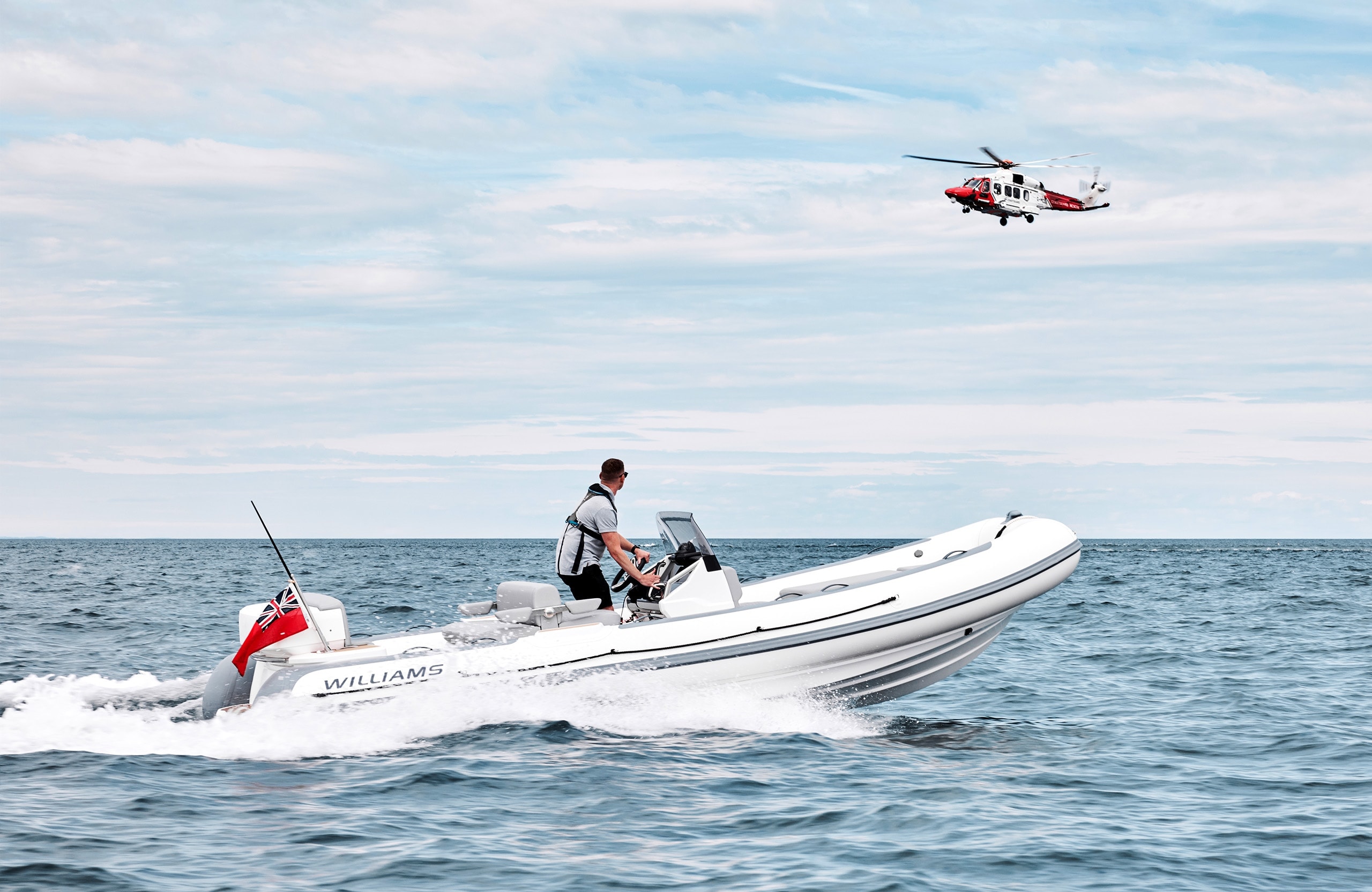 Williams · On the registerWilliams SOLAS 625LOA6.3mBeam2.41mTop Speed40knPrices on requestView on Superyacht Tenders →
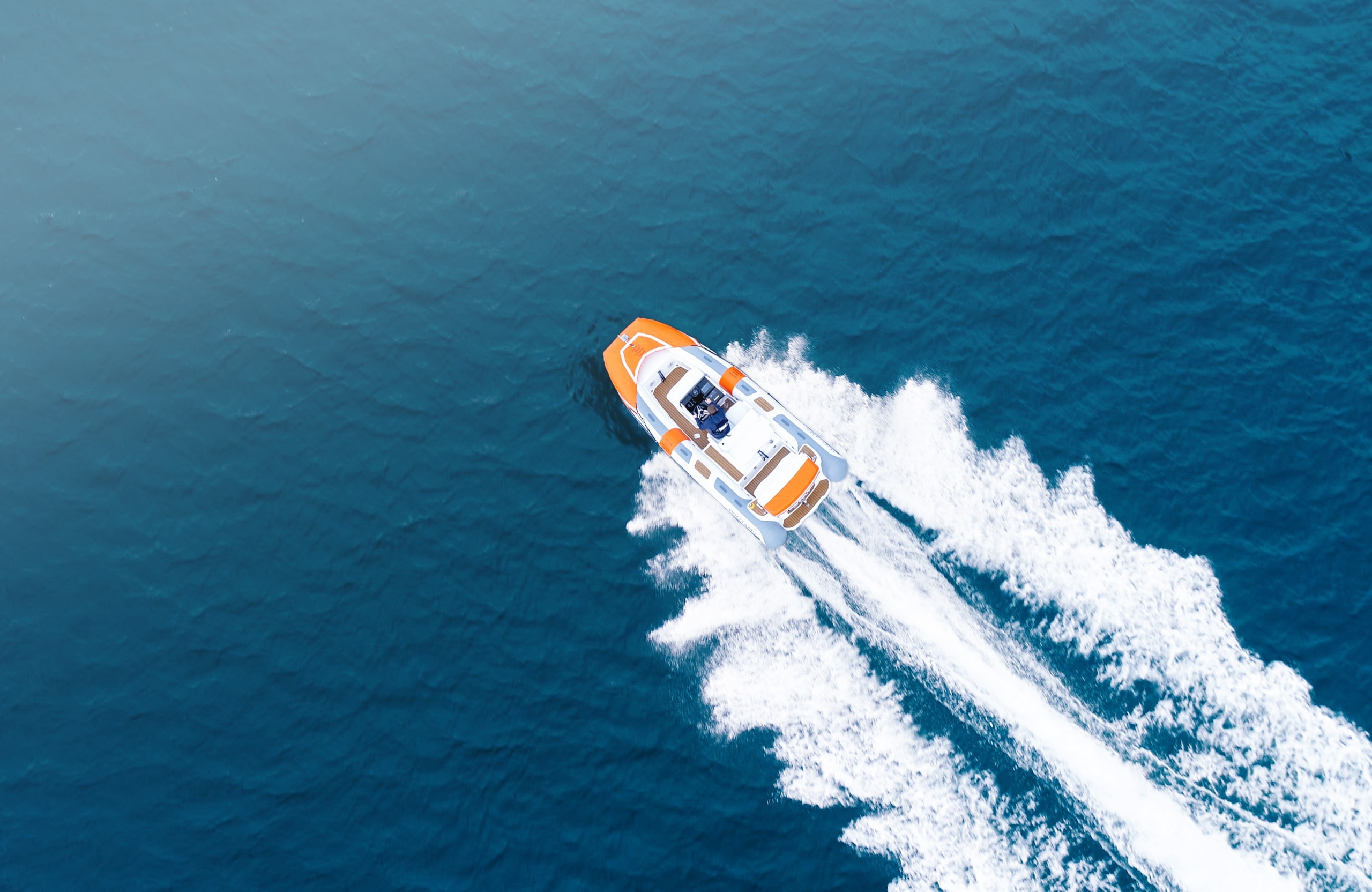 Williams · On the registerWilliams SOLAS 565LOA5.7mBeam2.41mTop Speed38knPrices on requestView on Superyacht Tenders →
The trade is real. A dual-purpose boat carries the certification weight, the permanent davit rigging, and the stowed survival pack everywhere it goes, which makes it a poorer guest limousine than a purpose-built leisure tender. So the common pattern on larger yachts is one dedicated coded rescue boat plus one or more guest tenders, accepting the garage space and capital cost in exchange for a better experience at both ends. Smaller commercial yachts more often dual-purpose, because a second hull does not fit or does not pay. The decision framework, by yacht size and use, sits in choosing a SOLAS tender and the full SOLAS tender compliance guide.
What we tell clients
Decide the rescue-boat question first, then the tender question, never the other way round. The coded craft is a legal requirement with a fixed specification, a davit, and a maintenance cycle; it sets the floor. Once that is settled, ask whether the same hull can reasonably absorb the daily guest workload. If the yacht is mid-size and the cruising programme is modest, dual-purposing one well-chosen coded boat is the clean answer. If guests are the point of the yacht, carry both and let the rescue boat be a rescue boat. Either way, specify it at build, because retrofitting coding onto a leisure tender is expensive and usually not possible at all.
Start at the SOLAS tenders overview for the regulatory map, or the superyacht tenders overview if you are weighing the leisure side of the fleet.