A SOLAS rescue tender is not certified once and forgotten. It earns a type approval as a product, then it is surveyed as an installed appliance on a specific yacht, and after that it has to be inspected, serviced, and tested on a fixed calendar for the rest of its working life. Owners and captains who treat the original approval certificate as the finish line are the ones who fail a port state inspection. The compliance picture has three layers: the boat is approved, the installation is surveyed, and the whole arrangement is kept live through record-keeping. This page walks the workflow in the order it actually happens. For the wider context start at the SOLAS tenders overview and what is a SOLAS tender.
Type approval: the boat as a product
Type approval is the first gate. Before a builder can sell a hull as a SOLAS rescue tender it has to prove that the design meets the International Life-Saving Appliance (LSA) Code, which is made mandatory by SOLAS Chapter III, Regulation 34. Every life-saving appliance carried to satisfy the convention must comply with the applicable LSA Code requirements, and a rescue boat falls squarely under section 5.1 of that code.
Approval is not a paper exercise. The prototype is put through destructive and operational testing: a drop test from height, an impact swing into a rigid wall, forced inversion to prove self-righting, and engine performance with the hull flooded. Williams Jet Tenders, for example, has its rescue tenders independently overseen by Lloyd's Register, with each design passing three-metre drop tests, impact swings, and forced inversion before approval is granted. The output is a type approval certificate tied to a specific model and build standard, not to one boat. That is why the same approved design can be ordered repeatedly. The detail of what the boat must contain sits in SOLAS requirements, and the cost of an approved hull is covered at SOLAS tender cost.
Flag and class survey: the installed appliance and its certificate
A type-approved boat is still not compliant until it is installed and surveyed on the yacht. The launching appliance, the davit, the release gear, the stowage cradle, and the embarkation arrangement are all part of the approved system, and they have to be signed off as a unit. This survey is carried out under the authority of the yacht's flag state, usually delegated to the classification society, and it is the step that produces the operational certification recorded on the yacht's safety equipment certificate.
This is the distinction owners miss most often. The boat is approved as a product, but the certificate that a port state control officer checks is the one covering the installation on this hull. Two practical consequences follow. First, a tender moved to a different yacht needs its davit and release-gear interface re-surveyed, because the launching appliance is part of the approved arrangement. Second, any modification to the cradle, davit, or release gear can trigger a re-survey. The classification logic that governs all of this is set out at tender classification rules, and the day-to-day picture is at SOLAS compliance basics.
Annual inspection and servicing: keeping the certificate live
Certification stays valid only while the inspection and servicing calendar is kept current. SOLAS Chapter III, Regulation 20 sets out a layered maintenance regime, and each layer has a different competent person attached to it.
- Weekly. Visual inspection of the boat, davit, and release gear, and a test run of the engine. This is crew work.
- Monthly. A fuller inspection against the manufacturer's checklist, and the boat launched and manoeuvred in the water with its assigned crew. Still crew work, logged in the maintenance record.
- Annual. A thorough examination and operational test of the boat, launching appliance, and release gear. As Lloyd's Register sets out for the IMO maintenance and inspection procedures under SOLAS III/20, this must be carried out by personnel certified by the manufacturer or by an authorised service provider holding a valid authorisation for that specific equipment. A deckhand cannot sign this off.
The servicing interval and procedures for the boat itself, including the inflatable elements where fitted, follow the manufacturer's instructions, so the annual visit is shaped by the specific model on board. Data-rich approved hulls in the common size band include the
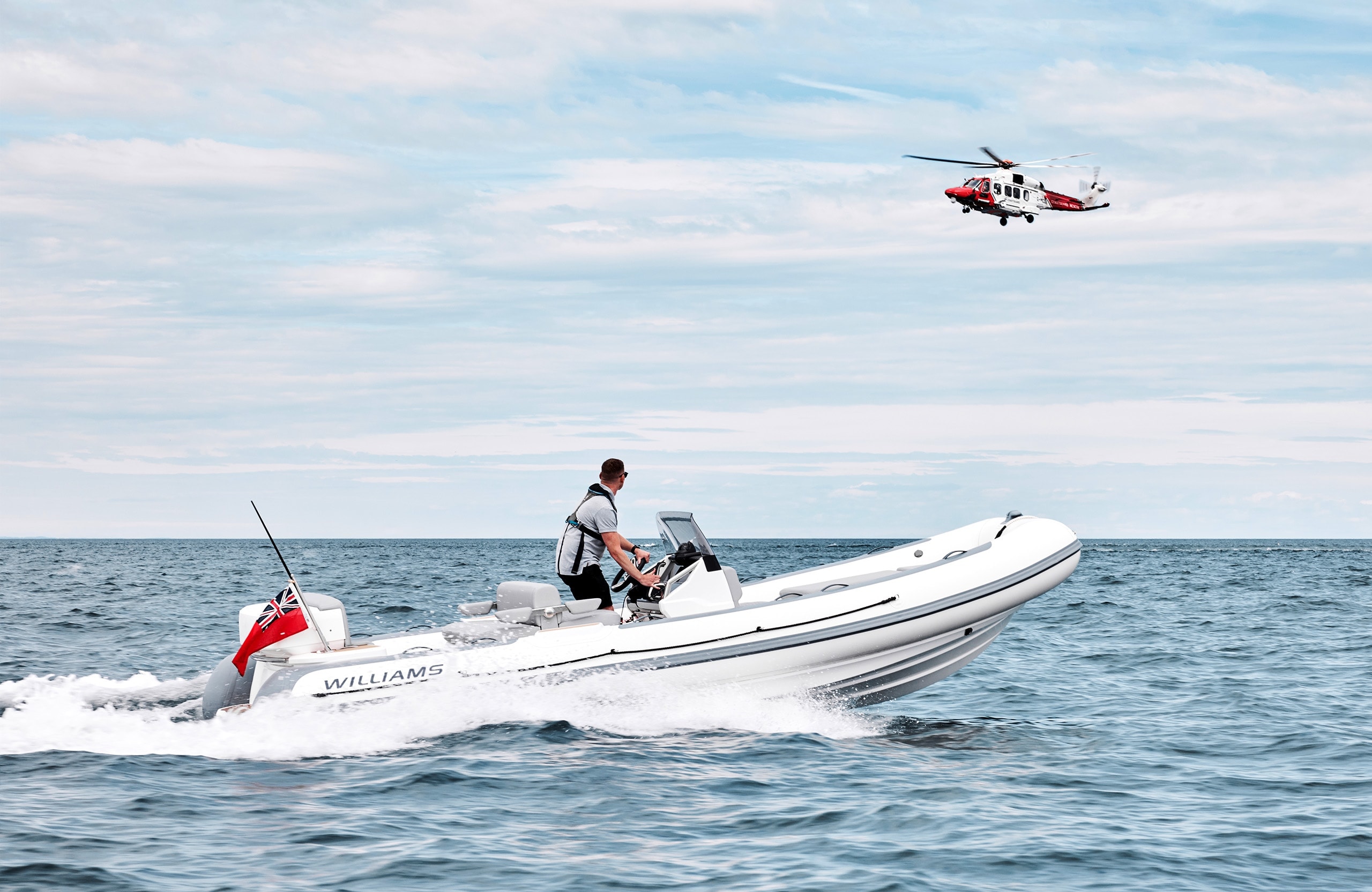 Williams · On the registerWilliams SOLAS 625LOA6.3mBeam2.41mTop Speed40knPrices on requestView on Superyacht Tenders →
and the smaller
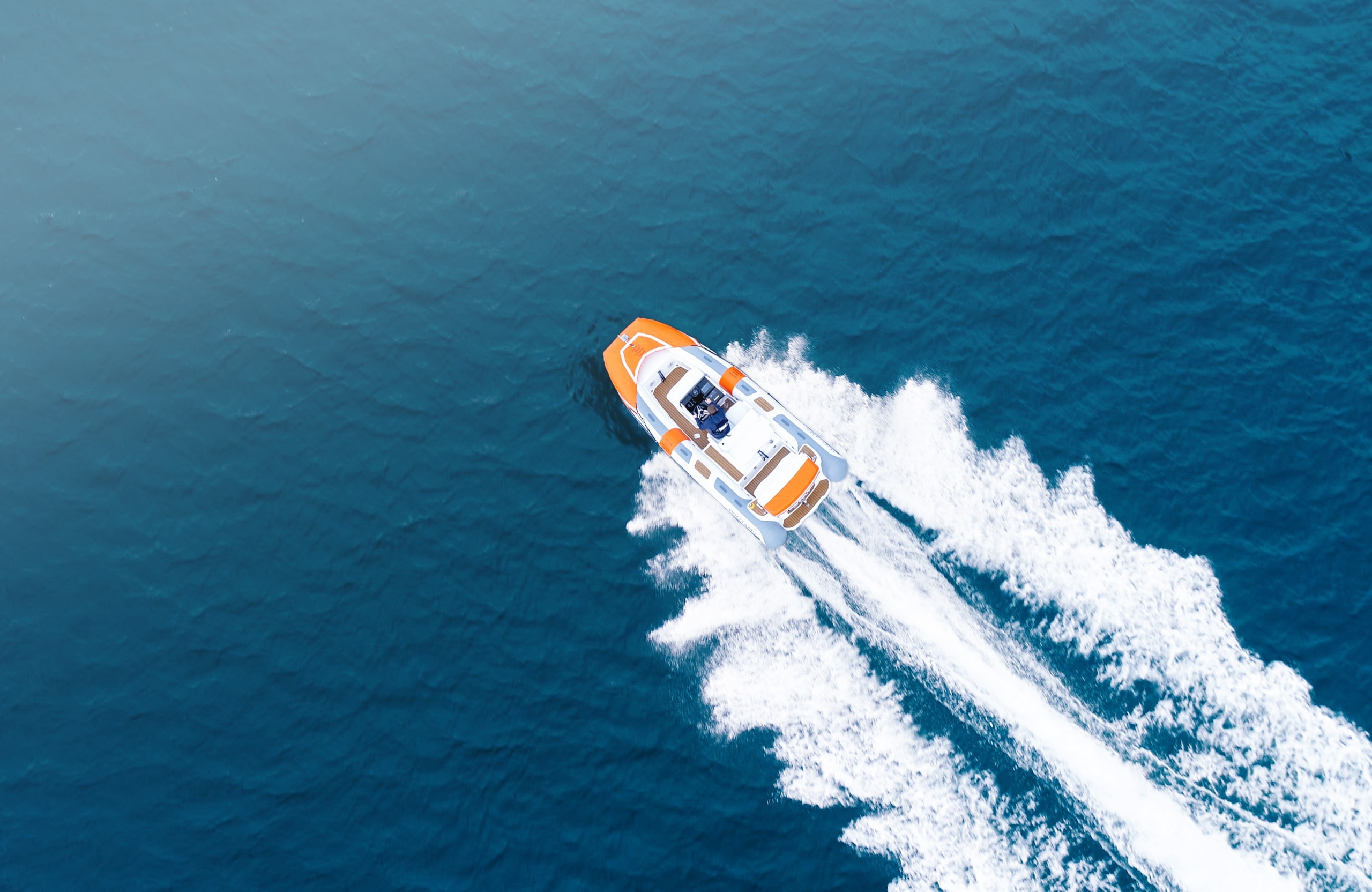 Williams · On the registerWilliams SOLAS 565LOA5.7mBeam2.41mTop Speed38knPrices on requestView on Superyacht Tenders →
both of which carry their own manufacturer service schedules. Choosing a model with strong service-network coverage is part of the decision covered at choosing a SOLAS tender.
Recertification: the five-yearly load test
On top of the annual cycle sits a five-yearly milestone that catches a lot of programmes out. Every five years, or whenever the release gear is overhauled, the launching appliance has to pass a dynamic load test. The winch brake is tested with a mass equal to 1.1 times its maximum working load, and the release gear is examined before the operational test and re-examined afterwards. There is no provision in SOLAS Chapter III to postpone this test, so the company has to schedule the five-yearly service, including the dynamic load test, to complete before the term expires.
In practice this means a SOLAS tender programme has two clocks running at once: a twelve-month clock for the annual thorough examination, and a sixty-month clock for the load test and any release-gear overhaul. Both must be driven by a service provider authorised for that davit and release gear. Budgeting for both is part of the lifetime cost picture at SOLAS tender cost.
Record-keeping: the proof that survives an inspection
None of the above counts unless it is documented. The yacht keeps a maintenance record book that logs every weekly, monthly, annual, and five-yearly action, signed by whoever carried it out, alongside the type approval certificate, the service provider's authorisation certificates, and the dated reports from the annual and five-yearly examinations. When a port state control officer steps aboard, the record book and the certificates are what they read, not the condition of the boat at a glance.
The rule of thumb we give clients is simple: if it is not written down and signed by an authorised person, it did not happen. A clean record book with current service reports is the difference between a routine inspection and a detention. The full operational workflow, including who holds which document, is set out in the SOLAS tender compliance guide.
What we tell clients
Treat certification as an ongoing programme, not a purchase. The type approval gets you a compliant hull; the flag and class survey gets you a valid certificate on this yacht; the annual examination and the five-yearly load test keep that certificate alive. Build the calendar into the yacht's planned maintenance system on day one, line up an authorised service provider before the first annual is due, and keep the record book immaculate. Owners who do this never think about SOLAS during an inspection. Those who buy an approved boat and assume the paperwork looks after itself are the ones who find out, at the worst possible moment, that an expired annual examination invalidates the appliance regardless of how good the boat is. Start at the SOLAS tenders overview to map the whole picture, or browse approved hulls across the superyacht tenders overview.