A beach lander is sized by two competing pressures. It has to be big enough to carry a full guest group and a bow ramp wide enough to walk down, and small enough to live inside the mothership's garage. Those two demands pull in opposite directions, and where a given boat lands between them is the single most important decision in the spec. This page sets out the realistic length bands, what each one buys you, and how to work back from the yacht to the right hull. For the category itself, start at what is a beach lander.
The typical length bands
Beach landers cluster into a narrow range. They are almost always garage-stowed and recovered rather than towed, so the upper limit is set by the largest cavity the current fleet carries, not by what a builder could draw. The Superyacht Content guide to beachlander tenders puts the practical custom range at 5 to 12 metres, which matches what we see trading. In day-to-day terms the bands break down like this.
- 6 to 7m. The compact end. Crew-tender duty, small guest groups, and yachts in the 35 to 45 metre range. A narrow ramp, four to six guests, and the lightest launch and recovery load. These are the easiest to garage and the cheapest to run.
- 8 to 10m. The commercial sweet spot, and where most new orders sit. Beam runs 3.0 to 3.3 metres, draft is typically 0.55 to 0.6 metres on a jet drive, and the boat carries 10 to 12 guests with a proper hydraulic bow ramp. This band suits 50 to 70 metre motherships.
- 10 to 12m. The limousine and flagship end. Enclosed or convertible cabin, split bow doors, and a wide guest ramp. These need a large stern or side garage and usually a 65 metre plus mothership to stow them. Above 12 metres the boat is effectively a chase boat and lives outside the garage logic entirely.
Across all bands, length tells you less than people expect. Two 9 metre landers from different yards can differ by a tonne in displacement and 0.3 metres in beam, which changes both garage fit and beaching behaviour.
How garage fit trades against size
The garage is the binding constraint, and height is usually tighter than length. Builders maximise other deck space first, so tender cavities are often shorter and lower than owners assume. The rule we give clients is simple: size the boat to the garage, never the garage to the boat, because the hull cavity is fixed once the yacht is built.
Work back from three numbers. Clear length sets the maximum LOA minus working clearance and the launch and recovery cradle. Clear beam has to swallow the lander's beam plus the fendering and the side rails of the cradle. Clear height is the one that catches people out, because a beach lander's folded T-top or arch can add 0.4 to 0.6 metres above the sheer. A boat that fits on length and beam can still foul the deckhead.
As a rough orientation, a 60 metre yacht can typically only carry a 9 to 10 metre tender, and that ceiling drops fast on smaller hulls. Our tender garage sizing reference covers the measurement method in full, and the longer tender garage sizing guide walks through the clearances yard by yard.
How beaching capability trades against size
Bigger does not beach better. The capability that defines the category comes from draft, hull form, and bow shoe design, not length. A larger hull carries more weight, which means it grounds further out and needs more thrust to drive itself back off the sand. A well-judged 8 metre lander with a 0.55 metre draft will often beach more cleanly than a heavier 11 metre hull.
What length does buy is freeboard and ramp height above the water, which makes a dry guest landing easier in a small swell. So the trade is real but not linear: go up a band for guest comfort and capacity, not for raw beaching ability. The underlying mechanics are covered in beach lander hull design.
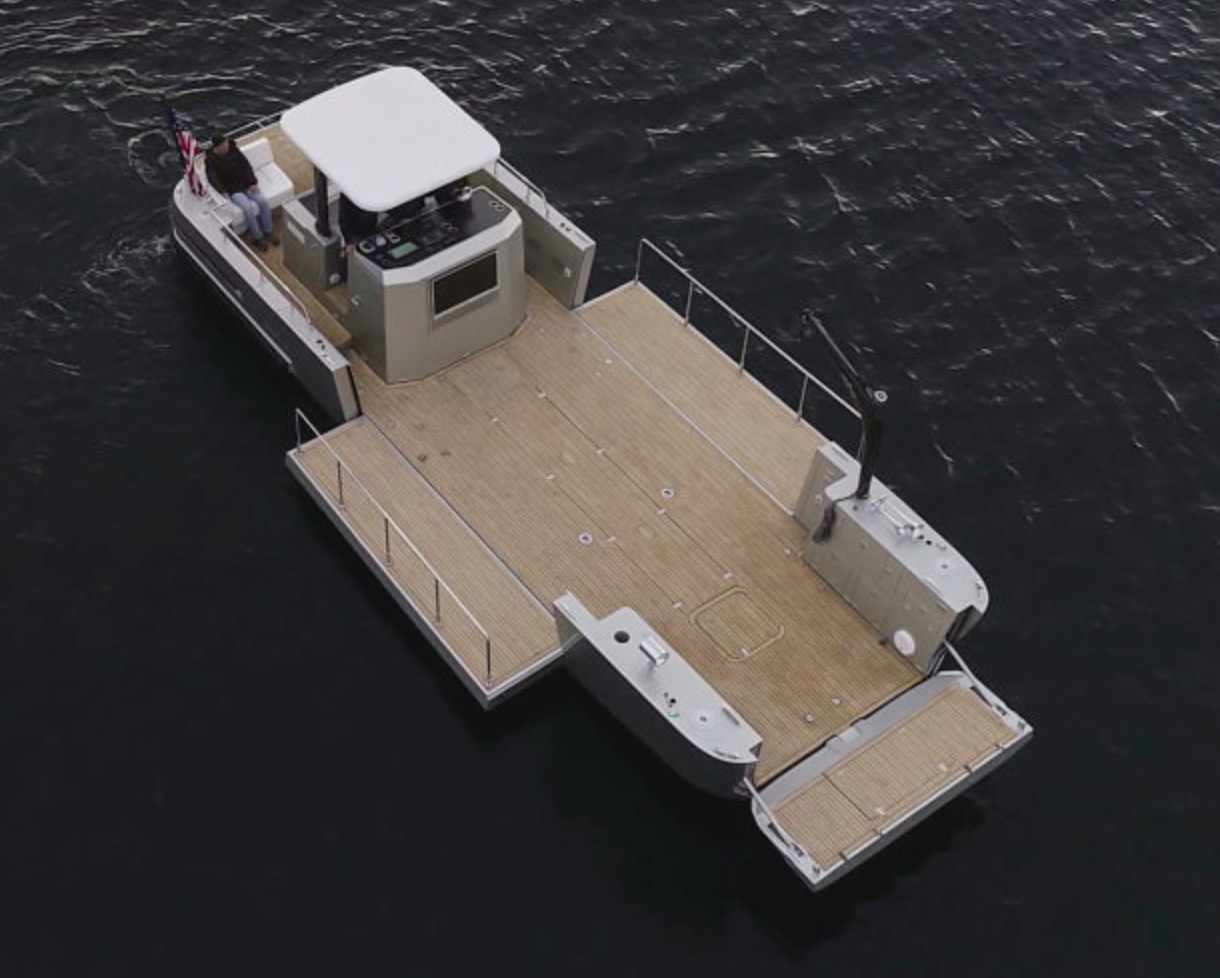 Reliant Yachts · On the registerReliant Yachts LanderLOA11.5mBeam3.93mTop Speed24knPrices on requestView on Superyacht Tenders →
Ramp width and load capacity by size
The bow ramp scales with the boat, and it is the spec that most directly shapes the guest experience. As a working guide across the bands:
- 6 to 7m: ramp clear width around 700 to 850mm, single-file boarding, four to six guests, light deck load.
- 8 to 10m: ramp clear width 900 to 1,100mm, comfortable single-file or assisted boarding, 10 to 12 guests plus a deckhand. This is the band where a wheelchair-capable 1,000mm ramp becomes feasible.
- 10 to 12m: wide split-door ramps, often above 1,200mm, enclosed seating, and the capacity to carry guests plus dive kit or beach setups.
Load capacity rises with length, but so does the launch and recovery load on the yacht's crane or slipway, and that system is sized once at build. A heavier lander can exceed the davit's safe working load even when it physically fits the cavity, so the weight number matters as much as the dimensions. Ramp format, hydraulic versus manual, and sea-state limits are set out in beach lander bow ramps.
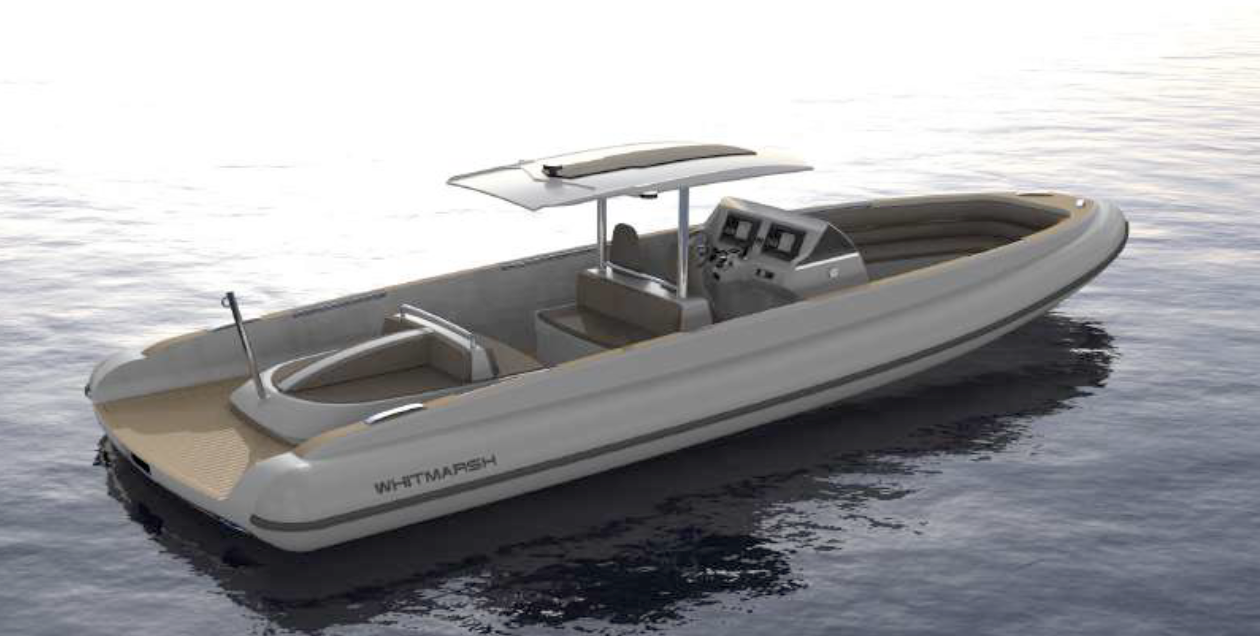 Whitmarsh · On the registerWhitmarsh 8.6mLOA8.6mBeam3.00mTop Speed40knPrices on requestView on Superyacht Tenders →
Matching a beach lander to the mothership
The right size is the largest hull your garage and launch system can take that still meets the guest brief. Run the decision in this order.
- Measure the garage. Clear length, beam, and height, with the cradle in place. This sets the ceiling.
- Check the launch and recovery system. Confirm the davit or slipway safe working load against the loaded weight of the candidate lander, not the dry weight.
- Set the guest number. A six-guest yacht does not need a 12-guest lander; a busy charter boat does. Size the ramp and seating to the real complement.
- Confirm the beaching brief. Shallow anchorages and soft sand reward a shallow-draft mid-size hull over a heavier flagship.
Owners running a second, faster day boat alongside the lander often split the roles, which lets the beach lander stay in the comfortable 8 to 10 metre band rather than being stretched to do everything. For broader context on tender sizing across the fleet, see superyacht tender sizes, and to weigh format against budget read choosing a beach lander alongside beach lander cost.
Castoldi beach landerWhat we tell clients
Pick the band from the garage and the guest list, in that order, and treat everything else as a refinement. The 8 to 10 metre band is where the category works best because it carries a full group, takes a real ramp, beaches cleanly, and fits the majority of 50 metre plus yachts without a custom garage rebuild. Going smaller is a sensible call for a crew tender or a tight cavity; going to 11 or 12 metres only pays off when the yacht has the volume to stow it and the brief genuinely needs an enclosed limousine landing. The most common mistake we see is an owner falling for a flagship hull that then will not clear the deckhead by 200mm. Measure first, specify second, and the boat will earn its place in the garage for the life of the yacht.
Sources
- Whitmarsh Ribs official — Whitmarsh (retrieved May 2026)