A beach lander is a tender built around one job: putting people and stores onto a beach without anyone getting wet. Its defining feature is a drop-down bow ramp. The hull noses into the shallows, grounds gently, and the bow folds down into a ramp so guests step straight onto the sand. Pair that with a shallow draft and waterjet propulsion, which has no exposed propeller to foul in thin water, and you have a tender that reaches shorelines a conventional tender or RIB cannot. The category sits inside the wider tender world rather than beside it, but it is specified for a different mission, and the distinctions matter when you order one.
The defining feature: the bow ramp
Everything about a beach lander follows from the bow. On a normal tender the bow is a sharp, fixed stem built for a dry ride at speed. On a beach lander the bow is a hinged section that lowers, usually hydraulically and on a button, to form a flat ramp from the foredeck down to the sand. Pascoe International, one of the established specialists in the category, describes its boats around exactly this idea: a button-controlled opening bow ramp that "settles the tender to enable elegant beach landings" (Pascoe International, Beachlanders).
That single change cascades into the rest of the spec. Because the boat is meant to ground itself, it carries a shallow draft and a flatter forefoot than a deep-vee tender. Because a propeller would be the first thing to hit the bottom, almost every serious beach lander runs waterjets. The Reliant X40L Lander, for example, was fitted with Hamilton jet drives rather than shaft propellers specifically so it could work in shoal water, and it adds pop-up winches to kedge itself on and off the beach. The result is a tender that can sit on the sand, hold position, load, and reverse off again under its own power.
How it differs from a standard tender
A standard tender is sized and shaped to shuttle guests from the yacht to a marina, a restaurant pontoon, or a swim stop, then return to its garage. Its priorities are a dry, fast ride and a clean step-off onto a dock. A beach lander accepts a slower, more utilitarian hull in exchange for the one thing a normal tender cannot do, which is land directly on an unimproved shore.
The practical differences show up in three places.
- The bow. Fixed stem on a tender, folding ramp on a lander.
- Draft and drive. A tender needs enough water to float its drive at the dock. A lander is built to touch bottom on purpose, so it runs shallow with jets.
- The deck plan. A tender optimises seating and shade. A lander keeps a clear path from the foredeck ramp aft, so guests and cargo move through the boat rather than around it.
None of this makes a beach lander a replacement for the main guest tender. Most fleets that carry one still carry a conventional limousine or open tender for marina work. We cover the trade-off in detail at beach lander uses and the hull choices at beach lander hull design.
How it differs from a RIB
A RIB lands people too, but by a completely different method. You board a RIB over its inflatable tubes or across the stern, usually in knee-deep water, with someone holding the boat off the bottom. It is light, forgiving, and cheap to run, and for a quick swim-stop or a dive group it is hard to beat.
The difference is dry versus wet, and casual versus formal. A RIB landing means wading, wet feet, and a hull you do not want to ground hard on rock or coral. A beach lander landing means walking down a ramp in shoes, with luggage or a cool box, onto a hull engineered to take the weight of grounding. If the brief is a polished guest experience or moving real cargo, the lander wins. If the brief is light, fast, and informal, the RIB does. The full comparison sits at beach lander vs RIB.
Typical missions
The use case is what justifies the boat, and beach landers earn their place on a few recurring jobs.
- Beach club setups. Landing loungers, parasols, paddleboards, a barbecue, and crew to a remote cove, then striking it all at the end of the day. The ramp turns an hour of ferrying by RIB into a single dry run.
- Guest landings. Putting a full guest group ashore on an undeveloped beach in shoes and dry clothes, which is the experience most charter briefs are really asking for.
- Provisioning on remote shores. Picking up stores, water, and fuel from a beach or a hard with no dock, common on expedition itineraries where the nearest marina is hours away.
- Vehicle and toy transfer. The largest landers, such as the Reliant X40L, carry a small vehicle, an e-bike fleet, or dive gear straight off the ramp.
Because the missions vary so widely, the hull does too, from a compact 6 metre shuttle to an 11 metre car carrier. We break the range down at beach lander sizes.
Where it sits in a fleet
A beach lander is rarely the only tender aboard. It is the specialist that sits alongside the everyday tender, the way a workboat sits alongside a limousine. On a yacht with one garage slot the decision is genuinely hard, because the lander's flat-bottomed, jet-driven hull is a compromise on outright speed and dry ride compared with a deep-vee guest tender. On a yacht with two slots, or one that can sacrifice a toy bay, the lander becomes the obvious second boat.
The constraint is almost always the garage. A lander's beam and the airdraft of its raised bimini have to clear the opening, which is why builders like Pascoe stress fitting "yacht garages of a minimum size." Before you commit to a length, check it against your tender garage sizing, because the garage will veto a hull faster than the budget will.
For reference points across the category, three boats bracket the range well.
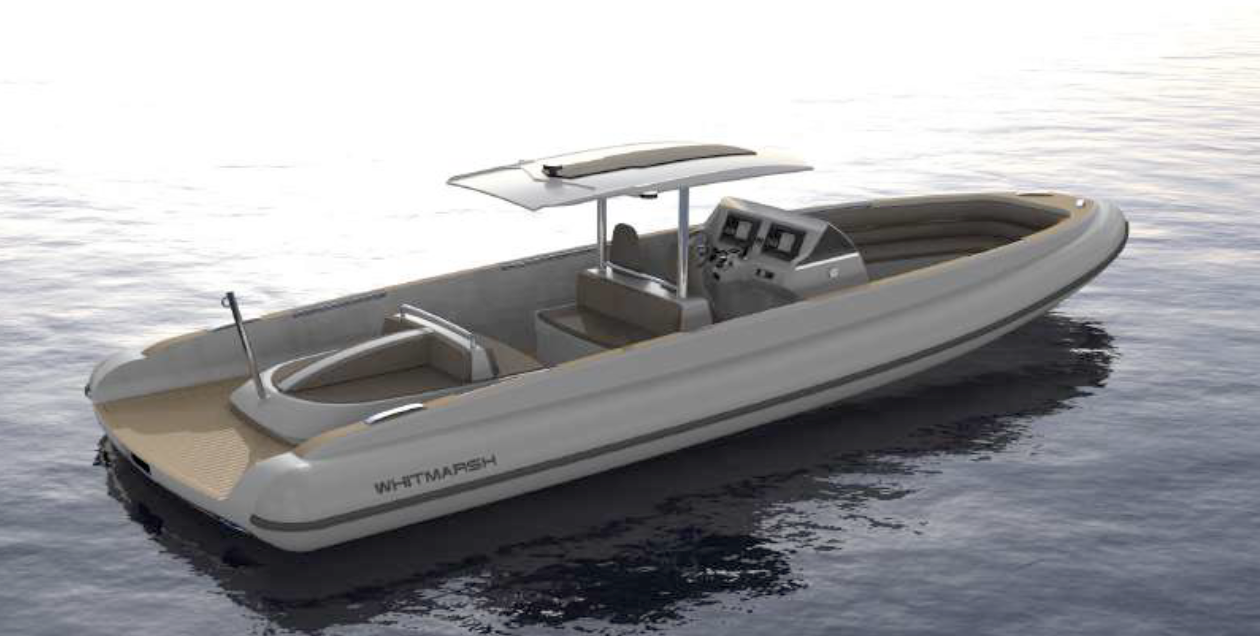 Whitmarsh · On the registerWhitmarsh 8.6mLOA8.6mBeam3.00mTop Speed40knPrices on requestView on Superyacht Tenders →
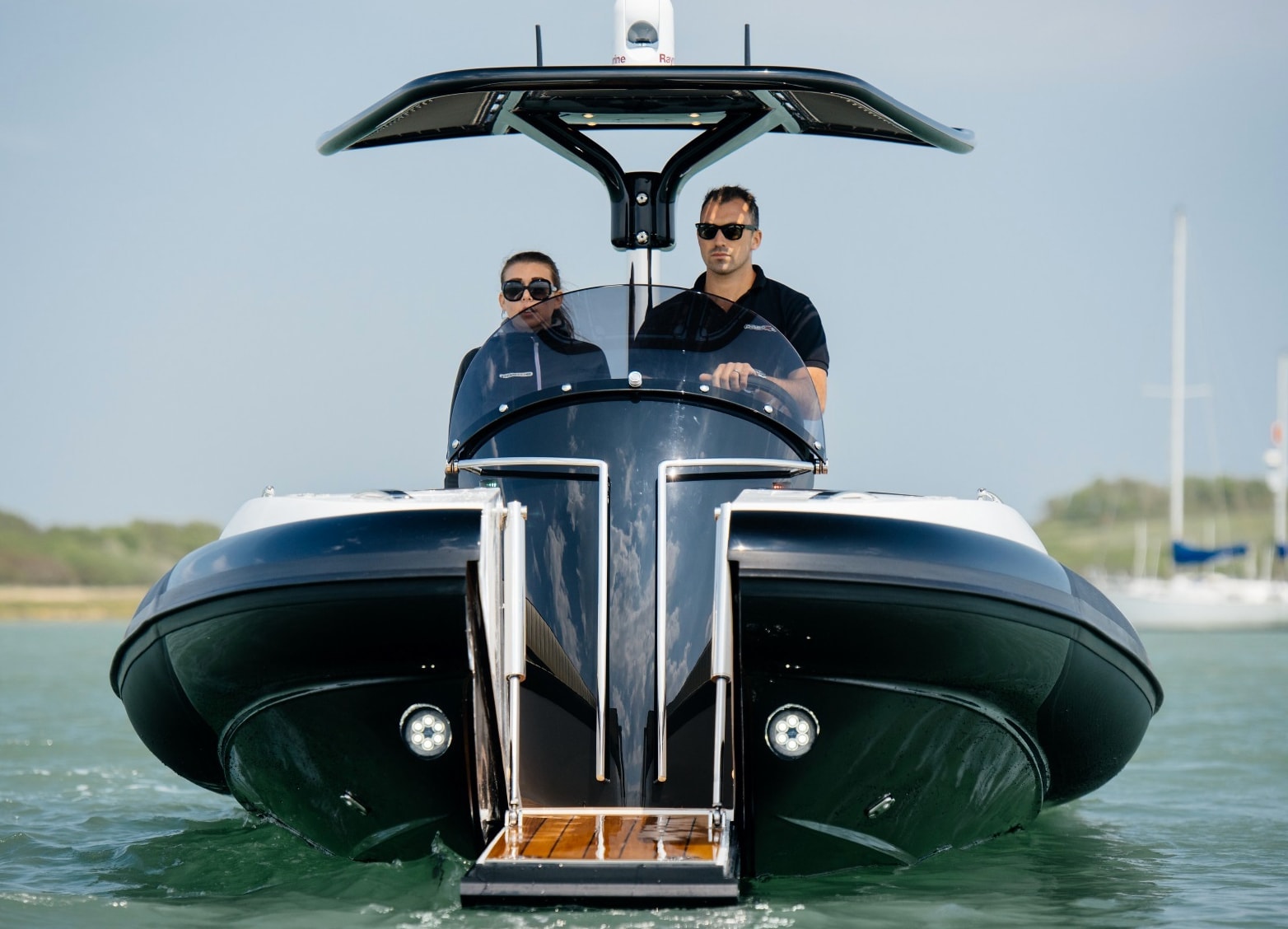 Pascoe · On the registerPascoe 8.6mLOA8.6mBeam2.95mTop Speed35knPrices on requestView on Superyacht Tenders →
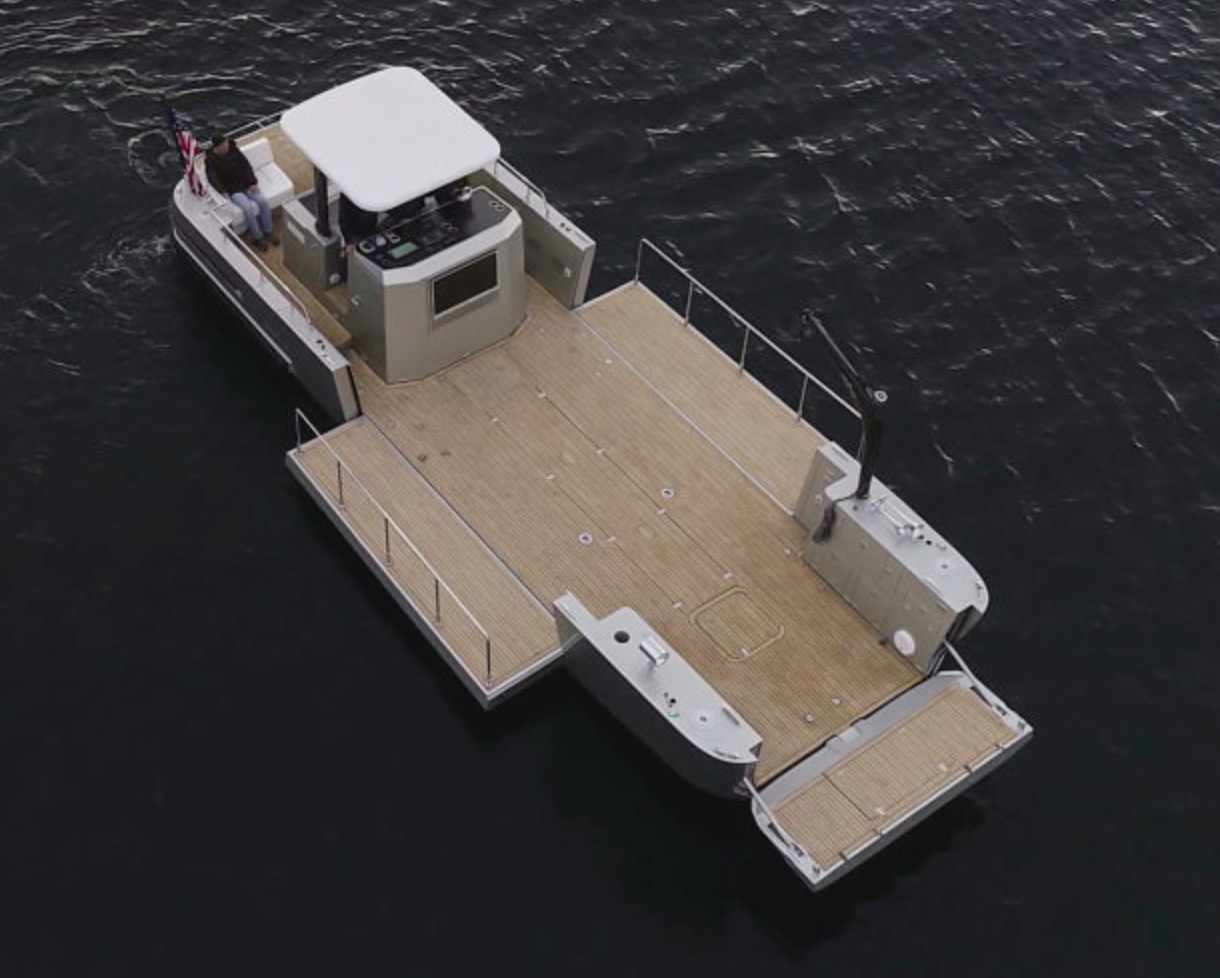 Reliant Yachts · On the registerReliant Yachts LanderLOA11.5mBeam3.93mTop Speed24knPrices on requestView on Superyacht Tenders →
What we tell clients
Start with the shore, not the boat. Walk us through where you actually want to land, how many people, in what clothes, carrying what, and how many days a season you will do it. If the honest answer is a handful of casual swim-stops, a good RIB or your existing tender will do the job and save you a garage slot. If the answer is repeated dry landings on real beaches, beach club logistics, or provisioning runs where there is no dock, the bow ramp pays for itself the first season.
From there the order of decisions is fixed: confirm the garage opening, then size the hull to it, then choose the deck layout for your mission, then settle the budget. Owners who run the sequence in that order rarely regret the boat. Owners who fall in love with a length first usually discover it does not fit the garage. To go deeper, start at the beach landers overview, read across to choosing a beach lander and beach lander cost, then compare current models at our guide to the best beach landers and the active new build beach landers. If you already know the maker you want, go straight to the builders directory.
Sources
- Whitmarsh Ribs official — Whitmarsh (retrieved May 2026)
- Reliant Yachts X40L Lander official page — Reliant Yachts (retrieved May 2026)
- Pascoe DT Launch Beachlander, Pascoe International — Pascoe (retrieved May 2026)