A limousine tender and an open tender answer the same question, "how do guests get from the yacht to shore," in opposite ways. The limousine encloses them in a fixed, climate-controlled cabin and treats the trip as a continuation of the yacht's interior. The open tender leaves them in the air, prioritises deck space and flexibility, and treats the trip as part of the day out. Neither is better in the abstract. The right answer falls out of the cruising ground, the season, the guest brief, and the garage. This is the core decision in most limousine and tender specifications, so it is worth working through attribute by attribute.
| Spec | Pascoe 10.4m TL Limousine | Pascoe 8.6m | Williams EvoJet 70 |
|---|---|---|---|
| Length overall | 10.4 m | 8.6 m | 7.1 m |
| Beam | 2.95 m | 2.95 m | 2.65 m |
| Top speed | 36 kn | 35 kn | 35 kn |
| Guests | 16 | 16 | 13 |
| Propulsion | — | other | jet |
| Price | Prices on request | Prices on request | Prices on request |
Comfort and weather
This is the difference that drives every other one. A limousine tender carries a fixed cabin with integrated air conditioning, sealed glazing, and a dry, stable ride. Guests stay warm in a cold shoulder-season passage, cool in Gulf heat, and out of spray and wind in a chop. An open tender offers none of that. In fair weather and warm air the open boat is the better experience: sun, breeze, and an unbroken connection to the water. In cold, wet, or windy conditions it is the worse one, and the limousine wins outright.
So the honest framing is seasonal and geographic. A summer-only Mediterranean programme rarely needs the enclosed cabin for comfort. A year-round or high-latitude programme, or one that runs long open-water transfers, will use it on most days. We cover the climate hardware in detail at limousine climate control.
Formality
The limousine tender reads as formal. Guests step from the yacht into an enclosed, finished space that mirrors the mothership interior, leather, veneer, ambient lighting, and arrive dry and composed at a marina or quay. That matters for owner arrivals, charter VIPs, and any transfer where appearance is part of the brief. The open tender reads as relaxed and active: it suits beach days, water sports, and casual runs ashore. If the programme is built around dignified arrivals, the limousine is the natural primary boat. If it is built around the day on the water, the open tender is.
Capacity and use
For a given hull length the two boats carry guests differently. The open tender turns the whole deck into seating and boarding space, so it tends to handle more people per metre and loads faster at the swim platform. The cabin, glazing, and helm structure of a limousine consume volume, so guest capacity for the same length is usually lower, though both types commonly carry six to twelve guests in the popular sizes. The open boat also doubles as a toy and dive platform and a beach-landing craft in a way the enclosed hull cannot. The limousine is a specialist; the open tender is a generalist.
Sightlines and the on-board experience
Open tenders give uninterrupted 360-degree sightlines and the wind-in-the-hair ride that many guests actually want on a short hop. Limousine cabins, by contrast, frame the view through glazing. Builders close that gap with large windows and, increasingly, with retractable or sliding roofs that open the cabin to the sky when the weather allows, which is the closest the enclosed boat gets to the open experience. Even so, for pure sightlines and immediacy the open tender leads.
Cost
The limousine costs more, both to buy and to run. The enclosed cabin, climate system, glazing, and higher interior finish add weight, complexity, and systems that have to be maintained and surveyed. Across the market a limousine typically lands 30 to 60 percent above the open version of the same platform, and the gap widens with bespoke interiors and stabilisation. We break the numbers down at limousine tender cost; the open-tender baseline sits with the wider tender cost picture. If budget is the binding constraint, the open boat delivers more usable capability per euro.
Garage fit
The enclosed cabin is taller than an open deck, so the limousine is the harder boat to stow. Garage height, not just length, becomes the constraint. Builders answer this with lowering hardtops and folding screens that drop the stowed height to clear the garage door, but the planning is more involved than for an open hull of the same length. On smaller yachts the height of a fixed limousine cabin can rule it out entirely, which is one reason the category clusters on yachts of roughly 40 metres and up with garages able to take a 7-metre-plus tender. Work the geometry before you fall for a layout, and read choosing a limousine tender alongside it.
Why many yachts carry both
For larger yachts the cleanest answer is not to choose. A multi-tender garage lets an owner pair an enclosed limousine for guest and principal transfers with an open tender for beach trips, diving, and toy support, so neither boat is asked to do the other's job badly. YachtBuyer makes the same point from the limousine side, noting that because the enclosed design limits open-air use, "a secondary open deck tender, such as a RIB, is recommended for journeys where an open top is more practical" (YachtBuyer, Should I Buy a Limousine Tender?). On a yacht with the garage volume for two, the pairing is the most flexible fleet, not the most extravagant one.
A typical split looks like a 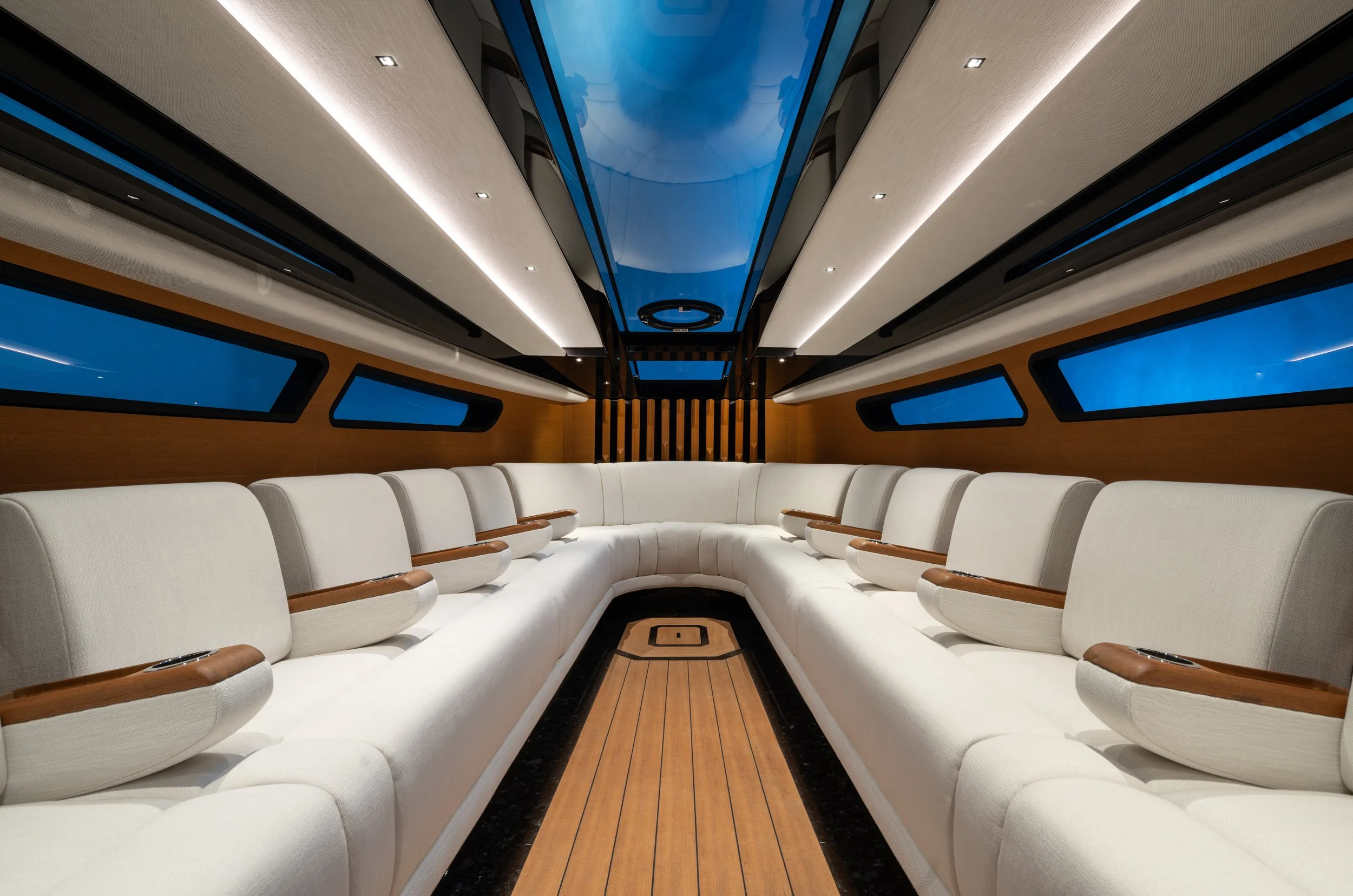 Pascoe · On the registerPascoe 10.4m TL LimousineLOA10.4mBeam2.95mTop Speed36knPrices on requestView on Superyacht Tenders → as the formal, all-weather shuttle, with a lighter open tender alongside for the active side of the programme. Where garage volume only allows one boat, the choice comes back to the attributes above.
What we tell clients
Start with the brief, not the boat. Map the cruising ground, the season, the length of a typical transfer, and how formal the arrivals need to be. If most days are warm, short, and casual, the open tender is the better single boat and the smarter spend. If the programme runs cold, wet, long, or formal, the limousine earns its premium. If the yacht has a garage for two and the budget to match, carry one of each and stop compromising.
For the underlying definitions and the wider buying process, start at the limousine tenders overview and read what is a limousine tender, then work through how to choose a superyacht tender. When you are ready to look at specific hulls, our best limousine tenders round-up tracks the current builders and platforms.
Sources
- 10m Limousine | Luxury Tenders for Superyachts - Pascoe International — Pascoe (retrieved Jun 2026)