A RIB and a solid tender can look interchangeable on a passerelle, but they are built on opposite ideas. A RIB is a rigid hull with an inflatable collar wrapped around the sheerline. A solid tender, sometimes called a GRP or hard tender, is a one-piece moulded hull with no tubes at all. That single difference, tube or no tube, drives almost every trade-off that matters when you specify one. This page compares the two on the attributes that decide real orders. If you want the underlying anatomy first, start with what is a RIB tender.
| Spec | Anvera 58S | SACS Strider 15 | Windy SR28 |
|---|---|---|---|
| Length overall | 17.5 m | 15.0 m | 8.4 m |
| Beam | 5.12 m | 4.50 m | 2.70 m |
| Top speed | 53 kn | 42 kn | 45 kn |
| Guests | 16 | 16 | 10 |
| Dry weight | — | — | 2,600 kg |
| Propulsion | surface drive | shaft | — |
| Price | Prices on request | Prices on request | Prices on request |
Stability
This is where the collar earns its keep. A RIB combines the directional stability of a rigid hull with the buoyancy of an inflatable, and the tubes sit exactly where they damp roll: out at the beam. The result is less side-to-side rocking at rest and during boarding, which matters when guests step across from a moving platform. The tubes also make the boat hard to swamp and effectively unsinkable, so a fully loaded RIB feels planted.
A solid tender is stable too, but it relies on hull form rather than buoyant tubes. Modern designs such as the Petestep hull used in the Williams Evene range claim improved stability from the running surface itself. At rest a solid hull rolls a little more freely than a tubed RIB of the same length, though good beam and a hard chine close most of the gap.
Fendering and coming alongside
The collar is also a full-length fender. When a RIB comes alongside the mothership, a quay, or a beach, the tube takes the contact and protects both boats. In a chop, that forgiveness is the difference between a clean transfer and a scuffed topside. As one industry overview puts it, the inflatable tubes provide excellent fendering protection when coming alongside, which is exactly why RIBs dominate rescue and rough-water work.
A solid tender has no such margin. It carries fixed rubbing strakes, moulded rubrails, and deployable fenders, and crews simply work it more deliberately against the mothership. On a flat day in a sheltered marina that is no hardship. In a swell, alongside operations need a steadier hand and a watchful deckhand.
Capacity for length
For a given overall length, a RIB usually carries more. The tubes add buoyancy and reserve at the beam without adding much hull, so the boat sits the same people and gear in a shorter package. That is useful when garage length is fixed and every centimetre counts. See tender garage sizing for how length drives the stow.
The counter-argument is usable deck. Tubes occupy the outer band of the boat, so a solid hull of the same beam gives more flat, walkable area inside the gunwale. Williams designed the tubeless Evene specifically so guests gain deck space to move around and enjoy the ride. So a RIB carries more capacity per metre of length, while a solid tender gives more usable space per metre of beam. Which one you value depends on whether your constraint is the garage or the guest experience.
Weight
RIBs tend to be lighter than an equivalent solid GRP boat, because the collar substitutes air for structure along the sheer. Lower weight helps acceleration, fuel burn, and the davit or crane rating you need to launch and recover it. For owners watching launch and recovery loads, that can be a real deciding factor.
A solid hull is heavier for the same footprint, but the weight is predictable and concentrated low, and it carries no air system to maintain. Heavier is not automatically worse: it can mean a more solid, planted feel underway.
Seakeeping
In a head sea the collar does something a rigid hull cannot. It flexes on wave impact, absorbing and softening the shock so the ride is less punishing and the boat does not bury its bow as deeply. That is the classic RIB virtue, and it is why they are trusted offshore and as workboats.
Solid hulls answer with running-surface design rather than tubes. Concave spray rails and stepped underbodies, again the Petestep approach, deflect spray and aim for a softer, drier, quieter ride at speed. A well-designed solid hull can ride beautifully in moderate conditions. Push into a steep short chop and the tubed RIB still has the edge on forgiveness.
Looks and finish
Taste runs both ways here, and it is genuinely a styling decision. A solid tender reads as a miniature yacht: clean sheerline, uninterrupted topsides, and a finish that matches the mothership's paint. For limousine and luxury day-boat briefs that visual continuity sells. The tubeless look is a large part of why the segment exists.
A RIB has a more purposeful, working appearance, though premium builders have closed the gap with painted Hypalon, slim profile tubes, and integrated upholstery. A 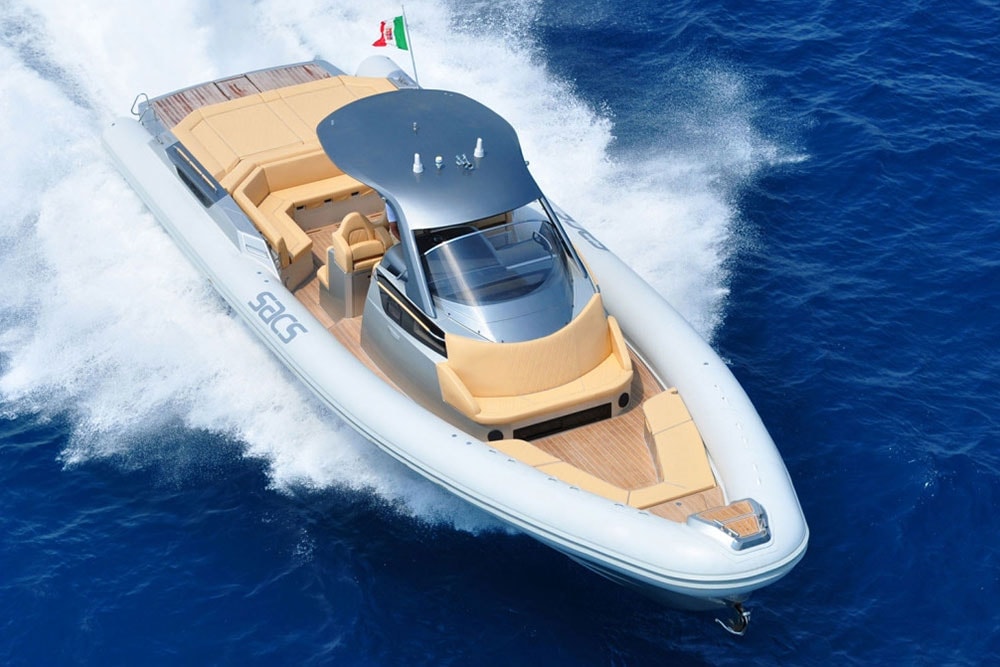 SACS · On the registerSACS Strider 15LOA15.0mBeam4.50mTop Speed42knPrices on requestView on Superyacht Tenders → or an open performance RIB can look every bit as considered as a hard boat.
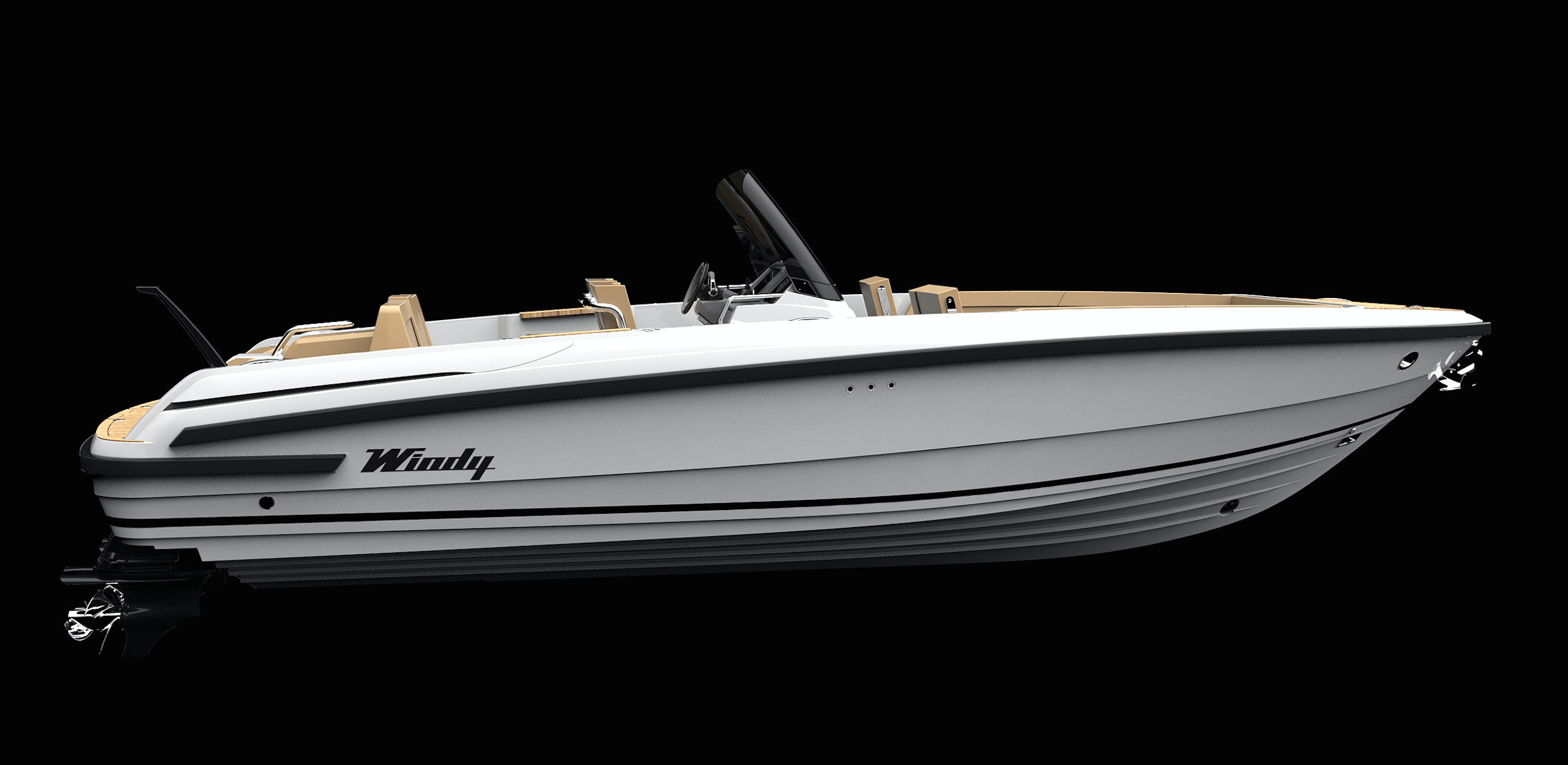 Windy · On the registerWindy SR28LOA8.4mBeam2.70mTop Speed45knPrices on requestView on Superyacht Tenders →
Maintenance
This is the clearest practical split. A RIB has a consumable the solid boat does not: the tubes. Hypalon collars typically last 15 to 25 years and then need retubing, at roughly 400 to 450 US dollars per foot, and they want inspection, cleaning, and the odd repair in between. Tube material choice matters, which is why we cover tube materials and collar construction separately.
A solid hull has no tubes to chafe, deflate, or replace. Maintenance is gelcoat, antifoul, and the usual mechanical items, the same regime as any GRP boat. Over a long ownership that is a lower and more predictable bill, which is one of the quieter arguments for going solid.
Which suits which programme
Use the programme to choose.
- Choose a RIB when you run a rough-water or mixed-use brief, when alongside work happens in a swell, when the garage length is the hard constraint, or when you want shock absorption and maximum capacity per metre. Performance RIBs such as the
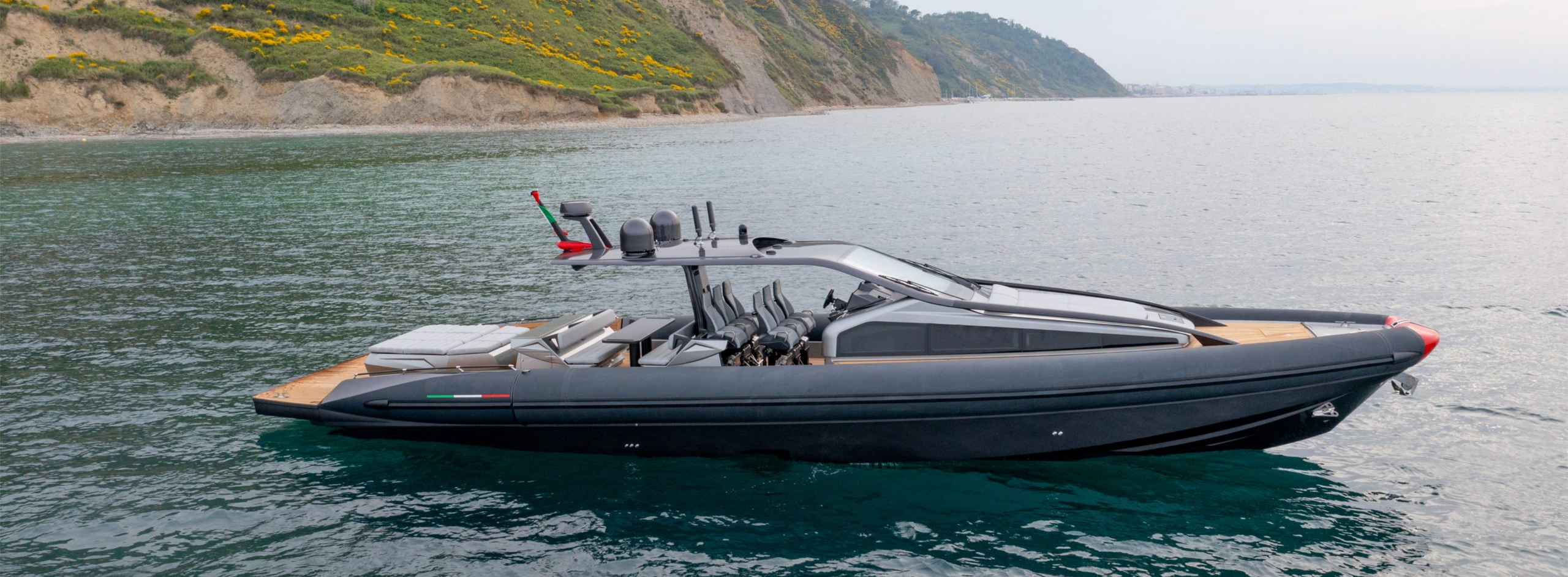 Anvera · On the registerAnvera 58SLOA17.5mBeam5.12mTop Speed53knPrices on requestView on Superyacht Tenders → show how far the type now stretches.
 - Choose a solid tender when the brief is calm-water limousine duty, when the look has to match the yacht, when you want maximum guest deck space, and when you would rather avoid the retube cycle.
Many fleets carry one of each: a RIB for tender and rescue duty, a solid boat for guest transfers. Work through the trade in full at choosing a RIB tender and, for the wider category, how to choose a superyacht tender.
What we tell clients
Do not start from "RIB or solid". Start from the job. If your alongside operations happen in open water, or your garage caps the length, the collar usually pays for itself in protection and capacity. If your tender's main task is moving guests in a sheltered marina and the boat has to look like the yacht, a solid hull will serve and cost less to keep. The honest middle position is that both types are excellent now; the bad outcomes come from picking on aesthetics alone and discovering the maintenance bill or the alongside behaviour later. Browse current options at RIBs and open tenders, see our best RIB tenders shortlist, then frame the brief around the programme.